Cinema Caverna
Ricardo Sardenberg
Estamos contentes em anunciar a inauguração da mostra Cinema Caverna por Janaina Wagner no nosso anexo Lanterna Mágica. A mostra complementa o premiado filme Quebrante, atualmente em exposição na 22ª Bienal Sesc Videobrasil.
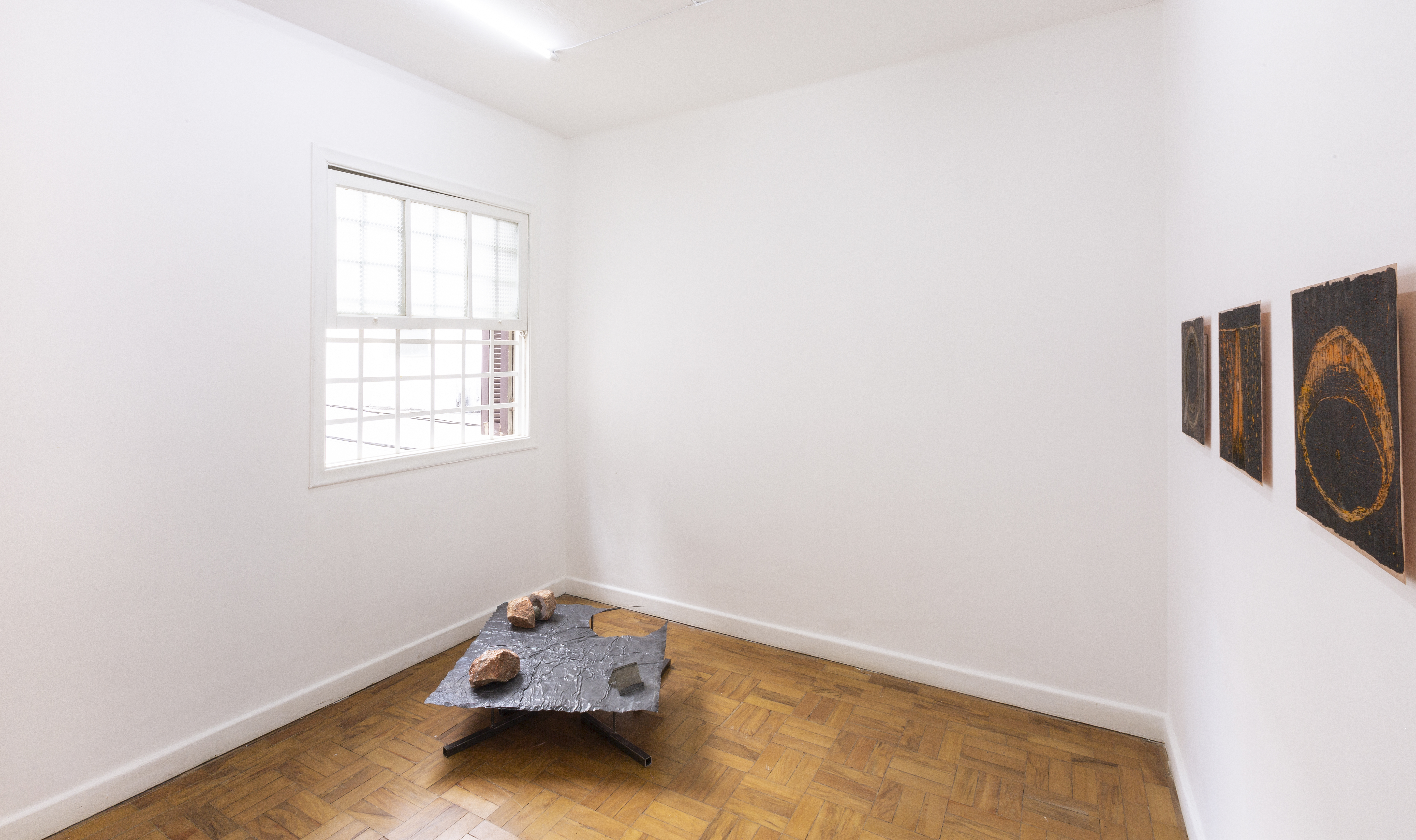
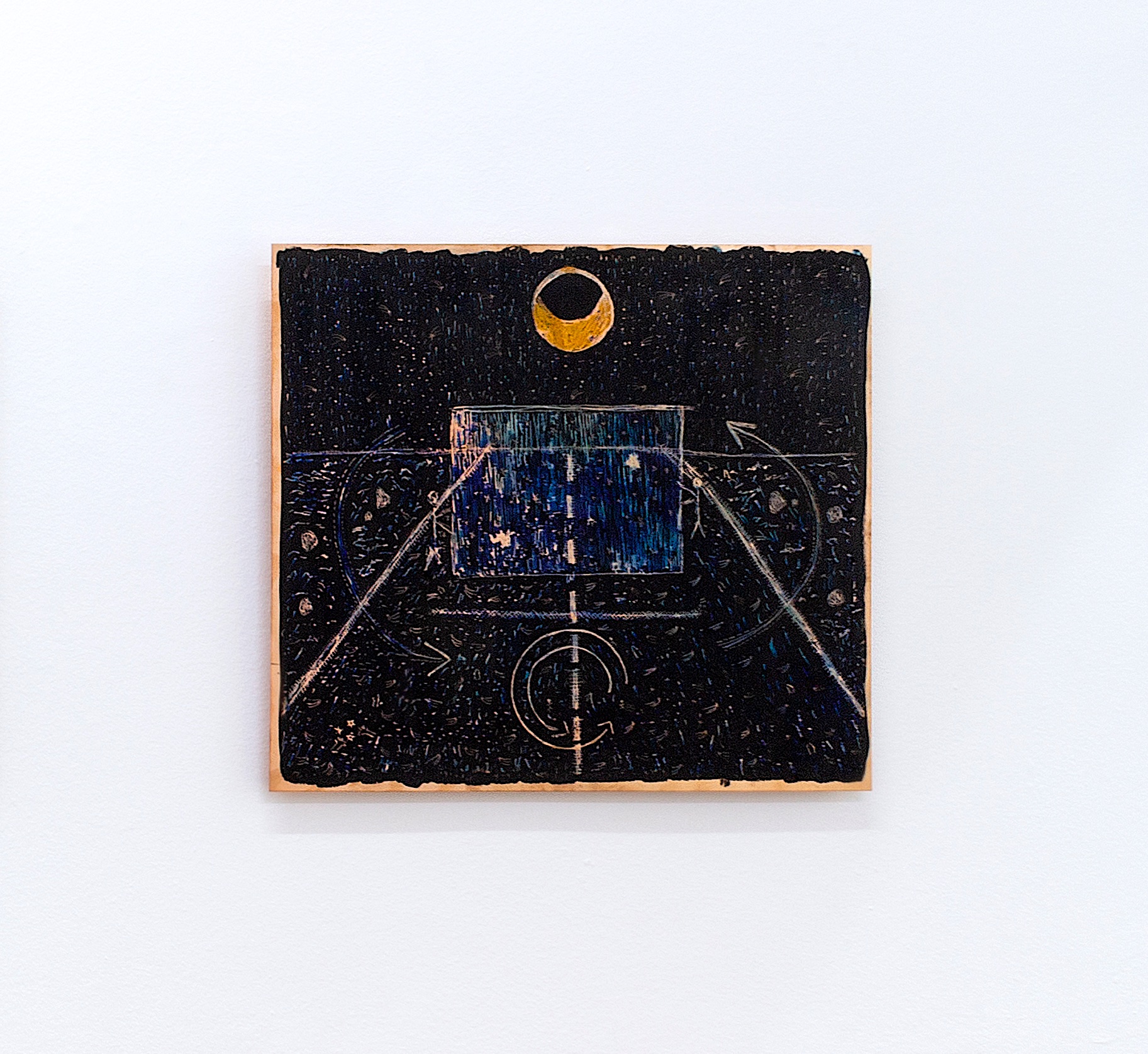
Em sua primeira exposição numa galeria, a artista que trabalha com vídeo experimental, desenho, pintura, fotografia e instalação, apresenta uma grande lua, além de obras em cobre e chumbo que se referem quase como um storyboard expandido imaginário do filme Quebrante numa simbiose de processos e formas complementares de criação. O campo da imaginação vai de encontro à história da construção da transamazônica e seu traçado que representa mais uma derrota da modernidade diante da natureza. Em nenhum outro ecossistema como a Amazônia a utopia moderna falhou de forma mais retumbante e aparente. Todas as diversas tentativas de domesticá-la por meio da racionalidade do traço foram de encontro à força da sua natureza viva biológica.
Dentro do modelo do cinema experimental, em que as narrativas se expandem fora do sistema cronológico, Quebrante conta a história das pedras, da lua e da professora da escola primária Erismar, de Rurópolis (Pará), a primeira cidade construída à beira da Rodovia Transamazônica BR 230, símbolo máximo da propaganda do projeto político de progresso da ditadura militar. Erismar, equipada de forma rudimentar com uma vela e um isqueiro, descobriu as cavernas situadas na região. É nessa relação entre o corpo e o buraco escuro, a internalização do ver e do não ver, que se descobre a pedra, a pedra dentro da pedra, a pedra que se despega da pedra e se torna lua, e se prende à Terra por meio da força invisível e mágica da gravidade, numa dança contínua de proximidades e distância.
A exposição Cinema Caverna é a lua que se despegou da instalação Quebrante. Em contínua conversa entre vídeo e a mostra, a exposição é a realização da fala de Erismar no filme: as pedras têm vida, elas vivem e crescem. Os desenhos em cobre, vidro e chumbo referem-se às imagens e falas de Quebrante, expandindo a experiência visual do vídeo para um universo imaginário reificado de escavação. Um projeto que revela as ideias imagéticas e materiais de uma Amazônia rasgada pela modernidade. São indícios de uma poética política das sobras, dos restos que encontramos diariamente no presente dos escombros e entulhos de um projeto utópico de intervenção na natureza em nome do progresso.
Quebrante é livremente inspirado no projeto de Robert Smithson, The Truly Underground Cinema (1971) e no filme The Very Eye of the Night (1958), por Maya Deren.
We’re delighted to announce the opening of the Cinema Caverna exhibition by Janaina Wagner in our Lanterna Mágica annex. It complements the award-winning film Quebrante, currently on show at the 22nd Sesc Videobrasil Biennial.
In her first gallery show, the artist, who works with experimental video, drawing, painting, photography and installation, presents a large moon, as well as works in copper and lead that are almost like an imaginary expanded storyboard of the film Quebrante in a symbiosis of processes and complementary forms of creation. The field of imagination goes against the history of the construction of the Trans-Amazonian Highway and its route, which represents yet another defeat of modernity in the face of nature. In no other ecosystem like the Amazon did the modern utopia fail in a more resounding and apparent way. All the several attempts to tame it through the rationality of the trace went against the force of its living biological nature.
Within the model of experimental cinema, in which narratives expand outside the chronological system, Quebrante tells the story of the stones, the moon and the elementary school teacher Erismar, from Rurópolis (Pará), the first town built on the edge of the Trans-Amazonian Highway BR 230, the ultimate propaganda symbol of the military dictatorship’s progress. Erismar, equipped in a rudimentary way with a with a candle and a lighter, discovered the caves located in the region. It is in this relationship between the body and the dark hole, the internalization of seeing and not seeing, that one discovers the stone, the stone inside the stone, the stone that breaks away from the stone and becomes the moon, and attaches iself to the Earth through the invisible and magical force of gravity, in an ongoing dance of proximity and distance.
In Cinema Caverna, the exhibition is the moon that has detached itself from the Quebrante installation. In an ongoing conversation between the video and the show, the exhibition is the realization of Erismar’s speech in the film: the stones have life, they live and grow. The drawings in copper, glass and lead refer to Quebrante’s images and speeches, expanding the visual experience of the video into a reified imaginary universe of excavation. A project that reveals the imagery and material ideas of an Amazon torn apart by modernity. They are indications of a political poetics of the leftovers, the remains that we find on a daily basis in the intervention in nature on behalf of progress.
Quebrante is loosely inspired by Robert Smithson’s project, The Truly Underground Cinema (1971) and the film The Very Eye of the Night (1958), by Maya Deren.






Exposições / Exhibitions
-
EU SOU MATÉRIA DERRETIDA ESCORREGANDO DO DENTRO DA TERRA PARA TE CONTAR COISAS INTERIORES:
Janaina Wagner
solo show
exposição individual