O Homem Nu
O Homem Nu
Ricardo Sardenberg
A obra de Efrain Almeida (1964–2024) nasce de um território em que o corpo, a natureza e o sagrado não admitem separações fáceis. Tudo nela parece pequeno somente à primeira vista. O artista conhecia a força da escala íntima, do objeto que exige aproximação e silêncio, como uma relíquia, um ex-voto ou uma lembrança guardada junto ao peito. Em suas mãos, a delicadeza jamais foi sinônimo de fragilidade: ela é uma forma de resistência, um modo de afirmar a permanência daquilo que o tempo ameaça apagar.
Primeira exposição panorâmica dedicada à obra de Efrain desde seu falecimento, O homem nu é apresentada pela Fortes D’Aloia & Gabriel e encontra um desdobramento na Sardenberg Casa 29. Realizadas em parceria, as duas mostras constroem leituras complementares de uma trajetória desenvolvida ao longo de aproximadamente 40 anos. Na Sardenberg, quatro obras aproximam momentos distintos dessa produção e formam um círculo simbólico, no qual nascimento e morte, desejo e perda, matéria e espírito se sucedem e se transformam.
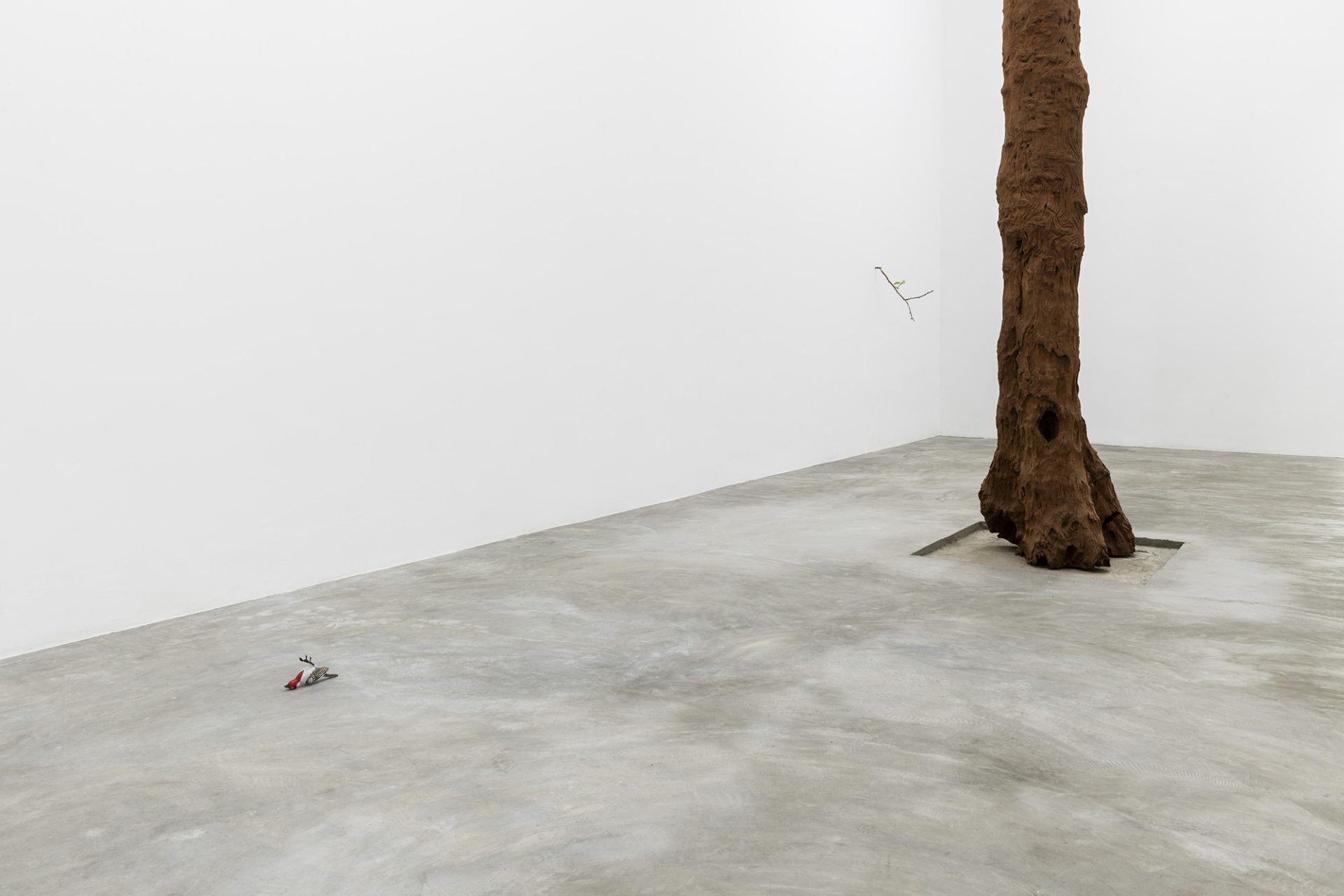
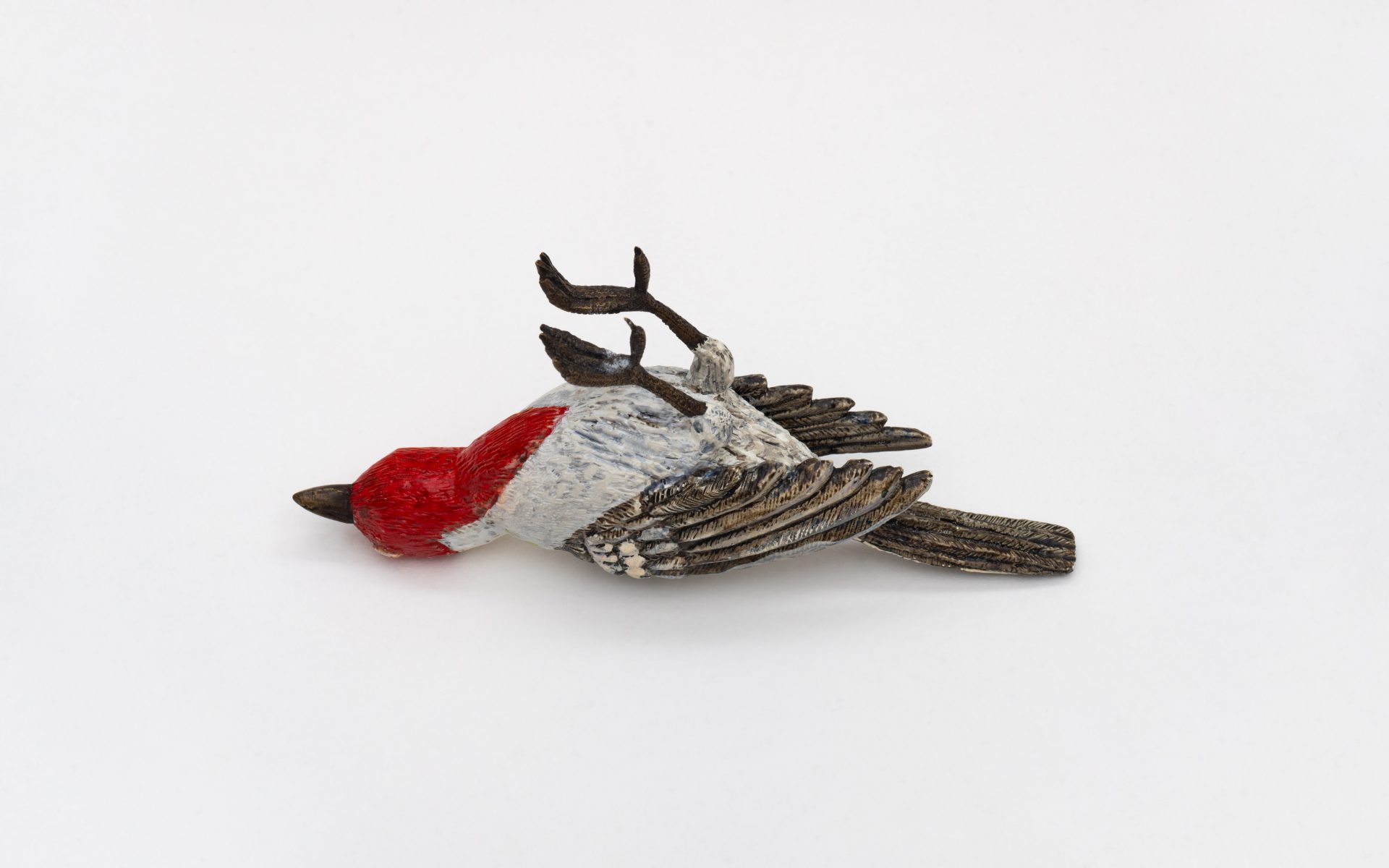
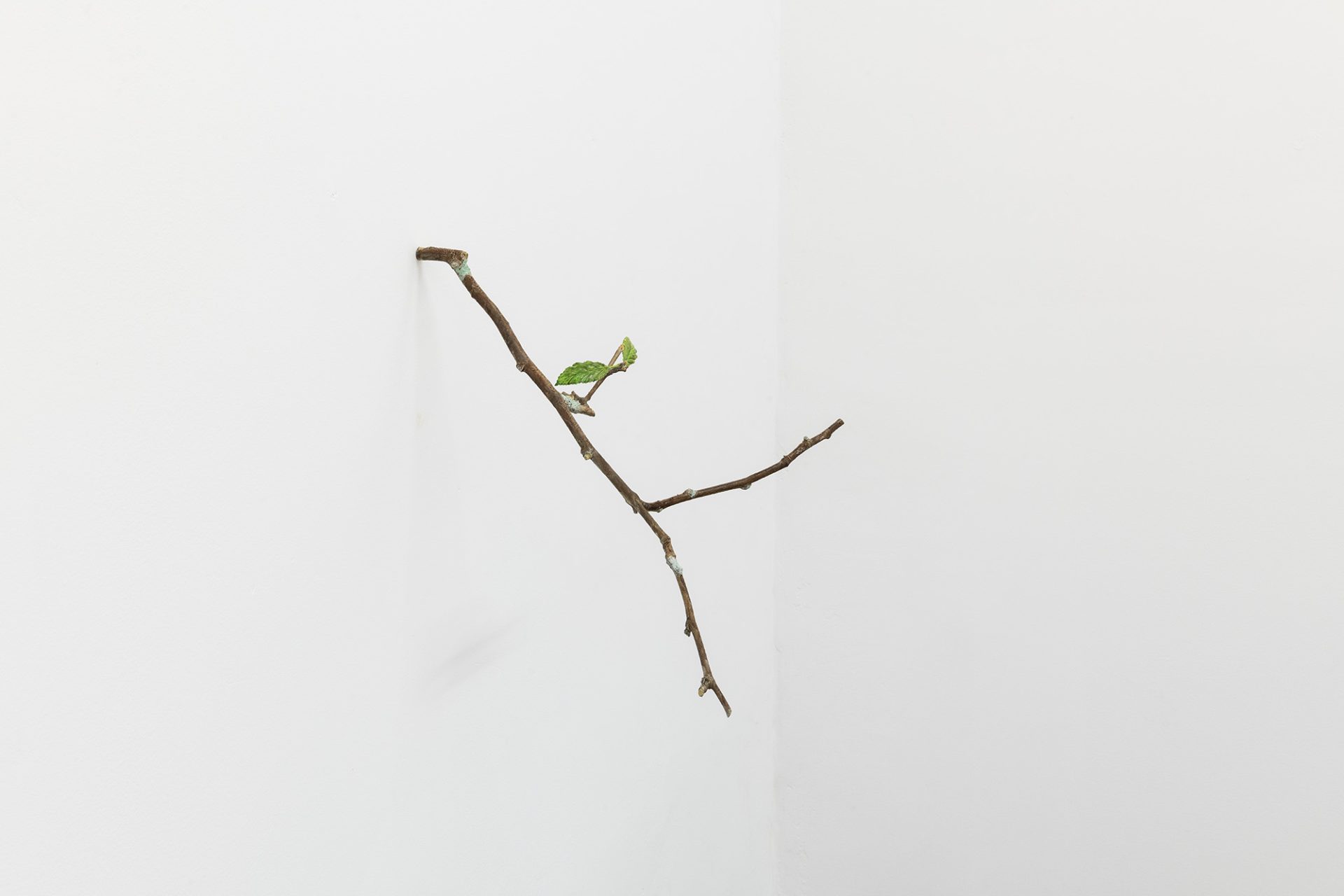
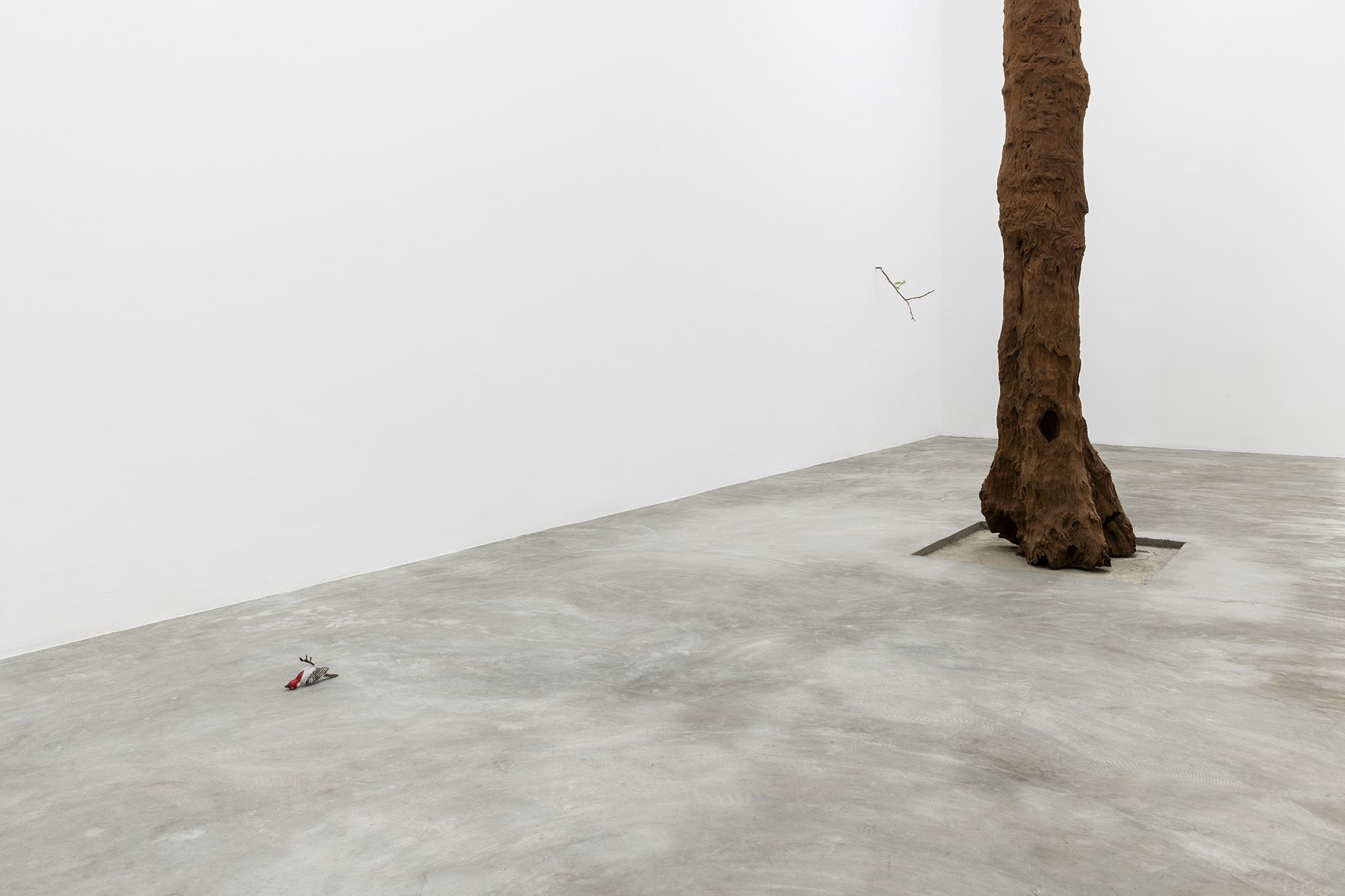
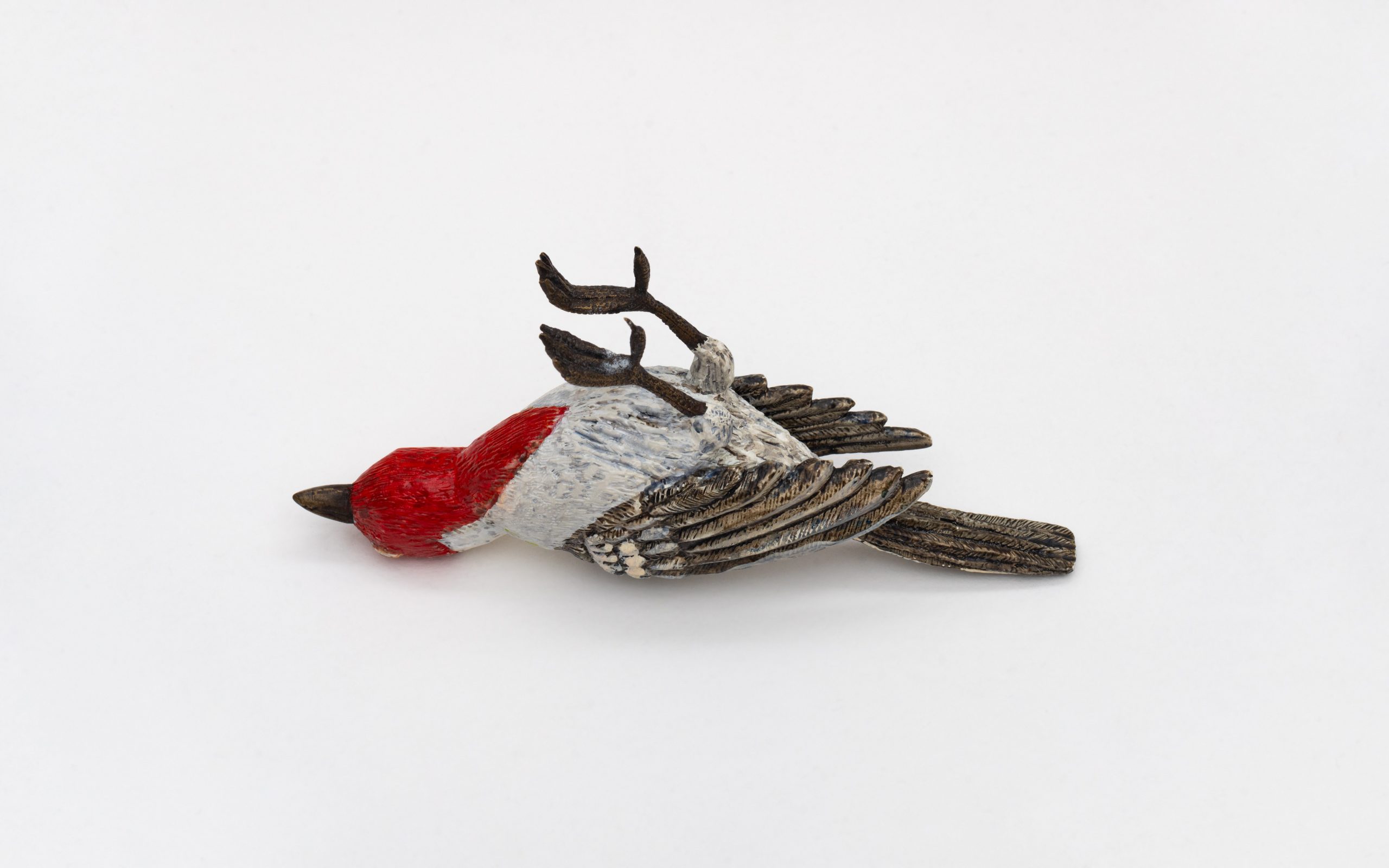
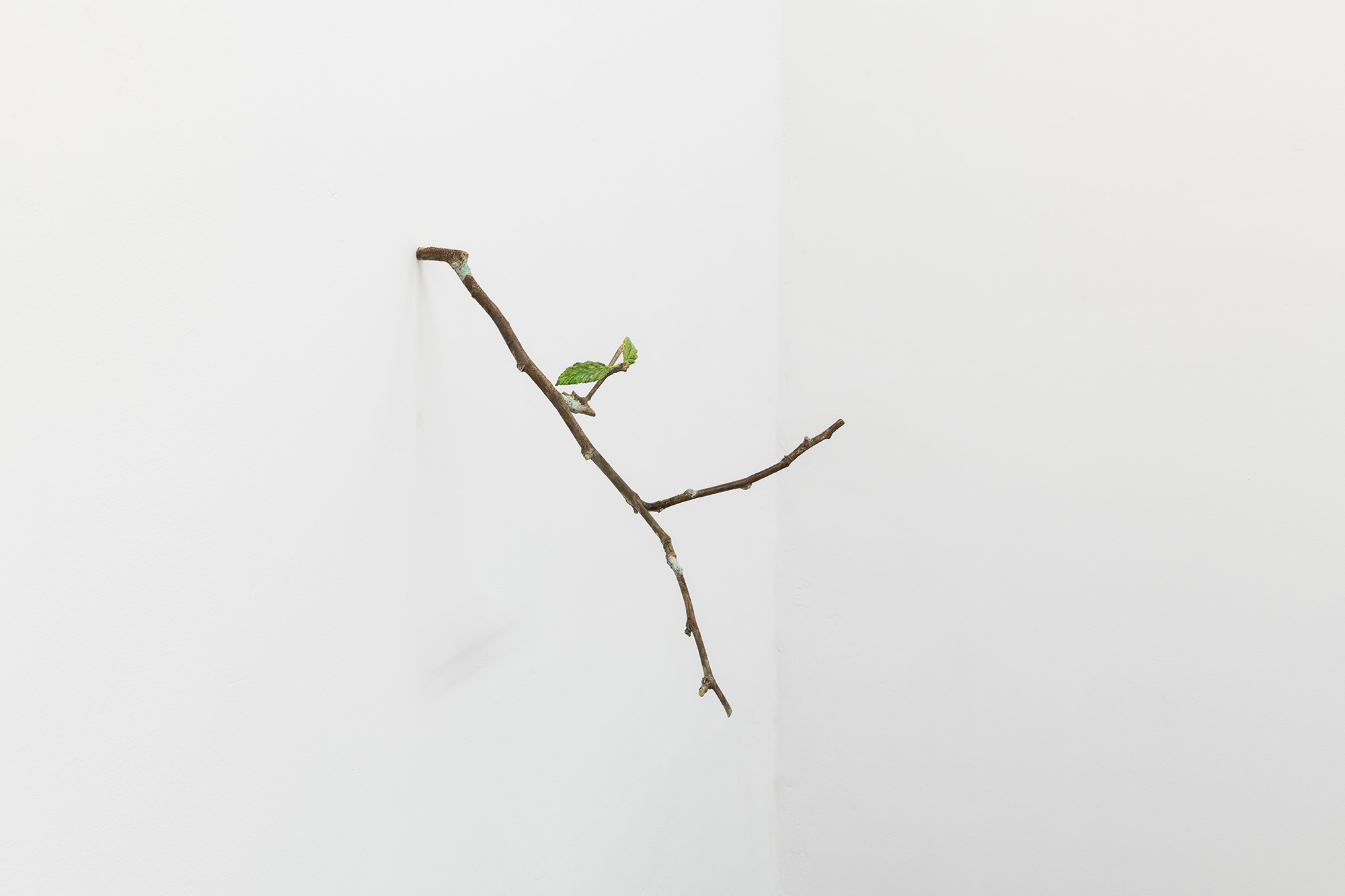
Em D.d, de 2017, o pássaro tombado traz a morte para o espaço da contemplação. Seu pequeno corpo, em bronze e animado pela cor, conserva a beleza que não desaparece com a queda. A ave já não voa, mas sua presença permanece carregada de movimento e memória. Ao lado dela, Alcino, também de 2017, apresenta um galho quase nu, interrompido aqui e ali pelo surgimento de folhas verdes. É uma imagem de despojamento e, ao mesmo tempo, de insistência: quando tudo parece reduzido ao essencial, a vida encontra uma passagem por onde retornar.
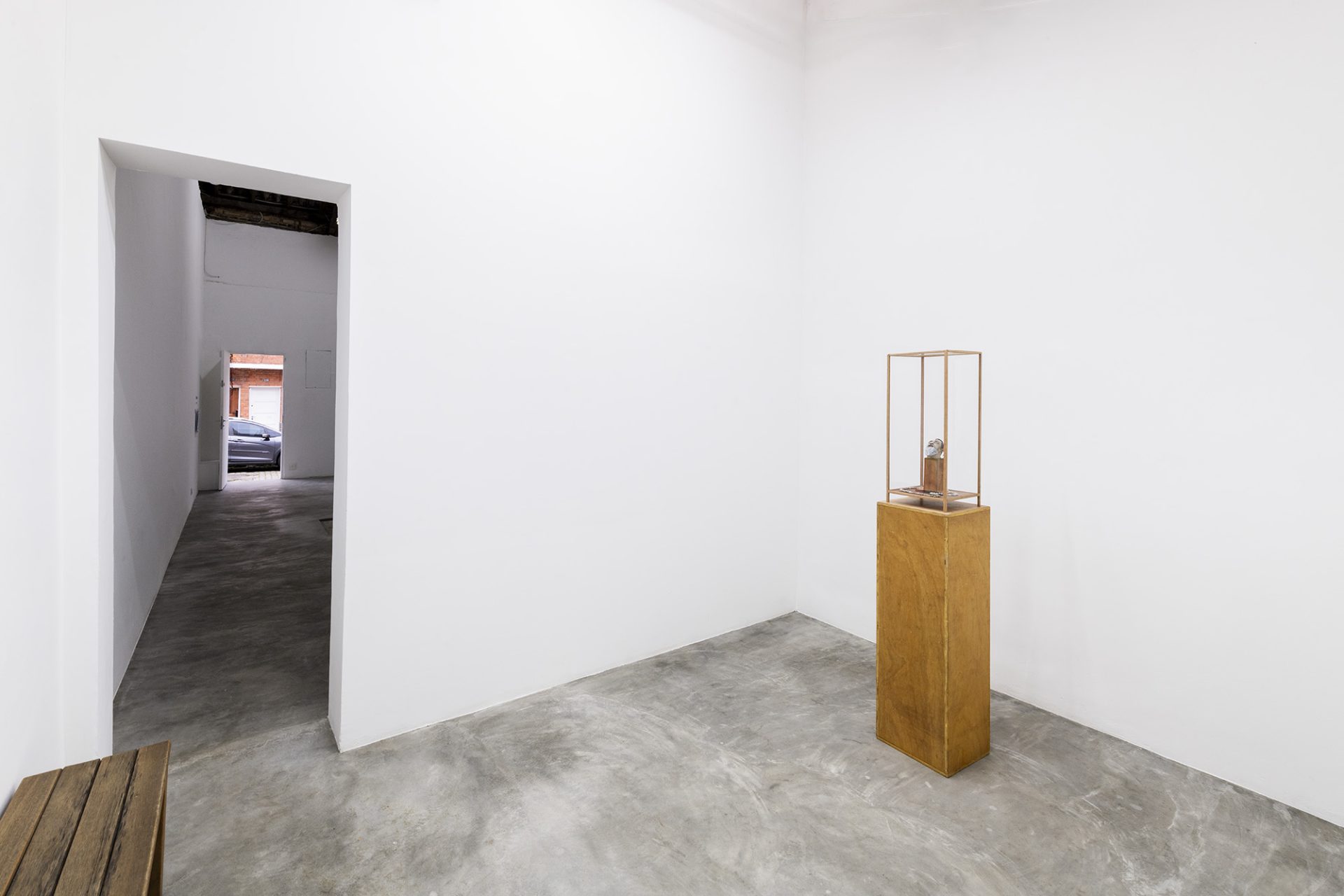
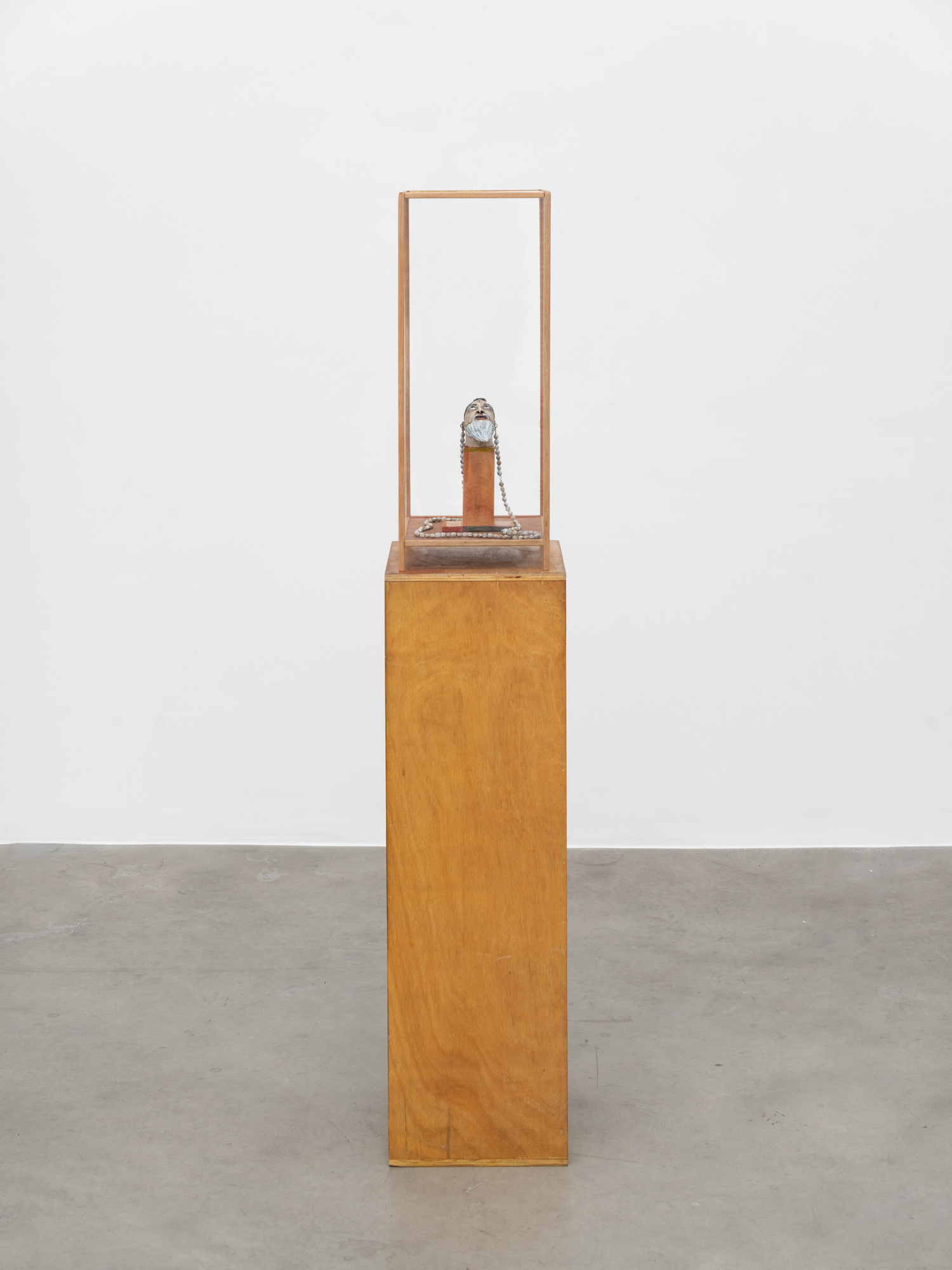
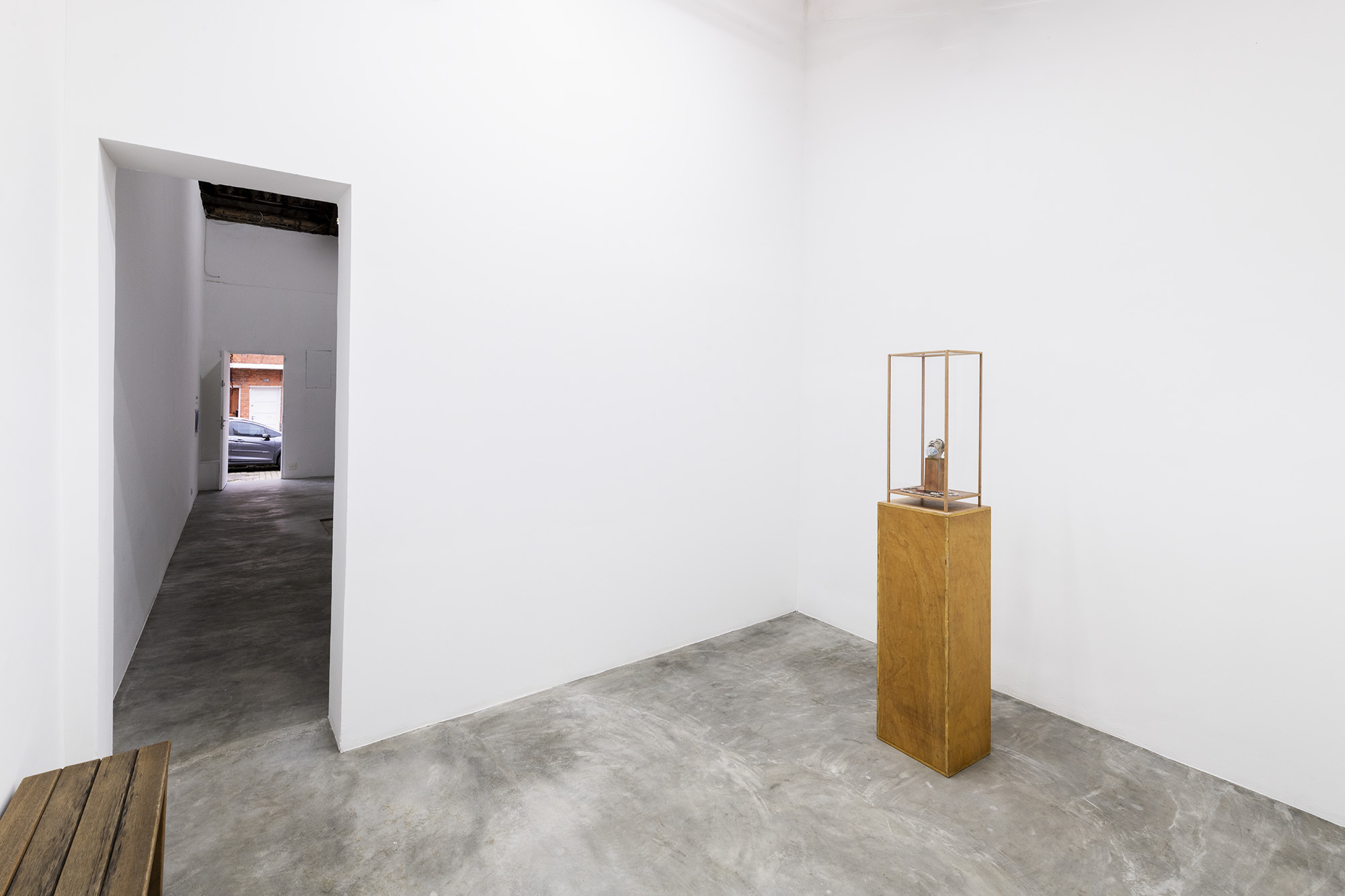
Cabeça Transe com Lágrimas de Nossa Senhora, de 2020, introduz uma dimensão abertamente espiritual. Protegida e também apartada por uma estrutura transparente, a cabeça converte-se em aparição, oferenda e testemunho. O transe desloca a consciência ordinária e aproxima o corpo de forças invisíveis; as lágrimas de Nossa Senhora reúnem dor individual e sofrimento coletivo. Não se trata, porém, de ilustrar uma fé estabelecida. Efrain constrói uma religiosidade atravessada pela experiência cotidiana, por lembranças, afetos e formas populares de devoção. O sagrado comparece como matéria viva, íntima e profundamente humana.
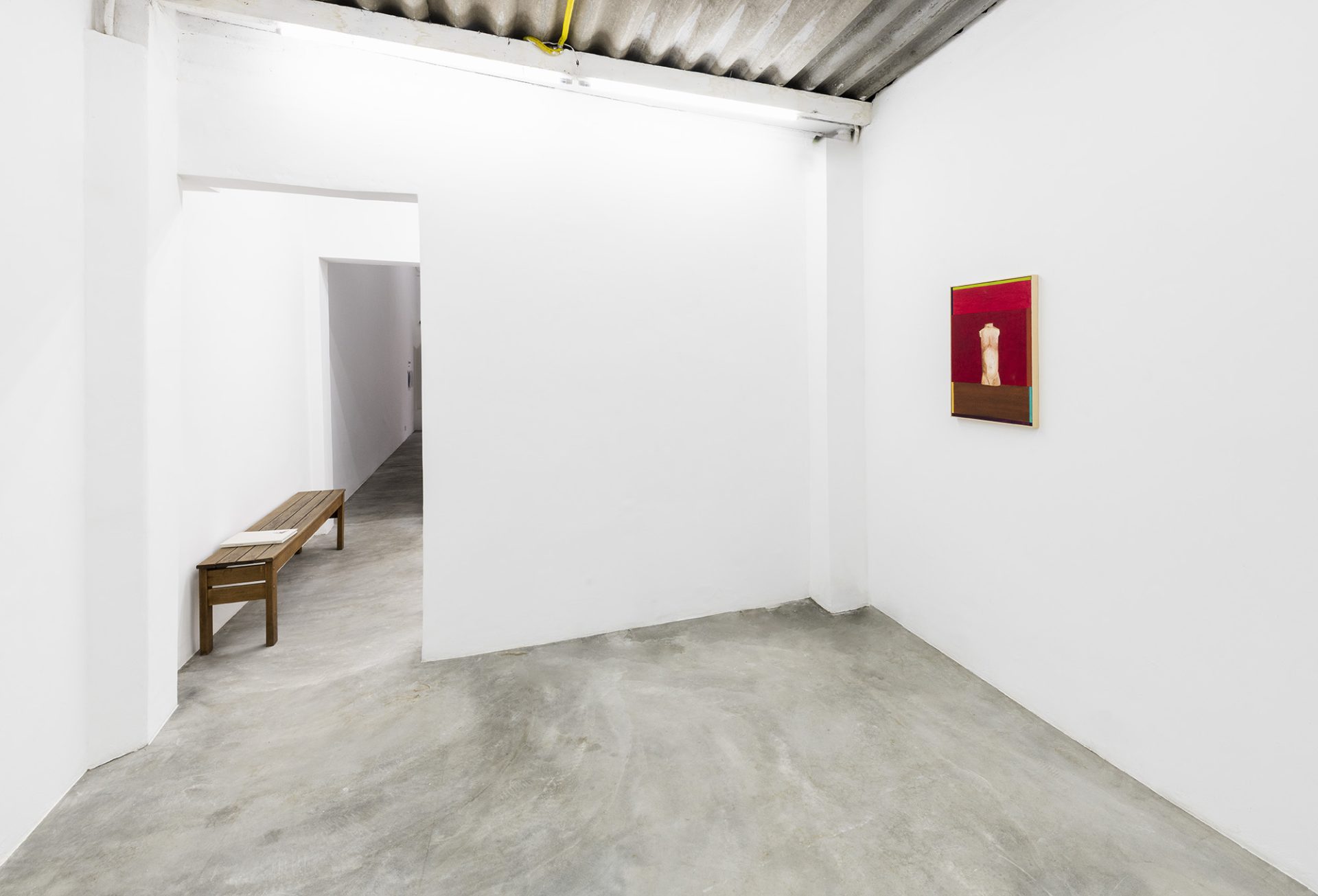
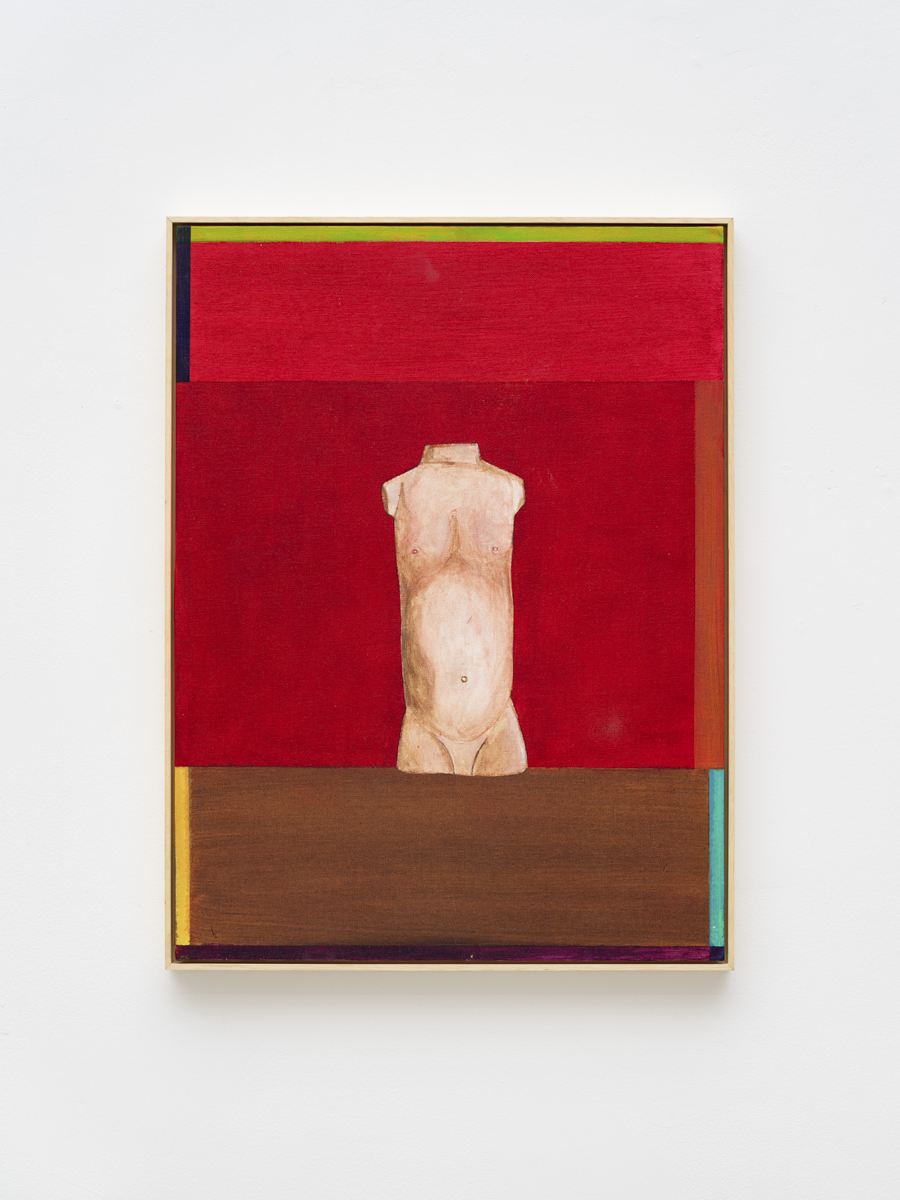
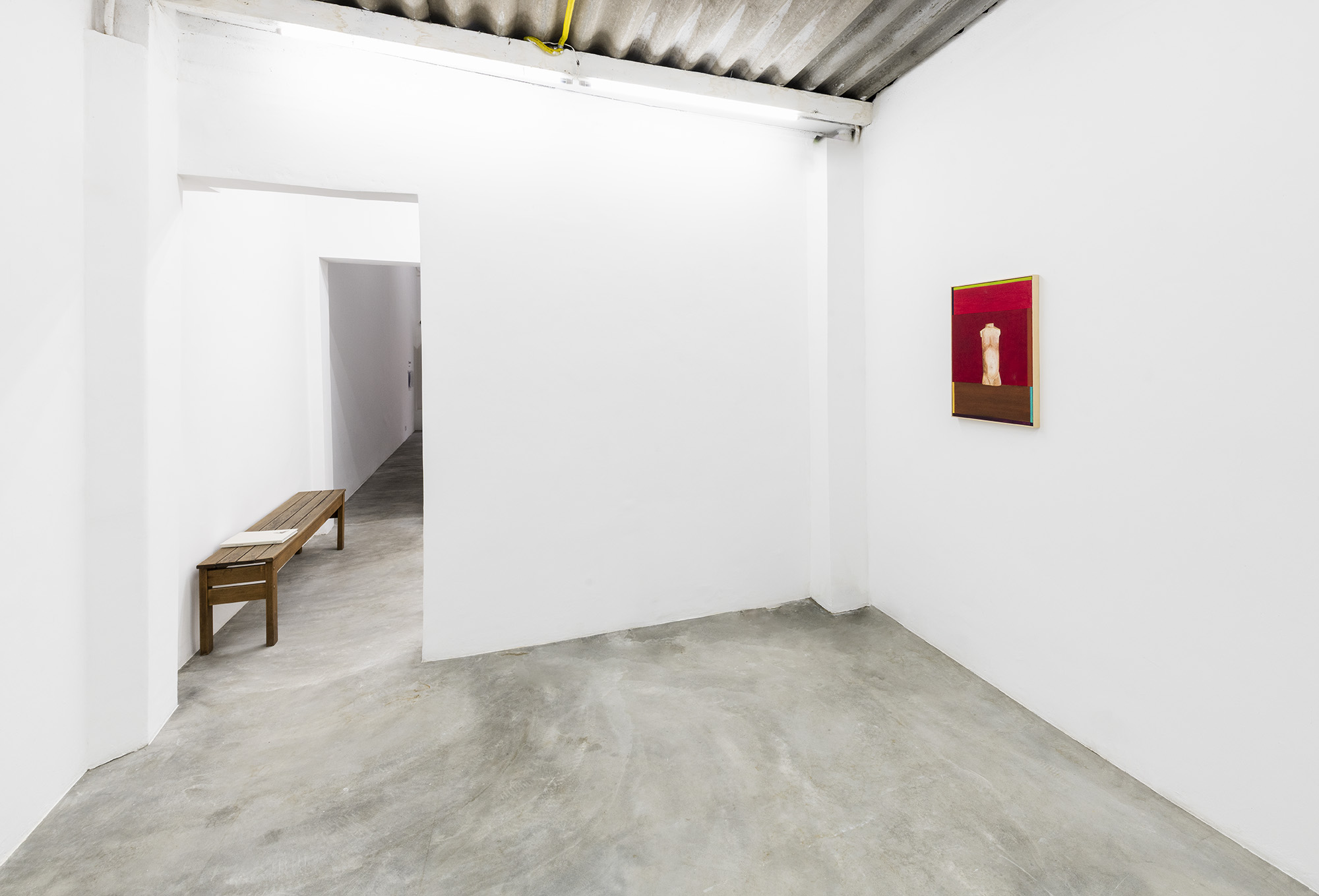
Em Votiva (torso), de 2022, o corpo se oferece em fragmento. Sem rosto e sem membros, o torso não representa uma identidade, mas concentra uma vulnerabilidade comum a todos. A figura votiva guarda a memória dos objetos entregues em agradecimento, promessa ou súplica, porém, o corpo também se afirma como lugar do desejo, da exposição e da consciência de si. A carne, pintada a óleo sobre cartão entelado, encontra abrigo no campo vermelho encarnado cor de sangue, paixão, ferida e vitalidade. Ao mesmo tempo, a organização rigorosa da superfície, estruturada por campos de cor e formas geométricas, estabelece um diálogo com a tradição construtiva e concreta da arte brasileira. Efrain aproxima universos muitas vezes tratados como inconciliáveis: a devoção popular, a pulsão erótica e a abstração geométrica. Aquilo que parece incompleto revela-se suficiente para falar do homem inteiro; e, aquilo que poderia ser apenas figura, torna-se também cor, plano e construção.
Essas obras demonstram como Efrain atravessou convenções que, sobretudo ao longo de sua vida, organizaram de maneira desigual a cultura brasileira. Sua produção transita entre a chamada arte popular e o gesto contemporâneo não para reconciliar mundos opostos, mas para mostrar que essa oposição jamais deu conta de nossa complexidade. É também nisso que reside sua condição precursora em relação às gerações atuais, para as quais tal divisão se apresenta de maneira menos rígida e menos evidente. A habilidade manual, a devoção, a memória familiar e da infância, o erotismo e a experiência do Nordeste não aparecem como sinais de uma origem a ser superada. São fundamentos de uma linguagem rigorosa, singular e plenamente consciente de seu tempo.
Há em Efrain uma poesia da transitoriedade. O pássaro cai, o galho renasce, a santa chora, o torso se oferece. Cada imagem ocupa o breve intervalo entre presença e ausência. Reunidas, elas compõem uma meditação sobre o ciclo da vida e sobre aquilo que persiste depois de nós: os gestos, as crenças, os desejos e as imagens que entregamos ao mundo.
Ao celebrar Efrain Almeida, a Sardenberg celebra um artista precursor, delicado e radical, cuja obra desfez fronteiras sem precisar anunciá-lo em voz alta. Este encontro assinala também os 25 anos da Fortes D’Aloia & Gabriel e reafirma a importância das alianças construídas em torno da arte. O homem nu permanece diante de nós sem disfarces, revestido apenas de sua memória, de sua finitude e de seu mistério.
The work of Efrain Almeida (1964–2024) emerges from a realm in which the body, nature, and the sacred resist easy separation. Everything in it appears small only at first closeness and silence, like a relic, an ex-voto, or a keepsake held close to the heart. In his hands, delicacy was never synonymous with fragility: it is a form of resistance, a way of affirming the endurance of what time threatens to erase.
The first survey exhibition devoted to Efrain’s work since his death, O homem nu [The Naked Man] is presented by Fortes D’Aloia & Gabriel, with a related presentation at Sardenberg Casa 29. Organized in partnership, the two exhibitions offer complementary readings of a career spanning approximately forty years. At Sardenberg, four works bring together different moments in his practice, forming a symbolic circle in which birth and death, desire and loss, matter and spirit follow and transform one another.
In D.d (2017), a fallen bird brings death into the realm of contemplation. Its small body, cast in bronze and enlivened by color, retains a beauty that does not vanish with its fall. The bird no longer flies, yet its presence remains charged with movement and memory. Beside it, Alcino (2017) presents an almost bare branch, interrupted here and there by the emergence of green leaves. It is an image of bareness and, at the same time, of persistence: when everything seems reduced to its essence, life finds a passage through which to return.
Cabeça Transe com Lágrimas de Nossa Senhora [Trance Head with Tears of Our Lady] (2020) introduces an explicitly spiritual dimension. Both protected and set apart by a transparent structure, the head becomes an apparition, an offering, and a testimony. Trance displaces ordinary consciousness and draws the body closer to invisible forces; the tears of Our Lady bring together individual pain and collective suffering. This is not, however, an illustration of an established faith. Efrain constructs a form of religiosity shaped by everyday experience, memories, affections, and popular forms of devotion. The sacred appears as something living, intimate, and deeply human.
In Votiva (torso) [Votive (Torso)] (2022), the body offers itself as a fragment. Faceless and limbless, the torso does not represent an identity but concentrates a vulnerability shared by all. The votive figure retains the memory of objects offered in gratitude, as a pledge, or in supplication; yet the body also asserts itself as a site of desire, exposure, and self-awareness. The flesh, painted in oil on canvas-covered board, finds shelter within a deep red field—the color of blood, passion, wounds, and vitality. At the same time, the surface’s rigorous organization, structured by fields of color and geometric forms, establishes a dialogue with the Constructivist and Concrete traditions of Brazilian art. Efrain brings together realms often treated as irreconcilable: popular devotion, erotic impulse, and geometric abstraction. What appears incomplete proves sufficient to speak of the whole human being, while what might have been merely a figure also becomes color, plane, and construction.
These works demonstrate how Efrain moved beyond the conventions that, particularly during his lifetime, structured Brazilian culture along unequal lines. His work moves between so-called folk art and contemporary practice, not to reconcile opposing worlds, but to show that this opposition has never adequately accounted for our complexity. This is also what makes him a forerunner of current generations, for whom such a divide appears less rigid and less pronounced. Manual skill, devotion, memories of family and childhood, eroticism, and the experience of Brazil’s Northeast do not appear as signs of an origin to be transcended. They are the foundations of a rigorous and singular language, fully attuned to its time.
There is in Efrain’s work a poetry of transience. The bird falls, the branch is reborn, the saint weeps, the torso offers itself. Each image occupies the brief interval between presence and absence. Together, they form a meditation on the cycle of life and on what remains after us: the gestures, beliefs, desires, and images we offer to the world.
In celebrating Efrain Almeida, Sardenberg celebrates a pioneering, delicate, and radical artist whose work dissolved boundaries without needing to proclaim it aloud. This occasion also marks the twenty-fifth anniversary of Fortes D’Aloia & Gabriel and reaffirms the importance of the alliances forged around art. The naked man remains before us without disguise, clothed only in his memory, his finitude, and his mystery.