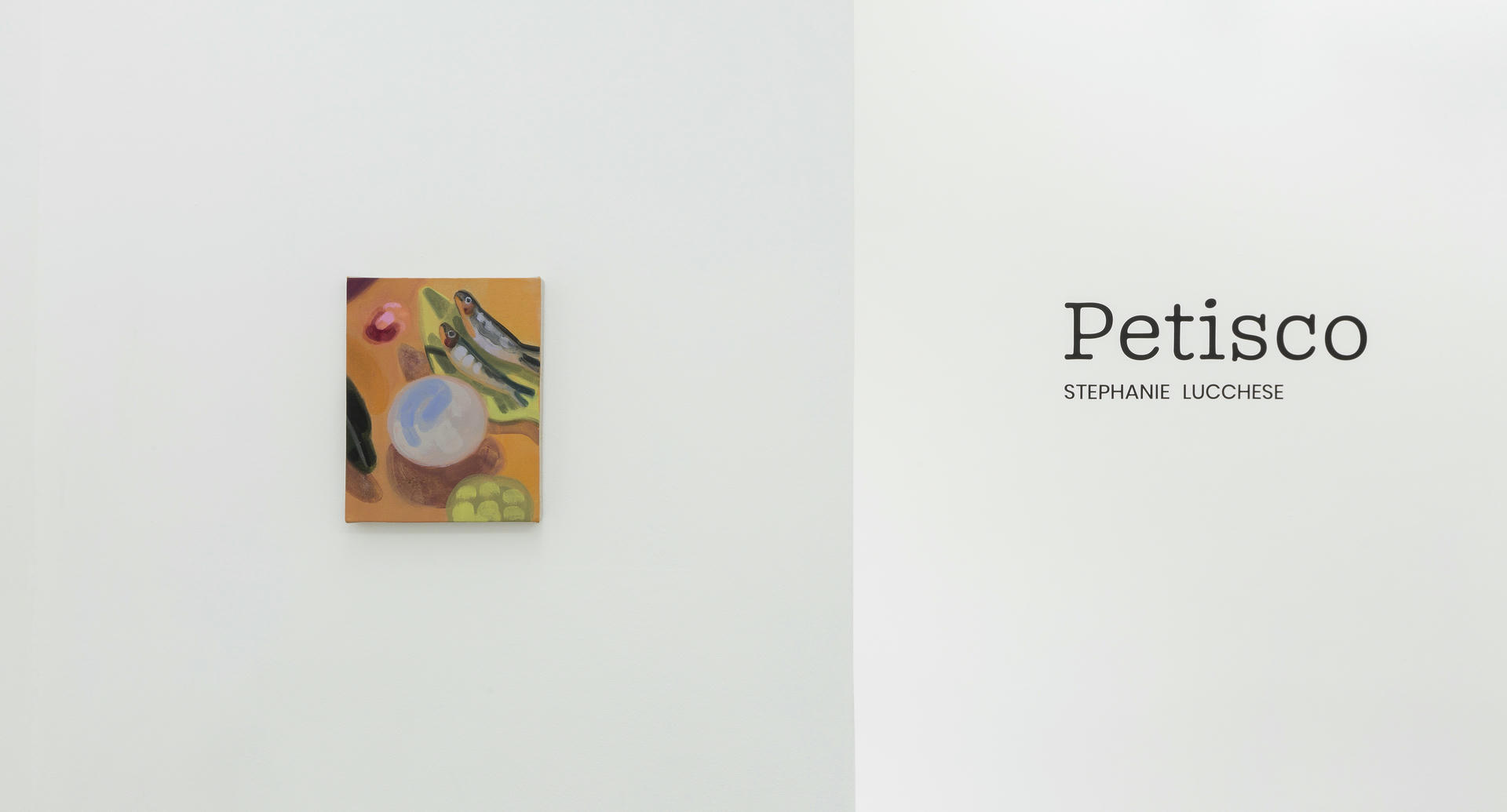
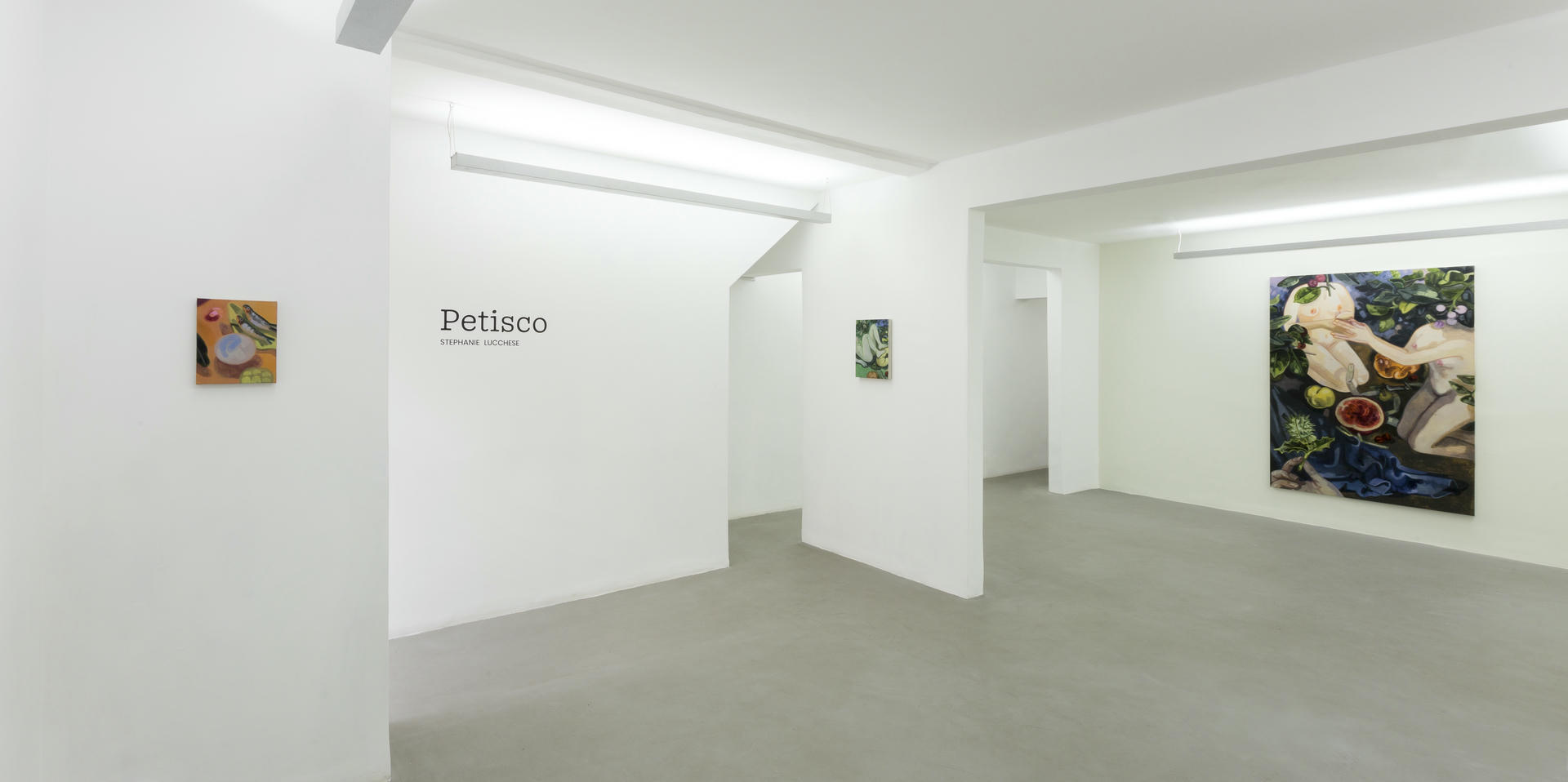
Petisco
Leonardo Stockler
Stephanie Lucchese
Petisco
07 de outubro de 2023
Conhecemos a Natureza tanto pelas suas forças quanto pelos seus frutos. E se quisermos um dia imaginar uma Natureza diferente, talvez devêssemos começar pensando através destes dois produtos.
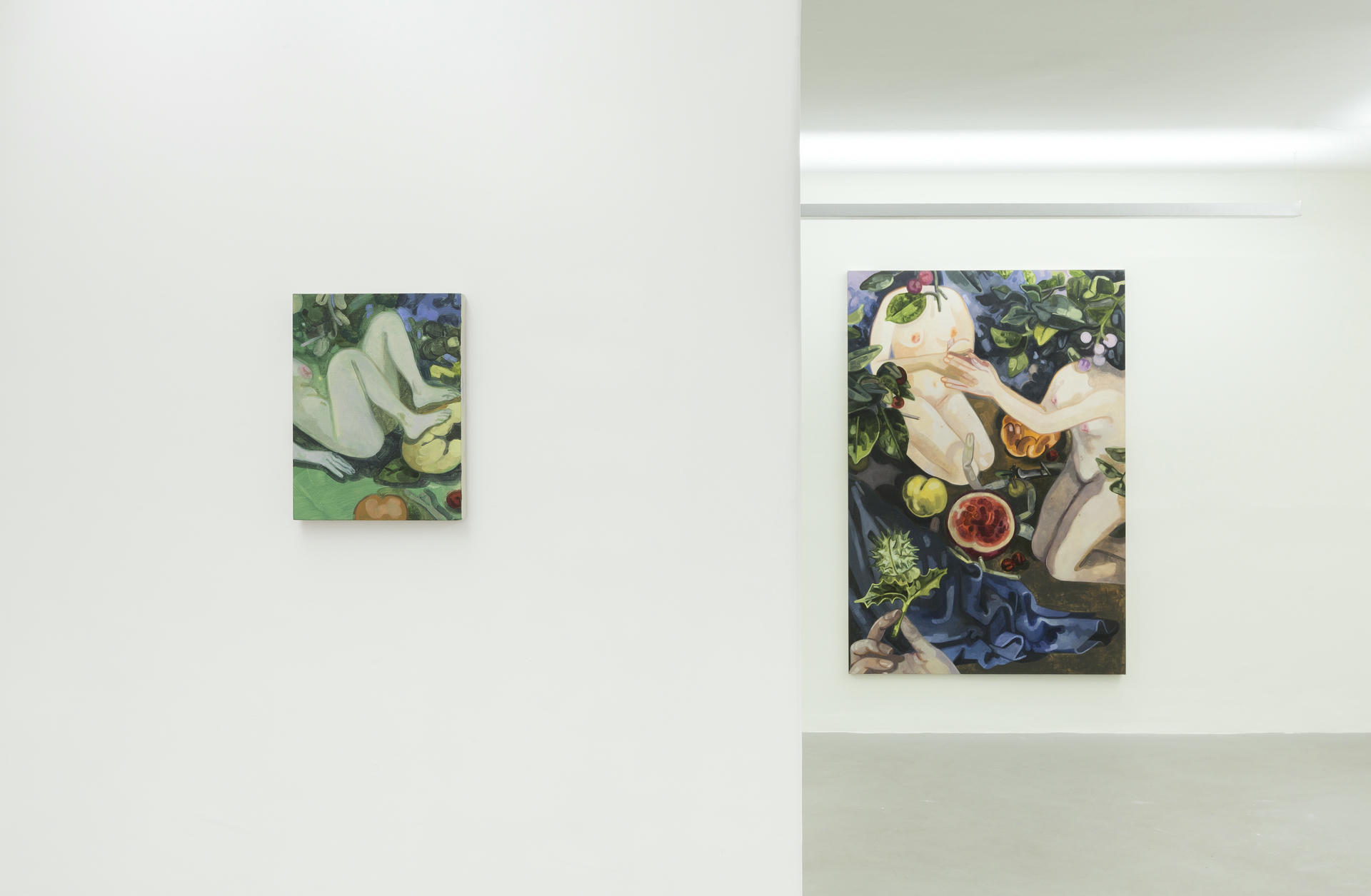
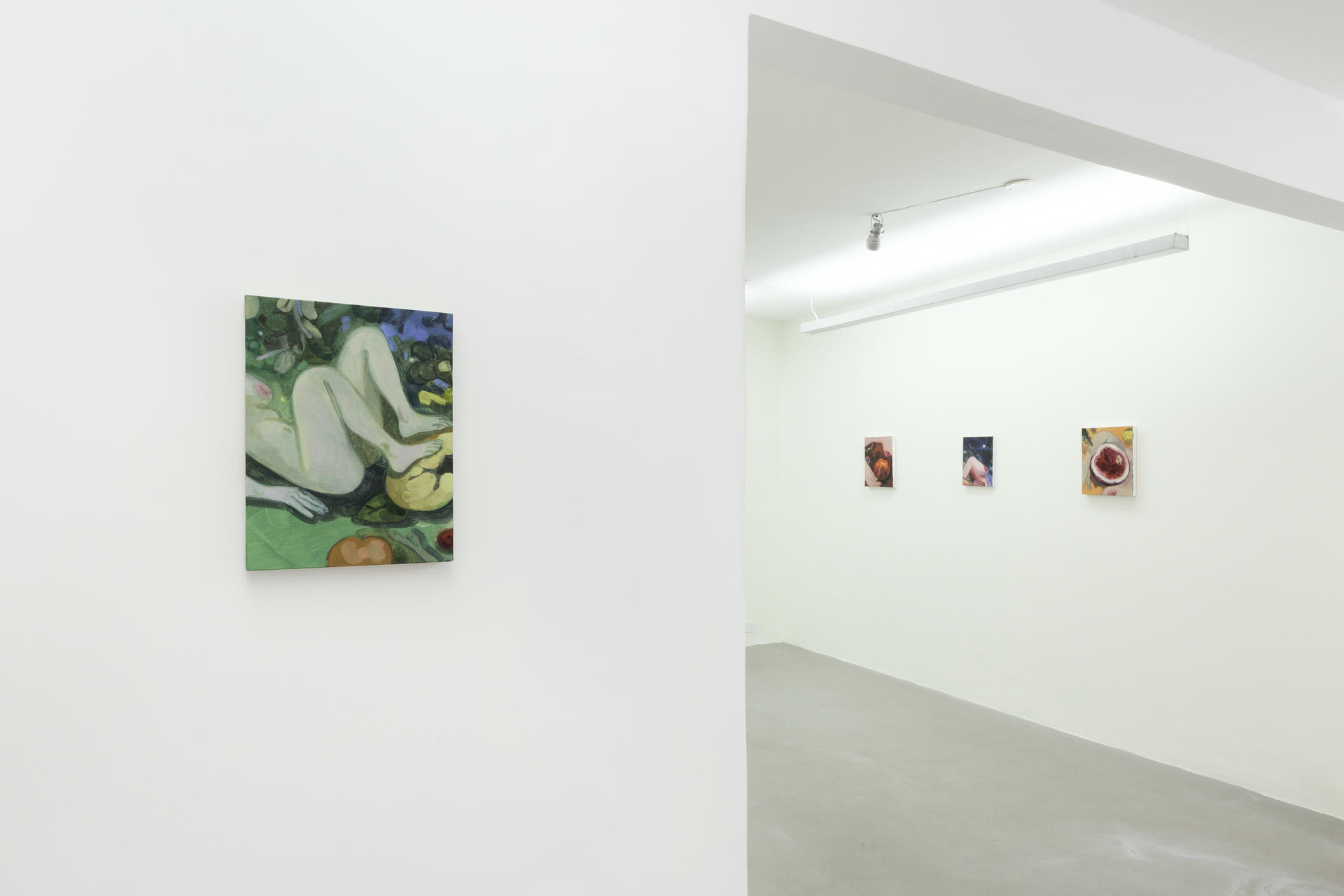
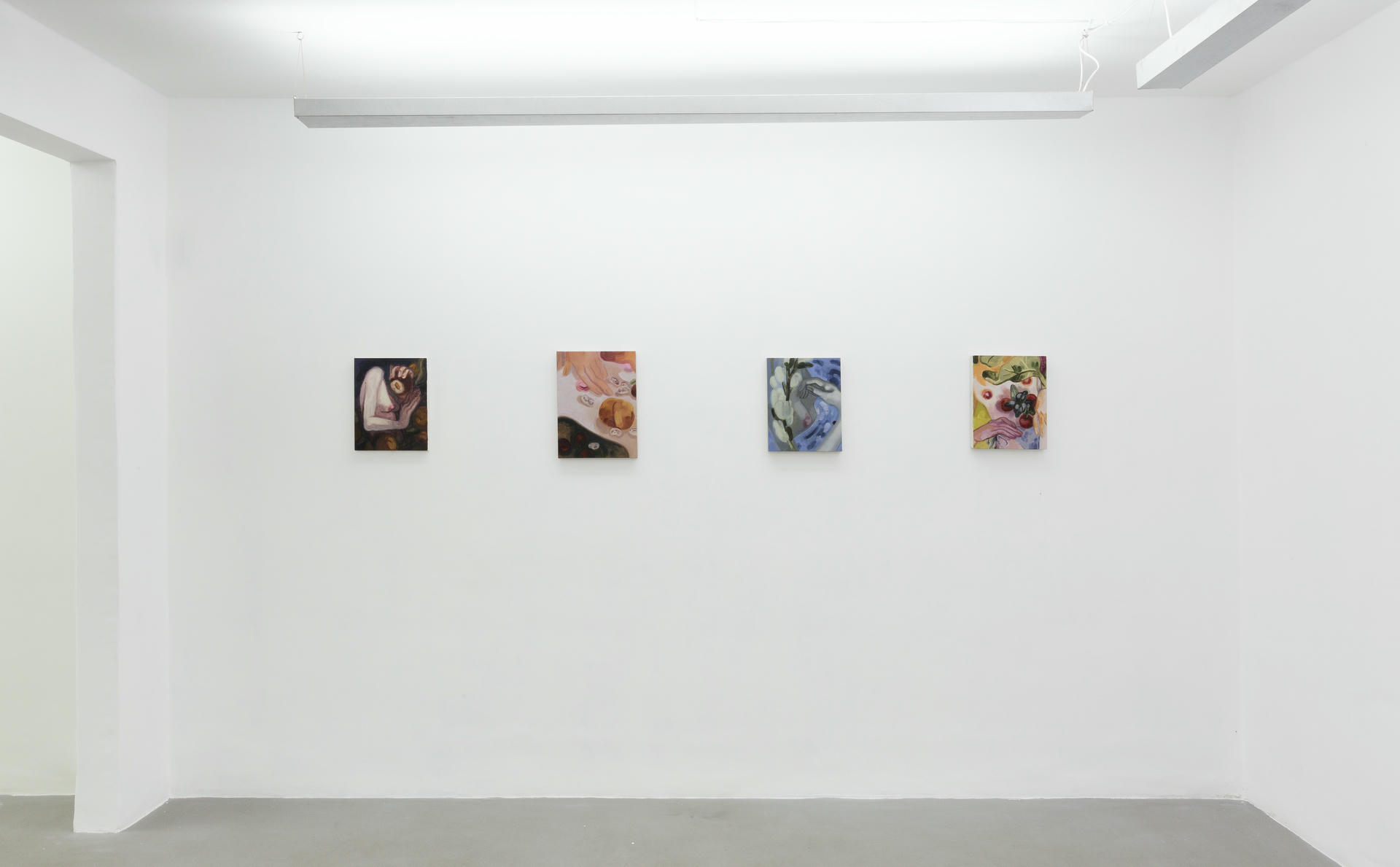
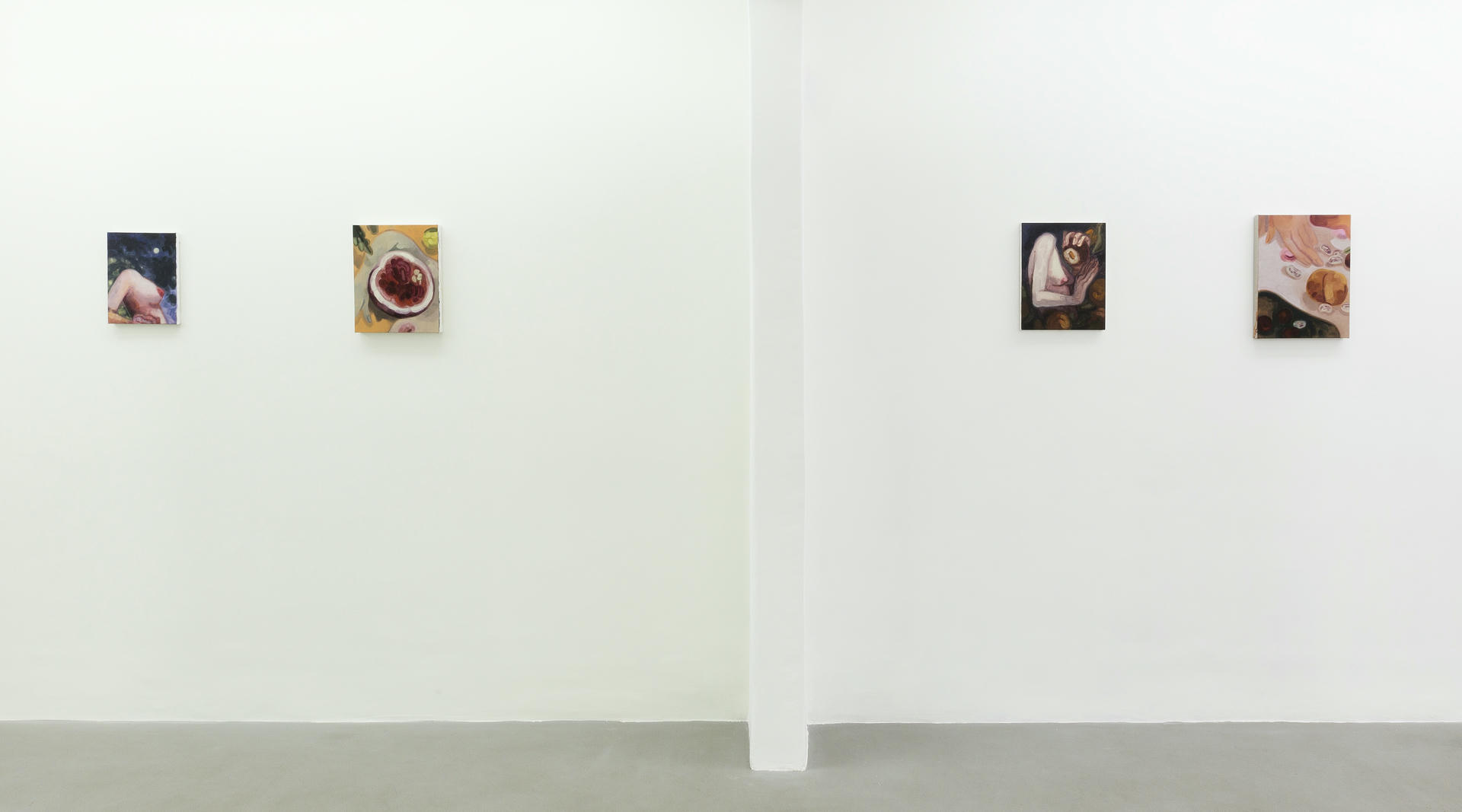
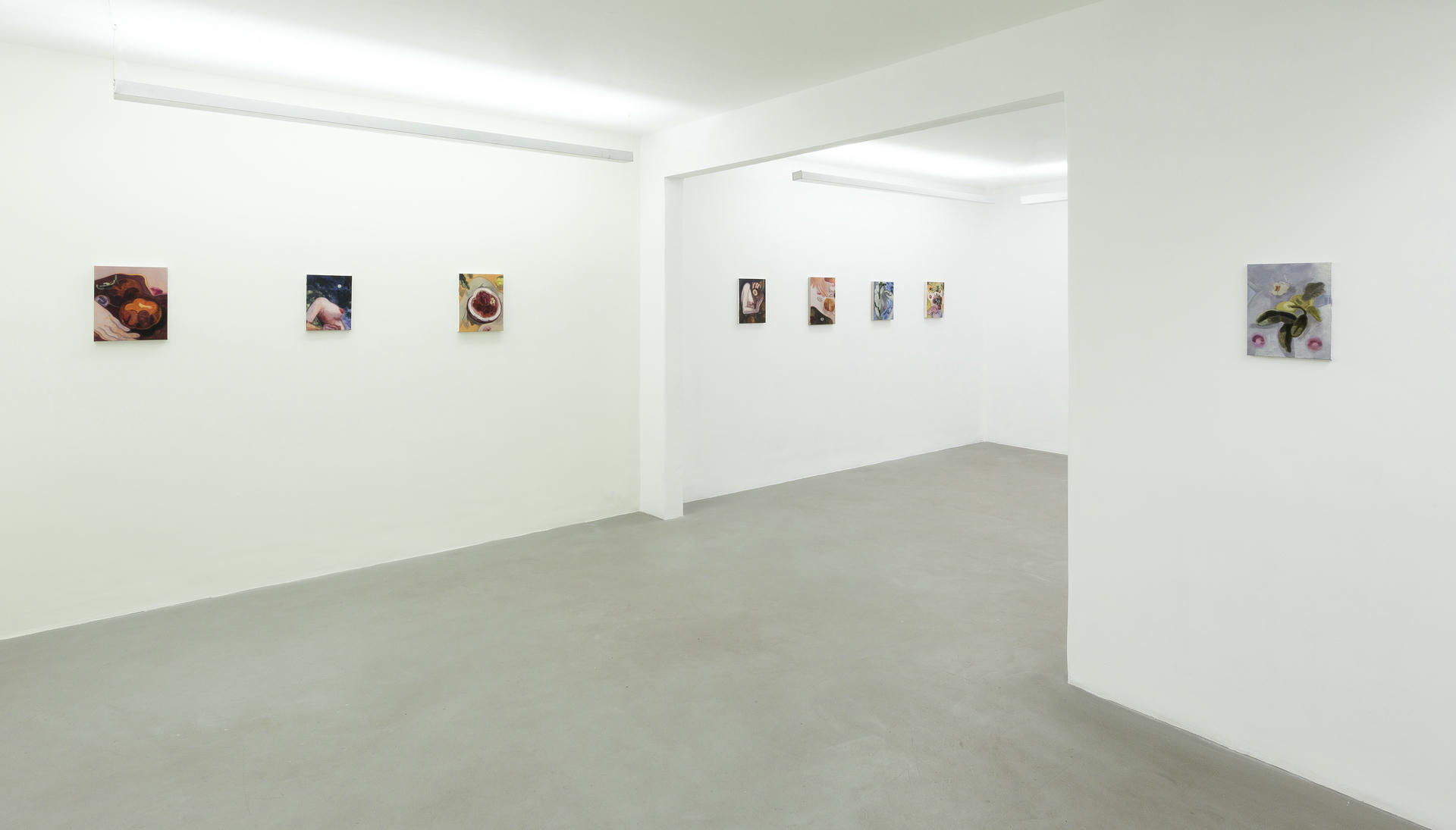
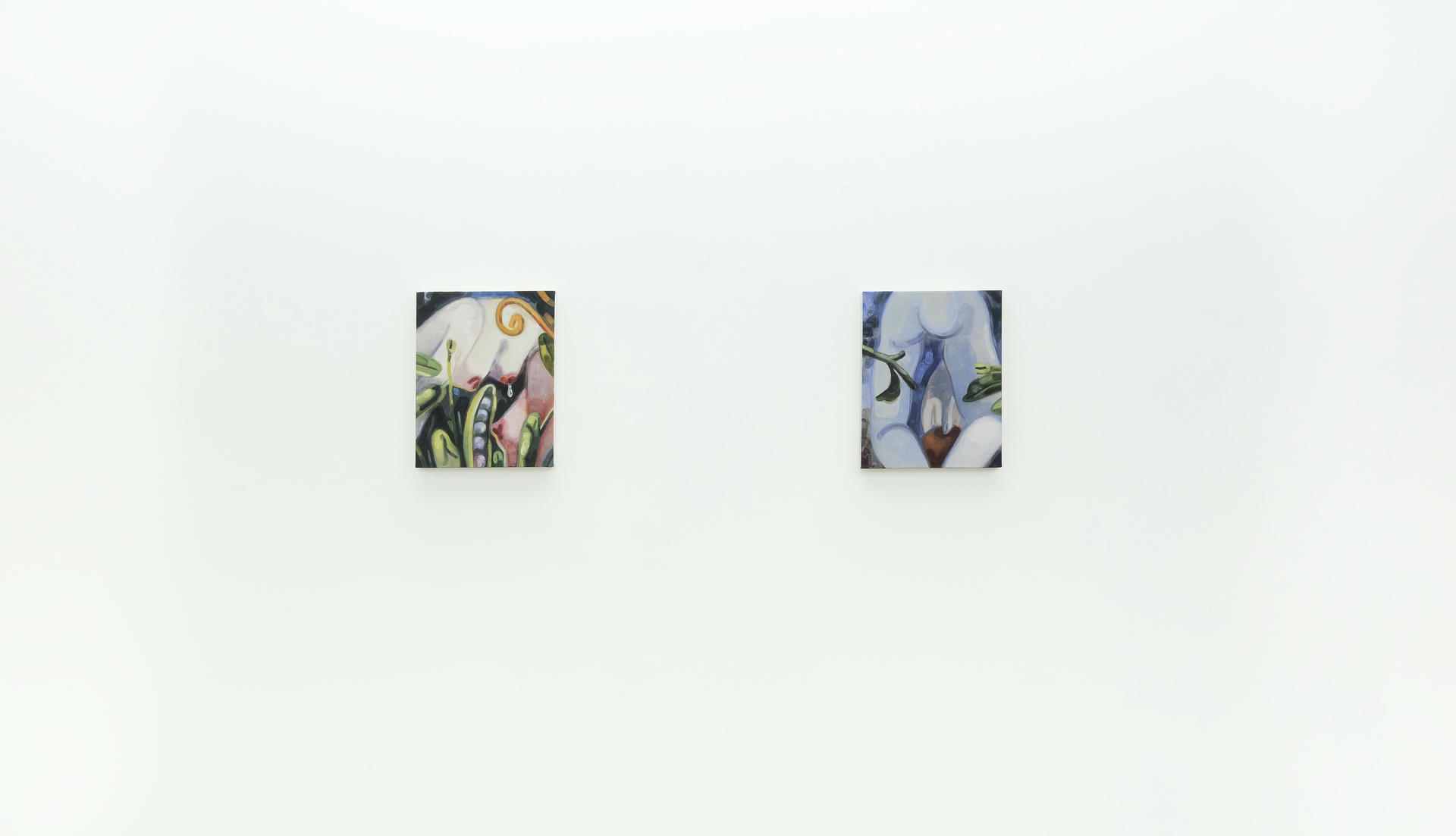
E é verdade que as obras de Stephanie Lucchese habitam uma mesma Natureza. Podemos contemplá-la através de suas imagens, que são cenas de uma biologia crepuscular. Seus frutos insólitos são ingredientes de um interminável banquete em que esta vegetação imaginada celebra a si mesma – profano tornado sagrado sem que haja qualquer profanação.
A Natureza é verossıḿil, possui regras próprias. Se o maior interesse da artista repousa, ainda, sobre a ficção, é porque a ficção serve como porta de entrada para estes lugares. O tempo mı́tico, o prazer da nostalgia, penetrar um ecossistema segundo a lógica que o distingue dentre outros horizontes, e encontrar ali um outro jardim de delıć ias – para conseguir registrar essa paisagem, talvez seja necessário criar também uma religião própria para ela.
A Natureza se comunica, as narrativas emergem de uma mesma fonte – podemos ver seus contornos de relance, nos traços que se prolongam entre uma cena e outra, e que tentamos apreender como um processo contı́nuo de individuação, como se este banquete estivesse ainda em seus estágios puerperais, sem formas fixas ou definidas.
Por isso não vemos rostos. Os corpos, contudo, continuam se expressando – é que a face não está na cabeça. Como é o seu vocabulário? O enquadramento destas figuras não pode se pretender completo. Seus eixos não são absolutos. A inconclusão de suas formas é muito sutil. Se conseguimos discerni-los é porque a luz parece congelá-las – com uma delicada artificialidade, quase teatral. Mas logo assim que essa luz se apagar sobre a tela a Natureza voltará a celebrar a si mesmo, devorando seus próprios frutos.
Histórias de viajantes, catálogos naturalistas, mitologias e linhas do tempo alternativa, todas estas matérias servem de referência para a pesquisa que levou Stephanie ao desenvolvimento deste mesmo grande tema. Nenhum destes frutos existe em nossas enciclopédias terrestres. Suas nervuras e carnaduras, suas polpas e suculências são expressões originais, como combinações alternativas de uma mesma membrana básica e imaginária à qual todos os ramos da evolução remontam – inclusive aqueles que não existem. São visões de silhuetas que, capturadas em soslaio, poderiam ensejar um único e mesmo mosaico – uma religião quase feita unicamente de imagens procura pelos seus devotos já em suas próprias reentrâncias.
Em sua mitologia, em sua doutrina, em favor de uma certa verossimilhança interna, alguns objetos e formas estão banidos: tênis, relógios, celulares, eis alguns exemplos de itens que nunca veremos nestas paisagens. A imanentização do além é um ato de materialização mágica – e não se pode pretender trazer para este mundo aquilo que não é de seu interesse. Tudo aqui caminha para a repetição em uma ordem fora do tempo, e não se pode querer fugir desta autofagia mitológica. EÉ assim que se sacraliza a forma?
A criação de um outro mundo envolve também uma certa fuga – temos de percorrer um outro plano. A potência poética que comunica uma outra vitalidade acaba por abrir, consigo, um outro espaço – é uma fuga para dentro. Ali, na cavidade que se abriu, contemplamos um novo planeta ou apenas uma versão deste em que já estamos? Artistas pintam aquilo que querem ver? EÉ preciso ainda preservar um certo poder de sugestão, ocultar algumas angulaturas de seu conteúdo.
Em poucos movimentos, um Deus desenhou as dimensões que acomodariam toda a nossa experiência. Qual foi o momento do qual se ergueu seu templo? As personagens destas telas, frutos de uma estação eternamente profícua, se exibem umas para as outras como se ignorassem completamente as intenções do demiurgo que esculpiu as suas formas e sua matéria. Daqui, de onde estamos, tentamos discernir uma essência que pede para ser contemplada. Ela não se esconde sob um fundo metafísico. Sua substância é explícita – e mesmo assim é impossível capturá-la. Não há nada além da superfície.
E tudo chegou à forma que tem hoje através de um longo processo de modelagem – neste processo, as coisas se encontram encaixadas umas às outras. Mas quais são os gestos que queremos vê-las encenando? Nada é desconfortável. Cada pose involuntária que aqui se captura tem seu brilho próprio. O corpo é uma ação que se desenha – e vai de onde para onde? As cores ajudam a delimitar qual é a verdadeira extensão de cada reino. A morte se oculta, e é sempre com alguma elegância que ela assim o faz.
Existe um jogo de insinuação mútua entre o natural e o artificial.
Em qual cavidade do corpo a alma continua a se esconder?
Mãos gentis desenharam em uma tela aquilo que a mente concebeu: a transferência de vontade implícita ao ato acaba animando o inanimado.
No progresso da técnica, a maior celebração de nossa competência enquanto artífices é a criação de algo que nos distraia.
A imaginação é um prolongamento deste mundo na direção de um outro.
Há uma cor invisıv́ el no interior de todas as outras cores.
O sabor do sabor, o cheiro do cheiro, o som do som; a realidade se apoia num ato contı́nuo de percepção, mas há algo, naquele que percebe, que não pode ser frontalmente percebido.
Que tipo de consciência parece querer brotar do fundo deste movimento?
O erotismo é uma virtude das formas.
O que é efêmero tende à expansão antes que seja subtraído pelo tempo.
No vazio branco de uma tela à sua espera, cada gesto é um ato criativo contrário à entropia; as chances diminuem conforme cada traço se executa.
O corpo caminha na direção de um fruto e o paladar é uma invenção do apetite.
Qual semente é capaz de fecundar um corpo imaginário?
A certeza de uma artista: a mente está sempre prenhe de algo maior do que a si mesma. Ela serve de passagem a algo que continuamente se coloca no mundo, indivı́duo após indivı́duo, impelindo a criação sempre para frente, na direção de novas paragens.
A Natureza veste fantasias adequadas ao seu próprio tempo. Em nenhum momento ela está realmente morta. Energia é atualização de estado.
As suas personagens se comportam como se, do outro lado da tela, houvesse um espelho – ali onde o poente não reconhece rosto algum, e só se pode chegar seguindo as orientações de estranhos tecidos invaginados.
Se o norte não existe, há um sul ainda mais ao sul em que vegetações semi-eróticas se espraiam sobre um cálido chão que já não se pode ver.
Cada fruto enseja uma nova estação: a infância desaparece entre o verão e a primavera.
A eternidade é o movimento congelado; o instante é a promessa do seu desdobramento.
Em qual espécie o charme e a elegância se insinuaram primeiro? Por algum motivo, a afetação do estilo se prolongou na espécie humana, mas já parecia querer germinar no mundo mineral.
Medite sobre o seguinte tema: um tipo de sabor que não existe, uma cor que não existe ou um som que não existe.
O corolário desta natureza reinventada é o seguinte: o centro de sua cadeia alimentar está disperso, como um cıŕ culo que não se fecha.
O sacerdócio silencioso das folhas; a misteriosa lealdade da sombra.
O desejo é o verdadeiro artesão da matéria.
A fugidia maturação de um alimento; à luz do tempo geológico, a festa dos sentidos é um banquete anônimo e os convidados têm, entre os seus dentes, a memória dos seus antigos reis.
Deixar-se contemplar – de onde vem uma permissão dessas?
A relação entre o embelezamento e o desperdício – a tendência da Natureza é conservar os seus experimentos bem-sucedidos.
O que se oculta e o que pede para ser visto – qual linguagem opera entre as fronteiras destes reinos?
A figuração de um processo digestivo que tende ao infinito; a mistura entre a matéria-prima nutriente e os resíduos do ofício.
Stephanie Lucchese
Petisco
October 07th, 2023
We know Nature both for its strengths and for its fruits. And if we ever want to imagine a different Nature, perhaps we should start by thinking through these two ideas.
It’s true that Stephanie Lucchese’s works inhabit an all encompassing Nature. We can contemplate it through her images, which are scenes of crepuscular biology. Its unusual fruits are the ingredients of an endless banquet in which this imagined vegetation celebrates itself – profane made sacred without any profanation.
Nature is credible, it has its own rules. If the artist’s greatest interest still lies in fiction, it’s because fiction serves as a gateway to more real places. Mythical time, the pleasure of nostalgia, entering an ecosystem according to the logic that distinguishes it from other horizons, and finding there another garden of delights – in order to record this landscape, it may need to create a religion of its own.
Nature communicates, as narratives emerge from one same source – we can see their outlines at a glance, in traces that extend from one scene to the next, and which we try to grasp as an ongoing process of individuation, as if this banquet was still in its puerperal stages, without an established form.
That’s why we don’t see faces. The bodies, however, continue to express themselves – it’s just that the faces are not on the heads. What is their vocabulary? The framing of these figures cannot be called complete. Their axles aren’t absolute. The inconclusiveness of their forms is subtle. We are able to discern them when they are frozen by the light – with a delicate almost theatrical artificiality. When the light is turned off, Nature goes back to celebrating itself, devouring its own fruits.
Travelers’ stories, naturalist catalogs, mythologies and alternative timelines all serve as reference for the research and development of the artist’s themes. None of these fruits exist in our terrestrial encyclopedias. Their nodes and flesh, their pulp and juiciness are original expressions, like alternative combinations of one primary imagined membrane to which all the branches of evolution go back – including those that don’t exist. They are visions of silhouettes that, if captured by sight, could give rise to a single mosaic – a religion made up almost entirely of images sought out by its devotees already in their own indentations.
In their mythology and doctrine, in defense of an internal verisimilitude, certain objects and forms are banned: sneakers, watches and cell phones are some examples of items that will never be seen in her landscapes. The immanentization of the otherworld is an act of magical materialization – and one must not bring into this world that of which is not of one’s interest. Everything here is moving towards repetition in an order outside of time, and a mythological autophagy is inescapable. Is this how one sacralizes form?
The creation of another world also involves a certain escape – one must traverse another plane. The poetic power that communicates another vitality ends up opening up another space – an escape inwards. There, in the cavity that opened up, are we contemplating a new planet or just a version of the one we’re already on? Do artists paint what they want to see? It is still necessary to preserve a certain power of suggestion, to hide certain angles of its content.
In a couple of swings, a god designed the dimensions that would accommodate our entire experience. What was the moment from which his temple was built? The characters on these canvases – the fruit of an ever fruitful season – flaunt themselves to one another as if completely unaware of the intentions of the demiurge who sculpted their forms and their matter. From where we are, we try to discern an essence that asks to be contemplated. It doesn’t hide under a metaphysical background. Its substance is explicit – and yet impossible to capture. There is nothing beyond the surface.
Everything arrived to its current form through a long process of shapening in which each thing is fitted together. But what are the gestures we want to see them enact? Nothing is uncomfortable. Each involuntary pose captured here has its own brilliance. The body is an action traced – and from where to where? Colors help delineate the true extent of each realm. Death hides itself, and it always does so with a certain elegance.
There is a mutual insinuation game between the natural and artificial.
In which cavity of the body does the soul continues to hide?
Gentle hands drew on a canvas what the mind conceived: the transfer of will implicit in the act ends up animating the inanimate.
In the progress of technique, the greatest celebration of our competence as craftsmen is the creation of something that distracts us.
Imagination is an extension of this world into another.
There is an invisible color within all the others.
The taste of taste, the smell of smell, the sound of sound; reality is based on an ongoing act of perception, but there is something in the perceiver that cannot be understood head-on.
What kind of awareness seems to try to emerge from the depths of this movement?
Eroticism is a virtue of forms.
What is ephemeral tends to expand before it’s subtracted by time.
In the white void of a canvas that awaits you, each gesture is a creative act against entropy; the odds diminish as each stroke is executed.
The body walks towards a fruit and the sense of taste in an invention of the appetite.
What seed is capable of fertilizing an imaginary body?
An artist’s certainty: the mind is always heavy with something greater than itself. It serves as a passageway for something that continually places itself in the world, individual after individual, pushing creation ever forward, towards new places.
Nature puts on a costume appropriate to its own time. At no instant is it really dead. Energy is an update of condition.
Its characters behave as if, on the other side of the screen, there was a mirror – there where the setting sun recognizes no face, and you can only reach it by following the directions of strange invaginated fabrics.
If there is no north, there is an even further south where semi-erotic vegetation spreads over a warm ground that can no longer be seen.
Each fruit gives rise to a new season: childhood disappears between Summer and Spring.
Eternity is the frozen movement; the instant is the promise of its unfolding.
In which species did charm and elegance first insinuate themselves? For some reason, the affectation of style lingered in the human species, but already seemed to want to germinate in the mineral world.
Meditate about the following theme: a type of taste that doesn’t exist, a color that doesn’t exist, or a sound that doesn’t exist.
The corollary of this reinvented nature is this: the center of its food chain is dispersed, like a circle that won’t close.
The silent priesthood of the leaves; the mysterious loyalty of the shadow.
Desire is the true artisan of matter.
The fleeting ripeness of a food; in the light of geological time, the feast of the senses is an anonymous banquet and the guests have the memory of their former kings between their teeth.
Letting yourself be contemplated – where does such permission come from?
The relationship between embellishment and waste – nature’s tendency is to preserve its successful experiments.
What is hidden and what asks to be seen – what language operates between the borders of these realms?
The figuration of a digestive process that tends towards the infinite, and the mixture between the nourishing raw material and the residues of the craft.