Mulheres dopadas e a pintora esquecida
Ricardo Sardenberg
PINKY WAINER PROPÕE UM MERGULHO ÍNTIMO NA VIVÊNCIA ANGUSTIANTE DO CONFINAMENTO EM NOVA EXPOSIÇÃO
Centrada em figuras femininas que enfrentam um ambiente opressivo e amedrontador, “Mulheres Dopadas e a Pintora Esquecida” será inaugurada na galeria Lanterna Mágica em 26 de março
Depois de anos sem expor, Pinky Wainer volta à cena com um conjunto potente de trabalhos desenvolvidos durante a pandemia. São duas séries – “Mulheres Dopadas” e “A Pintora Esquecida” – que reverberam aspectos centrais da produção da artista e serão mostradas a partir de 26 de março na “Lanterna Mágica”, espaço dedicado à experimentação recém-inaugurado em Higienópolis. Além da centralidade da figura feminina e de uma profunda necessidade de experimentar, ampliar limites técnicos e compositivos, a artista propõe um mergulho íntimo na vivência angustiante do confinamento. Diante de um ambiente opressivo e amedrontador, ela nos propõe obras com uma carga dramática intensificada. “É meu trabalho mais íntimo, mais particular”, explica.
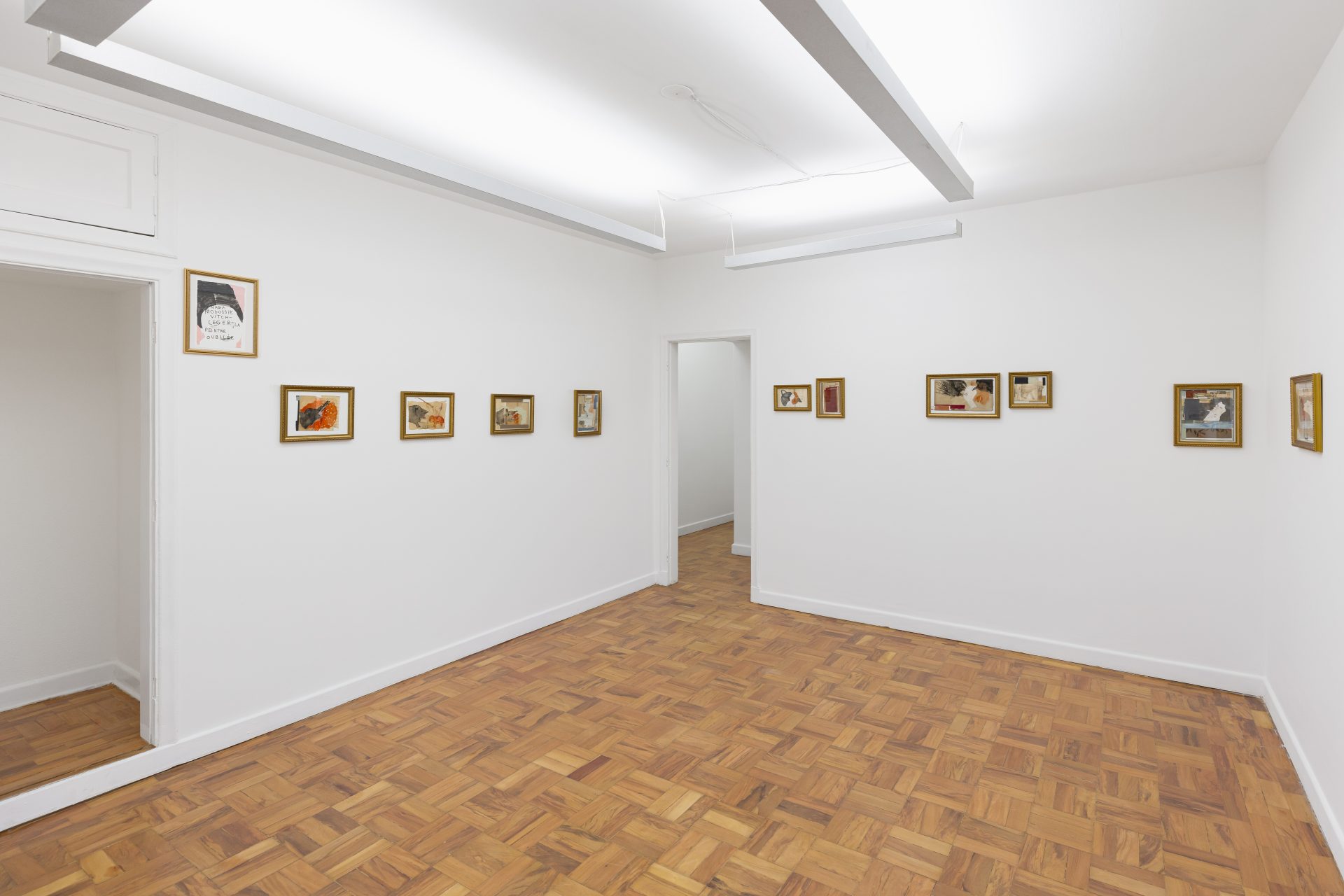
Na falta de um termo preciso para definir essas obras, Pinky segue chamando-as de aquarelas, apesar das muitas camadas de experimentação que contêm. Rasgos, colagens, combinação de materiais e texturas, experimentação de pigmentos alternativos como o café (usado também por Rodin), apropriação de trechos e pedaços de livros antigos se interconectam em combinações estranhas, que muitas vezes parecem saídas de um perverso conto de fadas, no qual mulheres misteriosas interagem, em forte tensão quase erótica, com animais um tanto ameaçadores, como corvos, lobos ou cisnes. Algumas vezes a mulher desaparece, em outras ela retorna solitária, protegida ou censurada por burcas, máscaras ou estranhos capuzes, mas olhos marcantes, que parecem conter a tensão expressiva da obra.
Já em suas últimas exposições, como as que realizou em 1997 na Galeria São Paulo, ou nos primeiros anos do século XXI na Galeria Millan em São Paulo e na GB Galeria, no Rio, a figura da mulher sempre foi o tema. No entanto, apesar de ser uma feminista aguerrida – “o máximo que posso nesse mundo louco” – e reconhecer que é óbvia a conexão que tem com as mulheres que pinta, para ela a imagem feminina é, antes de tudo, uma base para a pintura, uma figura a partir da qual nascem e se estruturam as composições. Seu interesse não está no desenho, mas sim nas múltiplas relações entre os elementos, as cores e os materiais presentes na obra. “Pintura abstrata e música clássica, só pra os gênios”, ironiza.
Autodidata, Pinky inicia sua carreira já explorando as potencialidades da aquarela, material que ganhou do pai aos 24 anos. A primeira exposição foi ainda nos anos 1980, na Galeria Rastro, a convite de Aparício Basílio, que se encantou com seu trabalho. “Peguei aquela oportunidade com os dentes”, conta. Multifacetada, se dividiu entre a experimentação artística, as artes aplicadas (realizando diversos projetos gráficos como ilustrações e capas de livro) e o ensino, que nos últimos anos se tornaram sua principal atividade. Gosta de enfatizar que não dá aula de técnica, mas sim de processo criativo. Afinal, como Pinky diz, aprendeu o que sabe na prática diária, na observação e muito em conversas com os balconistas das lojas de materiais artísticos. A artista afirma que não há erro em aquarela e cada mancha ou desvio pode dar margem a uma nova trama de relações. “Gosto muito dos defeitos, das coisas que você não controla”, afirma. A ausência, por quase duas décadas, da cena expositiva trouxe, segundo ela, algumas vantagens. “Não ser muito procurada te dá liberdade, você pode ousar, dizer não”, conta.
Uma das regras que criou para si é a organização da produção por séries. Foi uma delas, a das “Mulheres Armadas”, que foi publicando no Instagram, que atraiu o marchand Ricardo Sardenberg à sua casa para ver seus trabalhos recentes, visita que acabou gerando a atual exposição. Ao invés das lutadoras, prontas para o combate, a escolha da dupla recaiu sobre outros dois núcleos de composições recentes, mais intimistas. O primeiro, “Mulheres Dopadas” (ou “Mulheres Burguesas”) trabalha com uma certa zona de instabilidade, de tensão em que se entrecruzam figuras animalescas, frases e palavras recortadas de livros com forte carga simbólica, como uma biografia de Bianca Sforza, da família nobre que governou Milão em pleno renascimento e para quem Da Vinci trabalhou; “A Peste”, de Albert Camus; ou a biografia de Leon Trotsky, com todas as suas referências políticas de revolução, exílio e outros termos engajados e carregados de radicalidade. “A política me interessa muito, faz parte de nós”, sublinha.
A segunda e mais recente série produzida por Pinky, “Pintora Esquecida”, traz os mesmos processos de colagem e experimentação. Porém deriva de uma reportagem que caiu em suas mãos sobre Nádia Léger, pintora talentosa que ficou a sombra do marido Fernand Léger e que só em 2021 estava sendo resgatada para o público com uma exposição. Nádia era russa, militante comunista, foi aluna de Malevich e durante muito tempo trabalhou como assistente daquele que seria seu futuro marido. Ironicamente retorna ainda sob a sombra dele, já que a notícia do Le Parisien não menciona uma única vez seu sobrenome de solteira: Khodossievitch.
A figura de Nádia encantou a artista, que se identificou com essa figura de pintora esquecida, desaparecida, vendo uma ironia nessa aproximação, incorporando esses termos para enfatizar sua longa ausência do circuito expositivo. Apropriou-se então de um retrato antigo de Nádia, em que aparece “velha, gorda e bonita” e passou a retrabalhar essa imagem de base de diferentes maneiras, recobrindo seu rosto com a frase “Femme Oubliée” ou incorporando a intensa moldura de “A Bela Lindonéia”, retrato icônico pintado por Rubens Gerchman em 1966 e citada por Caetano Veloso e Gilberto Gil no verso “Na frente do espelho/Sem que ninguém a visse/Miss/Linda, feia/Lindonéia desaparecida”.
Produzir estes e outros trabalhos, de forma quase obsessiva, em que um puxa o outro, teria, segundo Pinky, uma estreita relação com os mais de dois anos de reclusão que vivemos e com o sentimento de asfixia provocado pelo momento político. Talvez como forma de processar e lidar com as interdições e expandir assim, simbolicamente, os limites estreitos da existência cotidiana. “Foi um processo não catártico, porém libertador”, sintetiza.
PINKY WAINER PROPOSES AN INTIMATE DIVE INTO THE ANGUSTING EXPERIENCE FROM LOCKDOWN IN NEW EXHIBITION
Centered on female figures facing an oppressive and frightening environment, “Mulheres Dopadas e a Pintora Esquecida” will open at Lanterna Mágica on March 26.
After years without exhibiting, Pinky Wainer returns to the scene with a powerful set of works developed during the pandemic. There are two series – “Mulheres Dopadas” and “A Pintora Esquecida” – that reverberate central aspects of the artist’s production and will be shown from March 26 at “Lanterna Mágica”, a space dedicated to experimentation recently opened in Higienópolis. In addition to the centrality of the female figure and a deep need to experiment, expand technical and compositional limits, the artist proposes an intimate dive into the anguishing experience of confinement. Faced with an oppressive and frightening environment, she proposes works with an intensified dramatic charge. “It’s my most intimate, most private work,” she explains.
Lacking a precise term to define these works, Pinky continues to call them watercolors, despite the many layers of experimentation they contain. Rips, collages, combination of materials and textures, experimentation with alternative pigments such as coffee (also used by Rodin), appropriation of excerpts and pieces of old books interconnect in strange combinations, which often seem to come out of a perverse fairy tale, in which mysterious women interact, in strong, almost erotic tension, with somewhat threatening animals, such as crows, wolves or swans. Sometimes the woman disappears, at other times she returns alone, protected or censored by burqas, masks or strange hoods, but striking eyes, which seem to contain the expressive tension of the work.
In her latest exhibitions, such as those she held in 1997 at Galeria São Paulo, or in early years of the 21st century at Galeria Millan in São Paulo and at GB Galeria in Rio, the figure of the woman has always been the theme. However, despite being a fierce feminist – “as much as I can in this crazy world” – and recognizing that the connection she has with the women she paints is obvious, for her the female image is, above all, a basis for the painting, a figure from which compositions are born and structured. Her interest is not in the drawing, but in the multiple relationships between the elements, colors and materials present in the work.
“Abstract painting and classical music, only for geniuses”, she quips.
Self-taught, Pinky began her career already exploring the potential of watercolor, material she got from her father at the age of 24. The first exhibition was in the 1980s, at Galeria Rastro, invited by Aparício Basílio, who was enchanted by her work. “I took that opportunity with my teeths,” she says. Multifaceted, she was divided between artistic experimentation, applied arts (carrying out various graphic projects such as illustrations and book covers) and teaching, which in recent years have become her main activity. She likes to emphasize that she doesn’t teach technique, but the creative process. After all, as Pinky says, she’s learned what she knows from daily practice, observation, and a lot from talking to clerks at art supply stores. The artist says that there is no mistake in watercolor and each stain or deviation can give rise to a new web of relationships. “I really like the flaws, the things you don’t control,” she says. The absence, for almost two decades, of the exhibition scene brought, according to her, some advantages. “Not being in high demand gives you freedom, you can dare to say no,” she says.
One of the rules she created for herself is to organize the production by series. It was one of them, “Mulheres Armadas”, which she published on Instagram, that attracted the art dealer Ricardo Sardenberg to her house to see her recent works, a visit that ended up generating the current exhibition. Instead of the female fighters, ready for combat, the duo’s choice fell on two other cores of recent, more intimate compositions. The first, “Mulheres Dopadas” (or “Mulheres Burguesas”) works with a certain zone of instability, of tension in which animal-like figures, phrases, and words taken from books with a strong symbolic charge, such as a biography of Bianca Sforza, from the noble family that ruled Milan during the Renaissance and for whom Da Vinci worked, intersect; “The Plague,” by Albert Camus; or the biography of Leon Trotsky, with all his political references to revolution, exile, and other engaged and radical-laden terms. “Politics interests me a lot, it’s part of us,” she stresses.
The second and most recent series produced by Pinky, “Pintora Esquecida”, brings the same processes of collage and experimentation. However it derives from a report that fell into her hands about Nádia Léger, a talented painter who remained in the shadow of her husband Fernand Léger and who only in 2021 was being rescued for the public with an exhibition. Nadia was Russian, a communist militant, was a pupil of Malevich, and for a long time worked as an assistant to the one who would be her future husband. Ironically, she returns still under his shadow, since the Le Parisien notice does not mention her maiden name: Khodossievitch.
Nádia’s figure enchanted the artist, who identified herself with this figure of a forgotten, disappeared painter, seeing an irony in this approach, incorporating these terms to emphasize her long absence from the exhibition circuit. She then appropriated an old portrait of Nádia, in which she appears “old, fat, and beautiful” and began to rework this basic image in different ways, covering her face with the phrase “Femme Oubliée” or incorporating the intense frame of “A Bela Lindonéia” (The Beautiful Lindonéia), an iconic portrait painted by Rubens Gerchman in 1966 and quoted by Caetano Veloso and Gilberto Gil in the verse “Na frente do espelho/Sem que ninguém a visse/Miss/Linda, feia/Lindonéia desaparecida”.
To produce these and other works, in an almost obsessive way, where one pulls the other, would have, according to Pinky, a close relationship with the more than two years of reclusion we have lived and with the feeling of suffocation caused by the political moment. Perhaps as a way of processing and dealing with the interdictions and thus symbolically expanding the narrow boundaries of everyday existence. “It was a process that was not cathartic, but liberating,” she summarizes.
Imagens / Images




Exposições / Exhibitions
-
pinky wainer 23.11 a 21.12
Pinky Wainer
solo show
exposição individual