Mão Amiga
Mão Amiga
Ricardo Sardenberg
“Durante a crise climática em que o Brasil ocupa um papel central, não apenas como território, mas como pivô simbólico do futuro, a maior parte da população parece atravessar o desastre como se ele fosse apenas uma questão de costumes. Uma festa permanente de extração, onde todos chutam a canela do vizinho para ganhar alguma vantagem, retirando do solo, da água, do ar e da energia tudo aquilo que ainda pode ser convertido em mercado. O lixo é jogado na calçada para que alguém limpe. Os afetos tornam-se transacionais. O cafuné desaparece, perde o erotismo, em meio aos incêndios capazes de dizimar estados inteiros, enquanto alguém sem tesão posta alguma coisa amorfa no Instagram.
Ao mesmo tempo, guerras localizadas do outro lado do planeta produzem efeitos imediatos sobre o tanque de gasolina, sobre o preço da comida, sobre a mesa de jantar de qualquer família brasileira. O petróleo, o feijão, o prato, a colher, a fome. Tudo parece ligado por uma rede contínua de dependência, desgaste e ansiedade. É nesse cenário que José Bento apresenta Mão Amiga.
Organizada por mim e pensada a muitas mãos, com o apoio decisivo do nosso amigo Márcio Botner e sua galeria A Gentil Carioca, a exposição nasce de um triângulo afetivo que já atravessa mais de vinte anos. Juntos, caminhamos pelos andaimes das proposições artísticas tentando entender como a escultura ainda pode funcionar simultaneamente como comentário social, econômico, espiritual e plástico.
Talvez seja justamente essa a condição singular da escultura: a mais física das artes, feita de peso, textura, escala e resistência, mas também aquela capaz de transformar matéria em presença coletiva. A escultura torna visível aquilo que antes estava oculto, e às vezes faz o contrário. Pode ser totem, evento social, transação econômica, lugar do sagrado ou monumento aos mortos. Às vezes tudo isso ao mesmo tempo.
É por meio dela que José Bento se comunica com o mundo, mas também, de maneira íntima, com o seu galerista de mais de vinte anos, A Gentil Carioca, e comigo, curador que hoje também dirige uma galeria. Juntos, e movidos por essa relação de afeto, “chegamos até aqui”, como dizia Tunga ao final da montagem de cada exposição.
“Mão Amiga começou numa conversa telefônica de madrugada, quando eu contava ao Zé sobre a nova casa da galeria Sardenberg. Essa modesta construção da década de 1920 revelou, ao ter o forro removido, um pé-direito altíssimo e um teto sustentado por uma viga monumental de peroba-rosa. Tudo ao redor havia sido lentamente devorado pelos cupins, mas a viga permanecia ali, majestosa e intacta.
Havia algo profundamente simbólico nessa resistência: a luta silenciosa entre os seres vivos e a matéria morta da madeira; entre o tempo biológico e o tempo histórico. Aquela árvore, provavelmente nascida antes mesmo da invasão portuguesa que deu origem ao Brasil, agora sustentava o teto de uma casa na megalópole de São Paulo, em 2026.
Durante a conversa, Zé observou que o encaixe dessa estrutura se chama justamente “mão amiga”, uma técnica construtiva tradicional em que duas peças se unem sem o uso de pregos, sustentando-se mutuamente pelo próprio desenho do encaixe. Naquela casa coexistiam, de maneira quase alegórica, natureza, técnica, vida e resistência. Foi dessa conjunção de forças, e dessa conversa entre amigos antigos, que nasceram as primeiras sementes da exposição. E foi também ali que surgiu a proposta da primeira instalação: Muirapiranga.
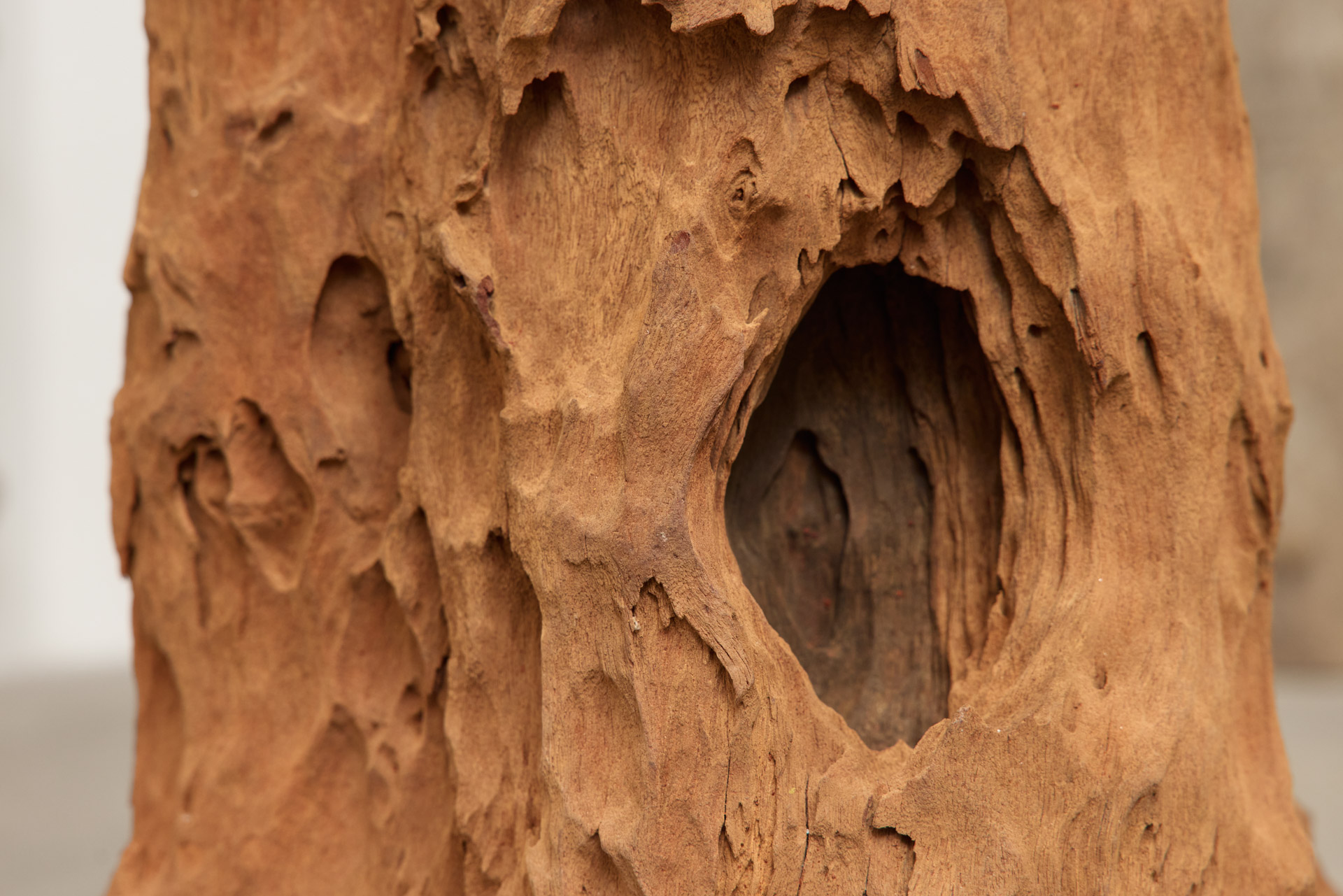
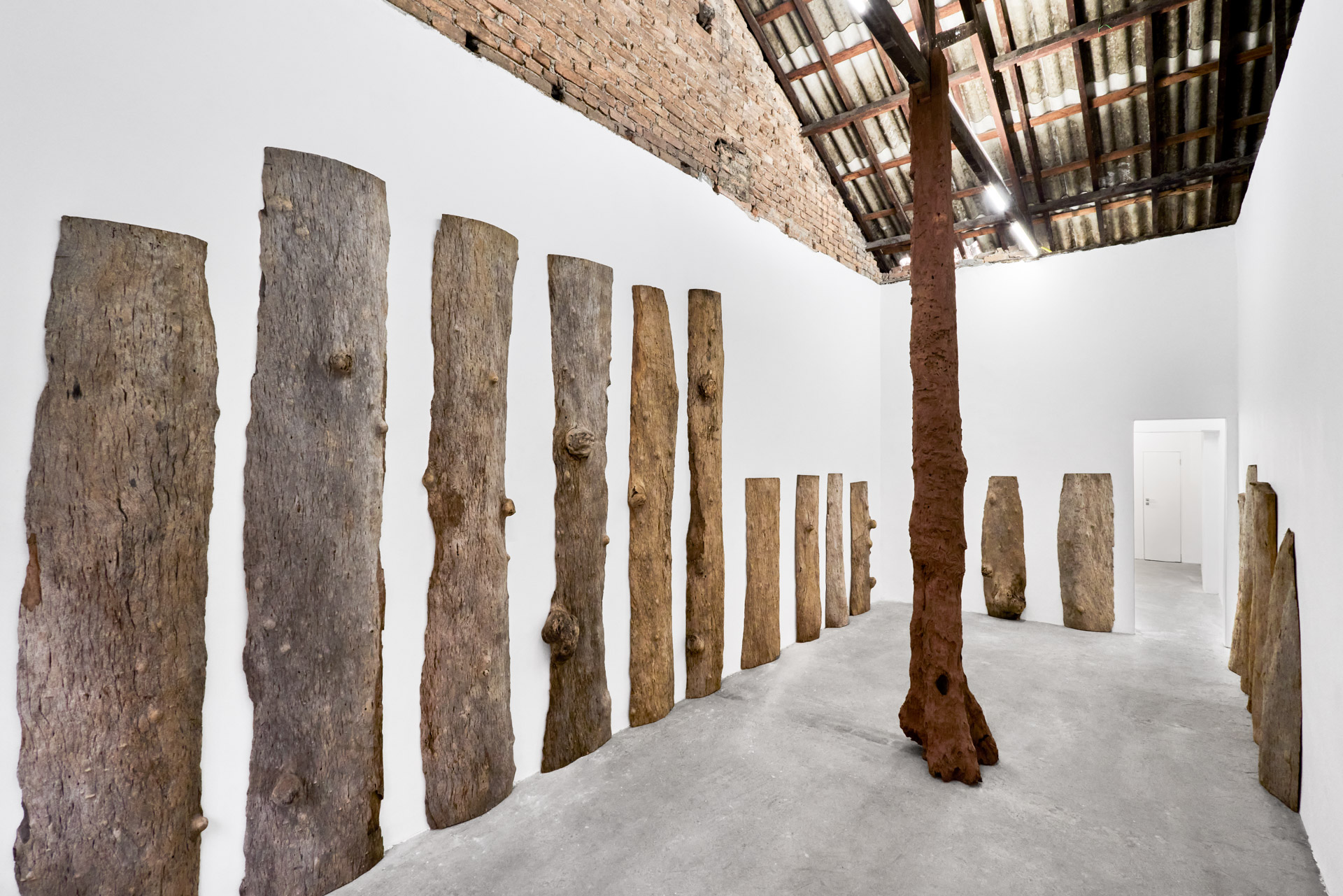
Conhecida também como falso pau-brasil, a muirapiranga é uma madeira avermelhada ligada simbolicamente à história de extração e violência que marcou a formação colonial brasileira. Basicamente a ideia do falso e do tráfico ilegal nascem ali no Brasil. A escultura apresentada por José Bento preserva a superfície original do tronco, mantendo sua presença orgânica e quase bruta. Em algum momento de sua existência, porém, a árvore sofreu cortes precisos que prepararam sua superfície para algum uso construtivo — talvez parte de uma máquina, talvez estrutura de uma casa ou de um moinho.
Na obra, geometria e natureza coexistem em tensão permanente. O tronco permanece árvore e, ao mesmo tempo, torna-se arquitetura; permanece matéria viva e também vestígio histórico. Com essa interferência, a própria casa passa a funcionar simbolicamente como a copa de uma árvore.
Ao redor, na mesma sala, os troncos de Anomalia da Solidão — obra originalmente apresentada na Galeria Milan — reaparecem como uma espécie de floresta imaginária. Num gesto escultórico mínimo, José Bento realiza apenas um corte longitudinal nos troncos e os encosta rente às paredes, transformando a arquitetura numa espécie de pele vegetal. A sala passa então a existir como interior de uma árvore, ou talvez como memória de uma floresta de peroba-rosa.
Esse gesto conecta a prática de José Bento à tradição de Amilcar de Castro, ao procedimento do corte e da dobra, mas também ao minimalismo americano e às investigações de Giuseppe Penone sobre os limites entre corpo, matéria e natureza.
O conjunto da instalação articula história da arte, comentário sobre a colonização e crise ambiental contemporânea. Ao final, permanece uma pergunta inevitável: que futuro é esse?
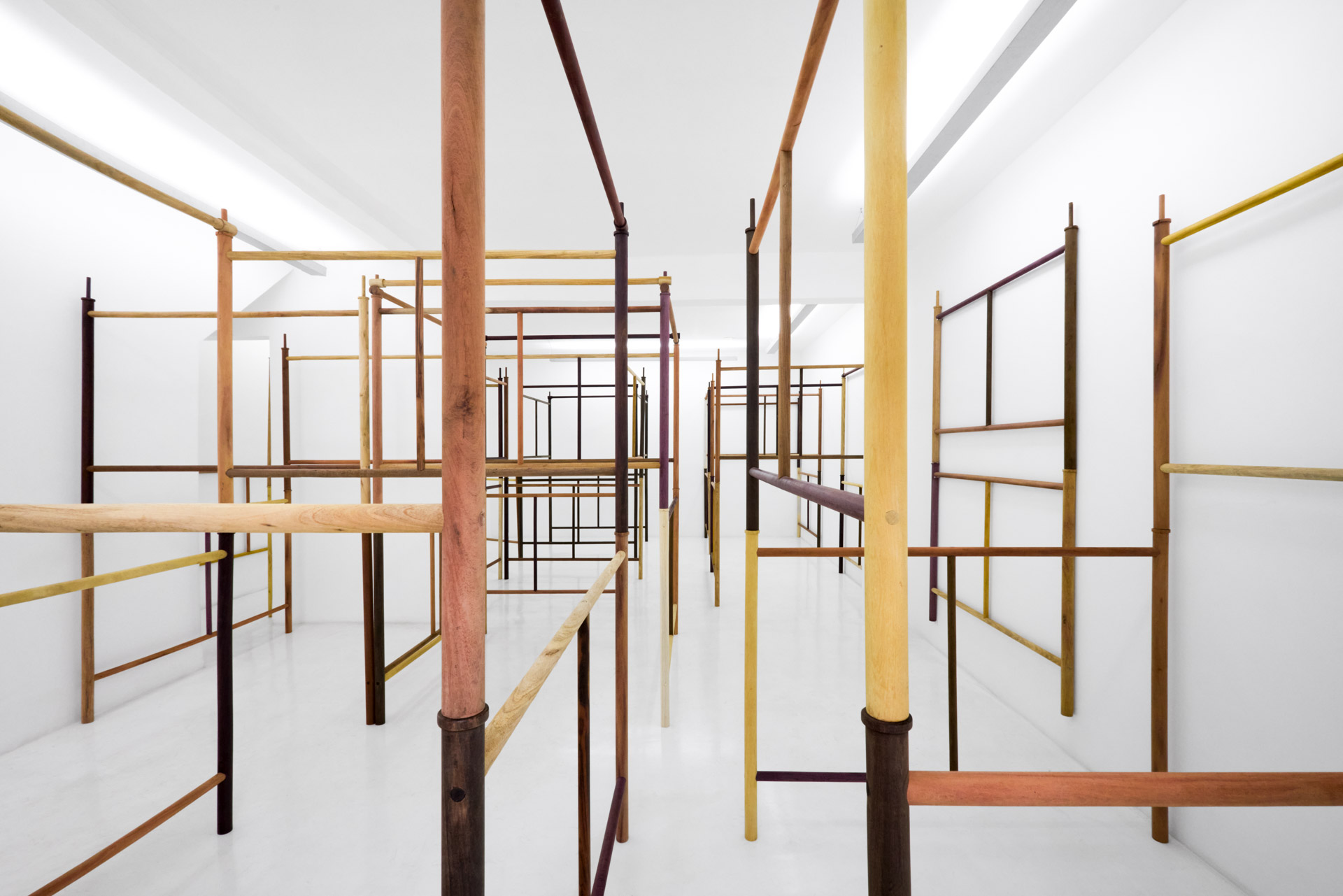
A segunda instalação, Andaime, está ligada às ideias de trabalho, produção e construção das nossas já famosas ruínas. O andaime é o chão provisório do trabalhador, a arquitetura temporária do esforço humano. Como diz o artista: “Ninguém levanta um andaime para tirar uma soneca.”
Cada peça do andaime é feita de uma madeira diferente das florestas brasileiras, criando um emaranhado cartesiano de cores, linhas e retas — como se a floresta fosse progressivamente convertida em racionalidade construtiva. A tradição concreta brasileira aparece deslocada para o campo literal do trabalho e da extração de riqueza: a geometria não mais como utopia modernista, mas como ferramenta funcional capturada pela lógica dos meios de produção.
Pode-se pensar essa floresta de andaimes como uma contraversão tropical dos cubos abertos de Sol LeWitt, da pureza serial de Donald Judd ou ainda como uma inversão orgânica dos materiais industriais de Carl Andre. Em José Bento, no entanto, a madeira nunca perde completamente sua condição de matéria da vida. Mesmo submetida à reta, ao cálculo e à repetição, ela continua carregando consigo a memória da floresta e da violência inscrita na história de sua extração.
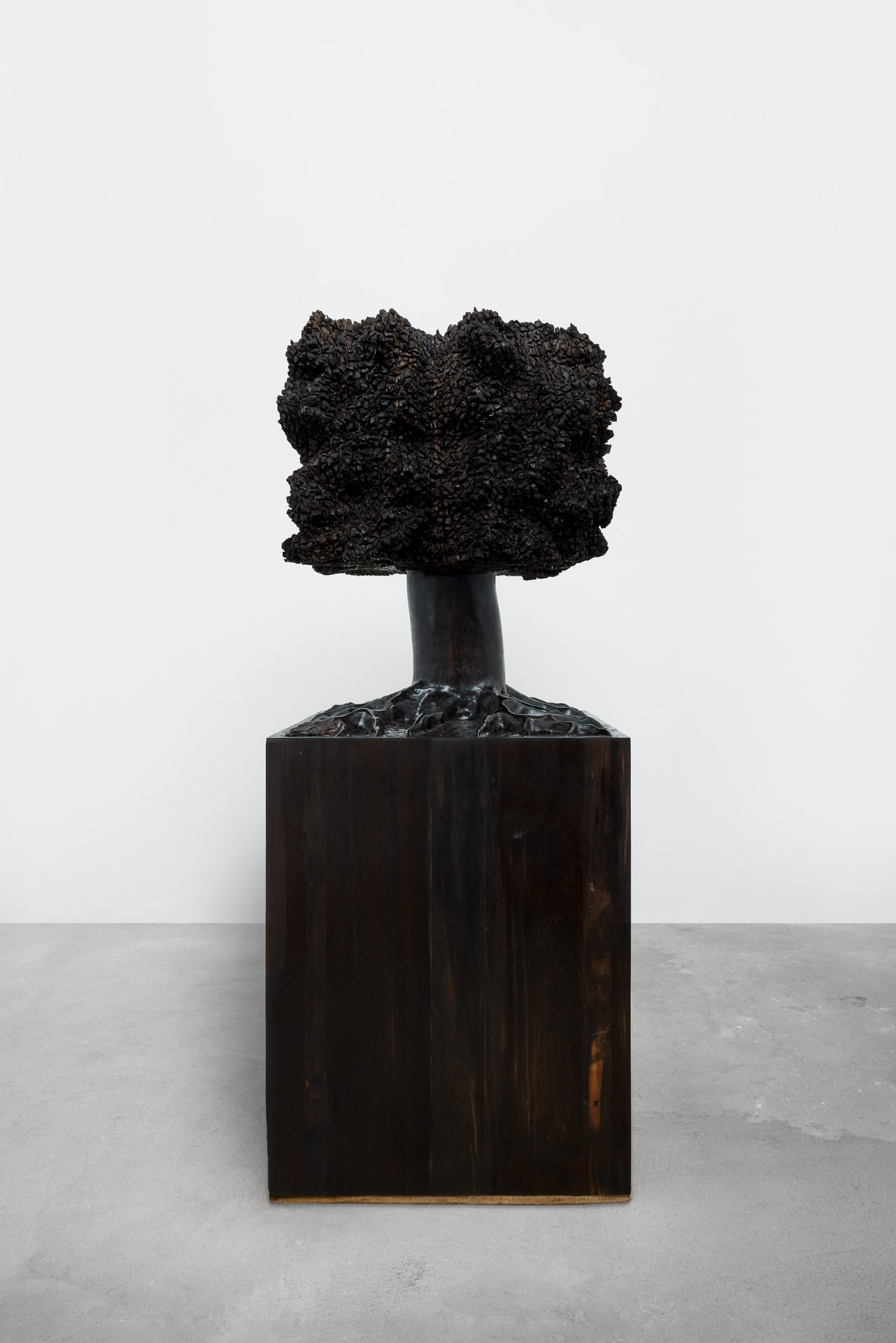
É nesse contexto que surge Barril, obra que mimetiza um barril de petróleo. Em meio às crises energética e alimentar que atravessam o presente, o barril de José Bento emerge quase como um fóssil conceitual: uma forma perfeita e silenciosa nascida da própria floresta milenar que, soterrada ao longo do tempo geológico, tornou-se a principal fonte de energia do capitalismo.
Feito de braúna maciça, o trabalho possui uma tensão singular entre peso histórico e síntese formal. Sua forma austera e minimal contrasta com a dramaticidade barroca de Bernini, artista frequentemente citado por José Bento durante os meses em que torneava o tronco até chegar ao Barril. Se no escultor barroco encontramos movimento e teatralidade, aqui tudo parece reduzido à forma mínima de uma unidade abstrata de valor. O barril de petróleo hoje existe menos como objeto físico do que como abstração econômica capaz de organizar guerras, mercados e futuros.
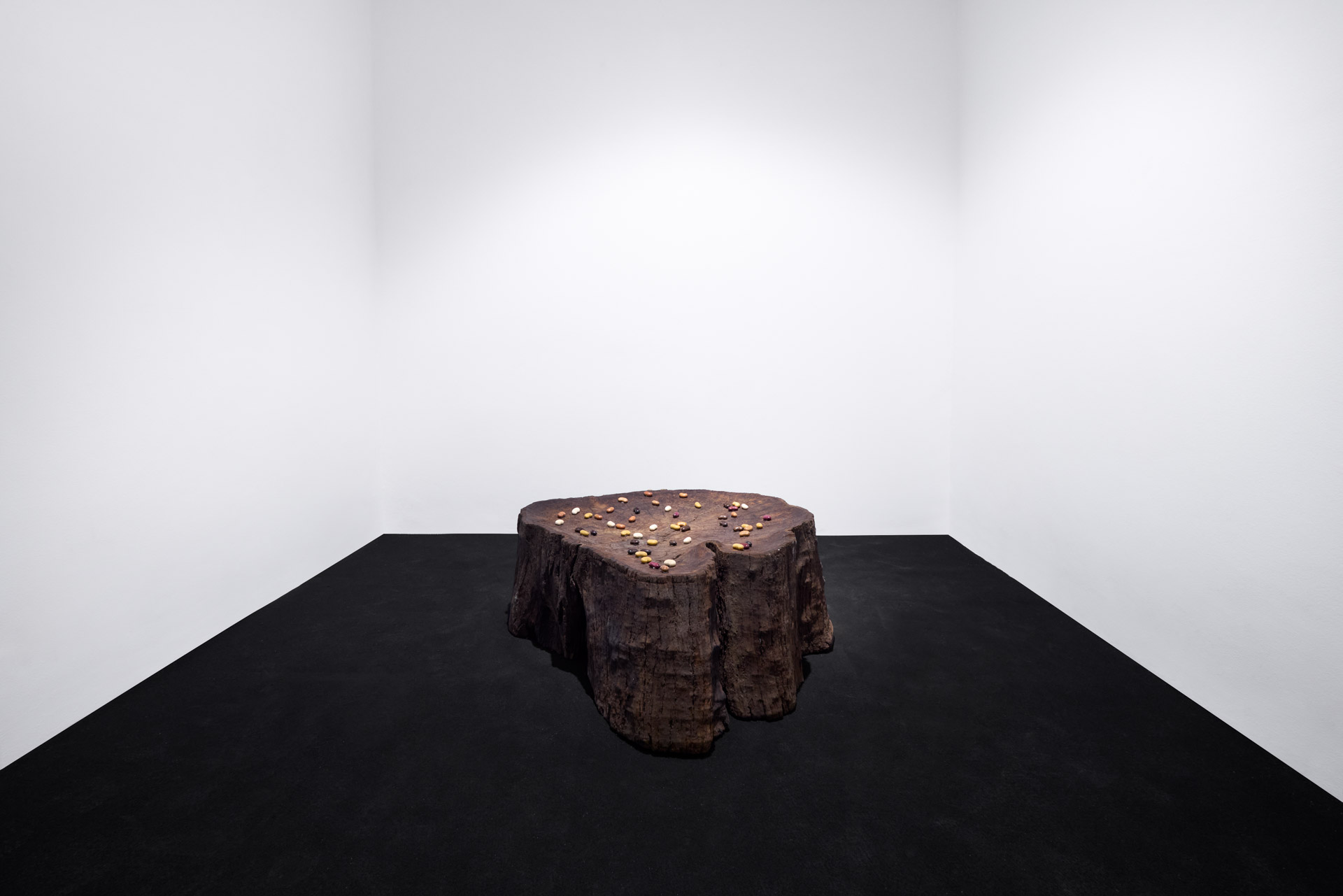
Ao final da exposição, um tronco de braúna com mais de oitocentos anos recebe um jogo de búzios feitos de feijão. O gesto aproxima ancestralidade e sobrevivência. O búzio, instrumento de leitura do destino nas religiões afro-brasileiras, encontra o feijão — um dos alimentos fundamentais da formação cultural e econômica do Brasil. Fonte primordial de energia popular, alimento que construiu corpos, cidades e imaginários.
É também nesse ponto que a exposição encontra Márcio Botner e A Gentil Carioca. A partir dessa rede de relações antigas e triangulares, Mão Amiga deixa de ser apenas uma exposição sobre matéria, trabalho ou natureza, e passa a falar também sobre amizade e construção coletiva. Na Gentil, duas salas reúnem trabalho e fome. Andaimes aparecem dispostos quase como algoritmos, enquanto obras como Colher, Prato e Prato de Tijolo recorrem ao imaginário da alimentação, da escassez e da sobrevivência como parte inseparável da história social brasileira.
Sem comida não existe corpo, e sem corpo não existe trabalho. Comer talvez seja o gesto mais elementar da vida social: aquilo que sustenta o corpo que trabalha, que deseja, que constrói cidades e move economias. A comida, assim como o trabalho, define quem somos, organiza afetos, produz memória e também revela desigualdades. Entre o prato vazio e o excesso, entre o alimento e a fome, José Bento aproxima escultura e sobrevivência, fazendo da matéria um comentário sobre aquilo que mantém a vida de pé.
Assim, no fundo, Mão Amiga talvez seja uma exposição sobre a tentativa de manter algo de pé. Entre árvores milenares transformadas em arquitetura, andaimes erguidos para sustentar o trabalho humano, barris que condensam a violência energética do capitalismo e búzios feitos de feijão, José Bento constrói uma narrativa onde natureza, história e matéria nunca aparecem separadas. Tudo está ligado por relações de apoio, desgaste e sobrevivência.
Talvez por isso a exposição tenha nascido de uma conversa entre amigos. Porque existe algo profundamente humano na ideia de “mão amiga”: uma estrutura que só permanece de pé porque uma parte sustenta a outra. Mais do que uma mostra sobre escultura ou arquitetura, Mão Amiga propõe vínculos entre pessoas, matérias, tempos históricos e modos de vida. Em um momento em que o mundo parece atravessar simultaneamente crises ambientais, energéticas e afetivas, José Bento propõe um retorno àquilo que ainda pode ser compartilhado: o trabalho, a memória, a amizade e a capacidade de construir algo em comum mesmo em meio às ruínas.”
“Amid the climate crisis in which Brazil occupies a central role — not only as a territory, but as a symbolic pivot of the future — most of the population seems to move through the disaster as though it were merely a matter of customs. A permanent celebration of extraction, where everyone elbows their neighbor out of the way to gain some advantage, pulling from the soil, the water, the air, and energy everything that can still be converted into market value. Trash is thrown onto the sidewalk so that someone else may clean it up. Affections become transactional. Cafuné disappears, loses its eroticism, amidst fires capable of annihilating entire states, while someone devoid of desire posts something amorphous on Instagram.
At the same time, localized wars on the other side of the planet produce immediate effects on the gas tank, on the price of food, on the dinner table of any Brazilian family. Oil, beans, the plate, the spoon, hunger. Everything seems connected by a continuous network of dependency, exhaustion, and anxiety. It is within this landscape that José Bento presents Mão Amiga.
Organized by me and conceived through many hands, with the decisive support of our friend Márcio Botner and his gallery A Gentil Carioca, the exhibition emerges from an affective triangle that spans more than twenty years. Together, we have walked through the scaffolding of artistic propositions, trying to understand how sculpture can still function simultaneously as social, economic, spiritual, and plastic commentary.
Perhaps this is precisely the singular condition of sculpture: the most physical of the arts, made of weight, texture, scale, and resistance, yet also the one capable of transforming matter into collective presence. Sculpture makes visible what was once hidden, and sometimes does the opposite. It can be a totem, a social event, an economic transaction, a site of the sacred, or a monument to the dead. Sometimes all of these at once.
It is through sculpture that José Bento communicates with the world, but also, intimately, with his gallerist of more than twenty years, A Gentil Carioca, and with me, a curator who now also directs a gallery. Together, moved by this relationship of affection, “we arrived here,” as Tunga used to say at the end of installing each exhibition.
“Mão Amiga began during a late-night phone conversation, when I was telling Zé about the new home of Sardenberg gallery. This modest 1920s construction revealed, once its ceiling lining was removed, an extraordinarily high ceiling supported by a monumental beam of peroba-rosa wood. Everything around it had been slowly devoured by termites, yet the beam remained there, sovereign and intact.
There was something profoundly symbolic in this resistance: the silent struggle between living beings and the dead matter of wood; between biological time and historical time. That tree, probably born even before the Portuguese invasion that gave rise to Brazil, now supported the roof of a house in the megalopolis of São Paulo in 2026. During our conversation, Zé remarked that the joint used in this structure is precisely called a “mão amiga” — a traditional construction technique in which two pieces connect without nails, sustaining one another solely through the design of the joint itself.
Within that house coexisted, almost allegorically, nature, technique, life, and resistance. It was from this conjunction of forces, and from this conversation between old friends, that the first seeds of the exhibition were born. It was also there that the proposal for the first installation emerged: Muirapiranga.
Also known as false brazilwood, muirapiranga is a reddish wood symbolically tied to the history of extraction and violence that marked the formation of colonial Brazil. The very ideas of counterfeit and illicit trade originate there, in Brazil. The sculpture presented by José Bento preserves the original surface of the trunk, maintaining its organic and almost raw presence. At some point in its existence, however, the tree underwent precise cuts that prepared its surface for some constructive use — perhaps part of a machine, perhaps the structure of a house or a mill.
In the work, geometry and nature coexist in permanent tension. The trunk remains a tree and, at the same time, becomes architecture; it remains living matter and also a historical vestige. Through this intervention, the house itself comes to function symbolically as the crown of a tree.
Around it, in the same room, the trunks from Anomaly of Solitude — a work originally presented at Milan Gallery — reappear as a kind of imaginary forest. Through a minimal sculptural gesture, José Bento makes only a longitudinal cut in the trunks and leans them flush against the walls, transforming the architecture into a sort of vegetal skin. The room then begins to exist as the interior of a tree, or perhaps as the memory of a peroba-rosa forest.
This gesture connects José Bento’s practice to the tradition of Amilcar de Castro, to the procedure of cutting and folding, but also to American Minimalism and to Giuseppe Penone’s investigations into the limits between body, matter, and nature. The installation as a whole articulates art history, commentary on colonization, and the contemporary environmental crisis. In the end, an inevitable question remains: what future is this?
The second installation, Scaffolding, is connected to ideas of labor, production, and the construction of our now-famous ruins. The scaffold is the worker’s provisional ground, the temporary architecture of human effort. As the artist says: “Nobody puts up scaffolding to take a nap.”
Each piece of the scaffold is made from a different wood from Brazilian forests, creating a Cartesian tangle of colors, lines, and right angles — as though the forest were progressively converted into constructive rationality. The Brazilian Concrete tradition appears displaced into the literal field of labor and wealth extraction: geometry no longer as modernist utopia, but as a functional tool captured by the logic of the means of production.
One might think of this forest of scaffolds as a tropical counter-version of the open cubes of Sol LeWitt, of the serial purity of Donald Judd, or even as an organic inversion of the industrial materials of Carl Andre. In José Bento, however, wood never entirely loses its condition as living matter. Even when subjected to the straight line, calculation, and repetition, it continues to carry within it the memory of the forest and the violence inscribed in the history of its extraction.
It is within this context that Barrel emerges, a work that mimics an oil barrel. Amid the energy and food crises of the present, José Bento’s barrel emerges almost like a conceptual fossil: a perfect and silent form born from the ancient forest itself, which, buried over geological time, became the principal source of energy for capitalism.
Made from solid braúna wood, the work possesses a singular tension between historical weight and formal synthesis. Its austere, minimalist form contrasts with the Baroque dramaticism of Gian Lorenzo Bernini, an artist frequently cited by José Bento during the months in which he turned the trunk until arriving at Barrel. If in the Baroque sculptor we find movement and theatricality, here everything seems reduced to the minimal form of an abstract unit of value. Today, the oil barrel exists less as a physical object than as an economic abstraction capable of organizing wars, markets, and futures.
At the end of the exhibition, a braúna trunk more than eight hundred years old receives a set of cowrie shells fashioned from beans. The gesture brings ancestry and survival into proximity. The cowrie shell, an instrument for reading destiny in Afro-Brazilian religions, encounters the bean — one of the foundational foods of Brazil’s cultural and economic formation. A primordial source of popular energy, a food that built bodies, cities, and imaginaries.
It is also at this point that the exhibition encounters Márcio Botner and A Gentil Carioca. Through this network of longstanding and triangular relationships, Mão Amiga ceases to be merely an exhibition about matter, labor, or nature, and also begins to speak about friendship and collective construction. At Gentil, two rooms bring together labor and hunger. Scaffolds appear arranged almost like algorithms, while works such as Spoon, Plate, and Brick Plate draw upon the imaginary of nourishment, scarcity, and survival as inseparable parts of Brazilian social history.
Without food there is no body, and without a body there is no labor. Eating is perhaps the most elementary gesture of social life: that which sustains the body that works, desires, builds cities, and moves economies. Food, like labor, defines who we are, organizes affections, produces memory, and also reveals inequalities. Between the empty plate and excess, between nourishment and hunger, José Bento brings sculpture and survival together, making matter into a commentary on that which keeps life standing.
Thus, at its core, Mão Amiga may be an exhibition about the attempt to keep something standing. Between trees thousands of years old transformed into architecture, scaffolds erected to sustain human labor, barrels that condense the energetic violence of capitalism, and cowrie shells fashioned from beans, José Bento constructs a narrative in which nature, history, and matter never appear separately. Everything is connected through relationships of support, erosion, and survival.
Perhaps this is why the exhibition was born from a conversation between friends. Because there is something profoundly human in the idea of a “mão amiga”: a structure that remains standing only because one part sustains the other. More than an exhibition about sculpture or architecture, Mão Amiga proposes bonds between people, materials, historical times, and ways of life. At a moment in which the world seems to be simultaneously traversing environmental, energetic, and affective crises, José Bento proposes a return to that which may still be shared: labor, memory, friendship, and the capacity to build something in common even amidst the ruins.”