Perfume do Invisível
Perfume do Invisível
Ricardo Sardenberg
Radicada em São Paulo e formada em Psicologia, Sofia Nehring desenvolve uma produção ligada aos questionamentos do corpo e da autoimagem, assim como à influência exercida pela mídia sobre a percepção de si. Nos últimos anos, sua prática passou a ocupar um lugar particular entre a escultura e a imagem fotográfica. Resina, tecidos, objetos sintéticos, estruturas metálicas, espuma, vidro e superfícies impressas integram um vocabulário no qual a imagem adquire corpo, peso e textura, enquanto a matéria parece conservar algo de instável, espectral e imaginário.
O título Perfume do Invisível faz referência ao universo dos quadrinhos de Milo Manara, conhecido pela construção de figuras femininas atravessadas pelo erotismo e pelo olhar masculino. Sofia se aproxima desse imaginário para deslocá-lo. Em vez de tomar o corpo feminino apenas como objeto de representação e desejo, pergunta o que acontece quando a própria mulher produz, encena, fotografa e transforma sua imagem.
Essa questão adquire outra camada porque a artista também atua como modelo. Habituada a estar diante da câmera e a lidar com os códigos visuais desse universo, Sofia incorpora à sua prática a experiência de ser observada, dirigida e convertida em imagem. Em suas obras, contudo, assume simultaneamente a posição de quem olha, seleciona, enquadra e constrói. O corpo deixa de ser uma presença estável para se tornar superfície, fragmento, vestígio e matéria em transformação.
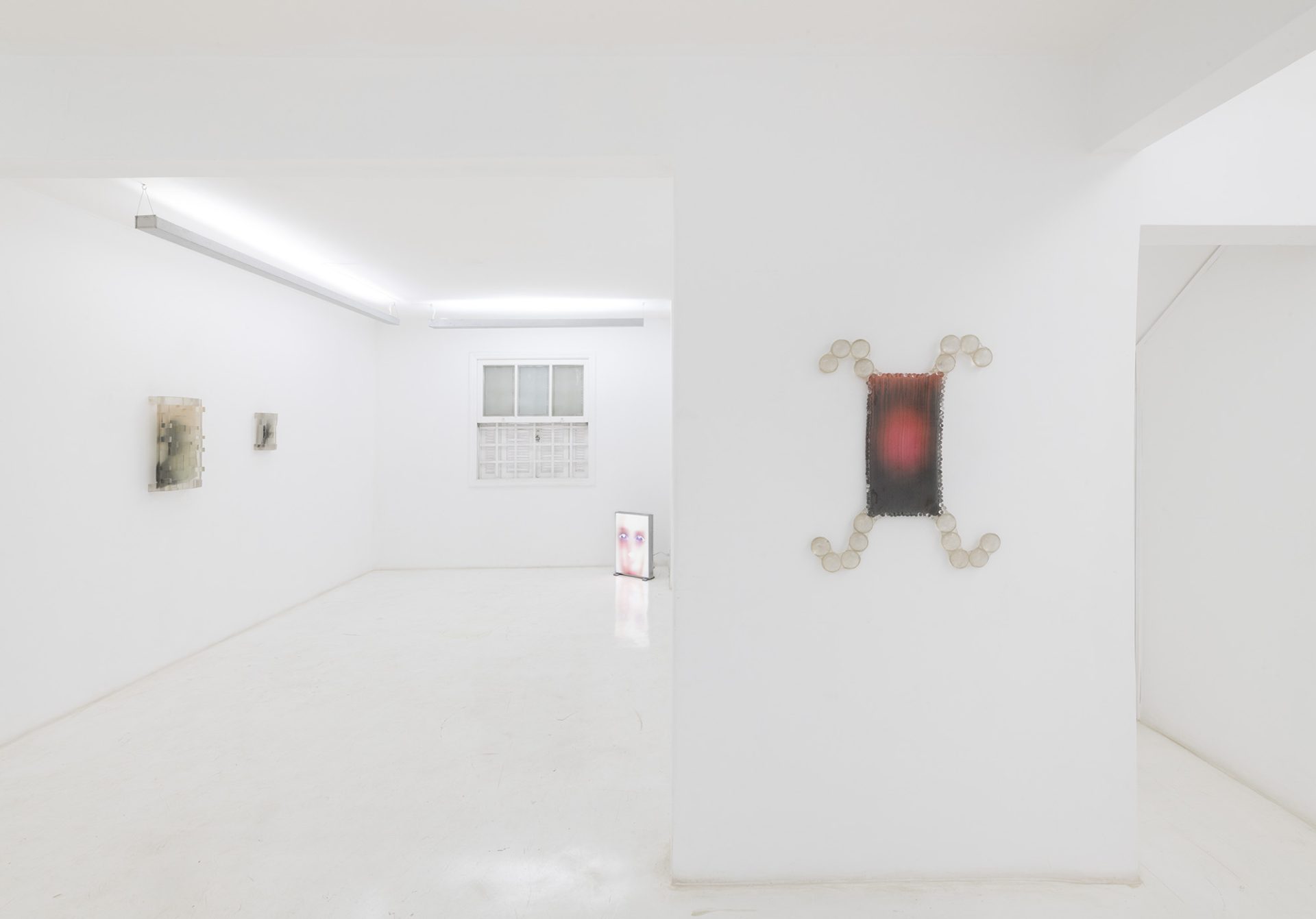
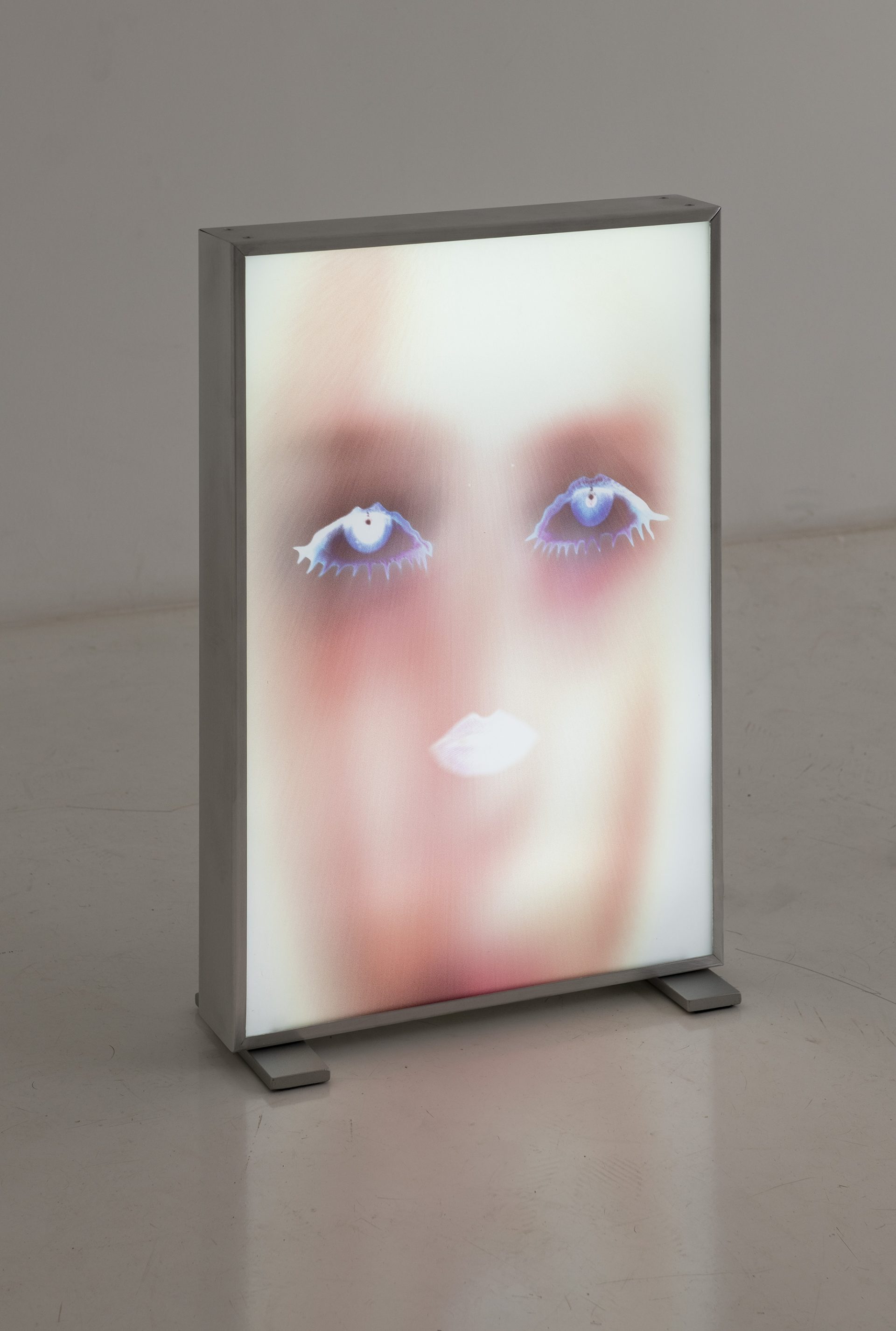
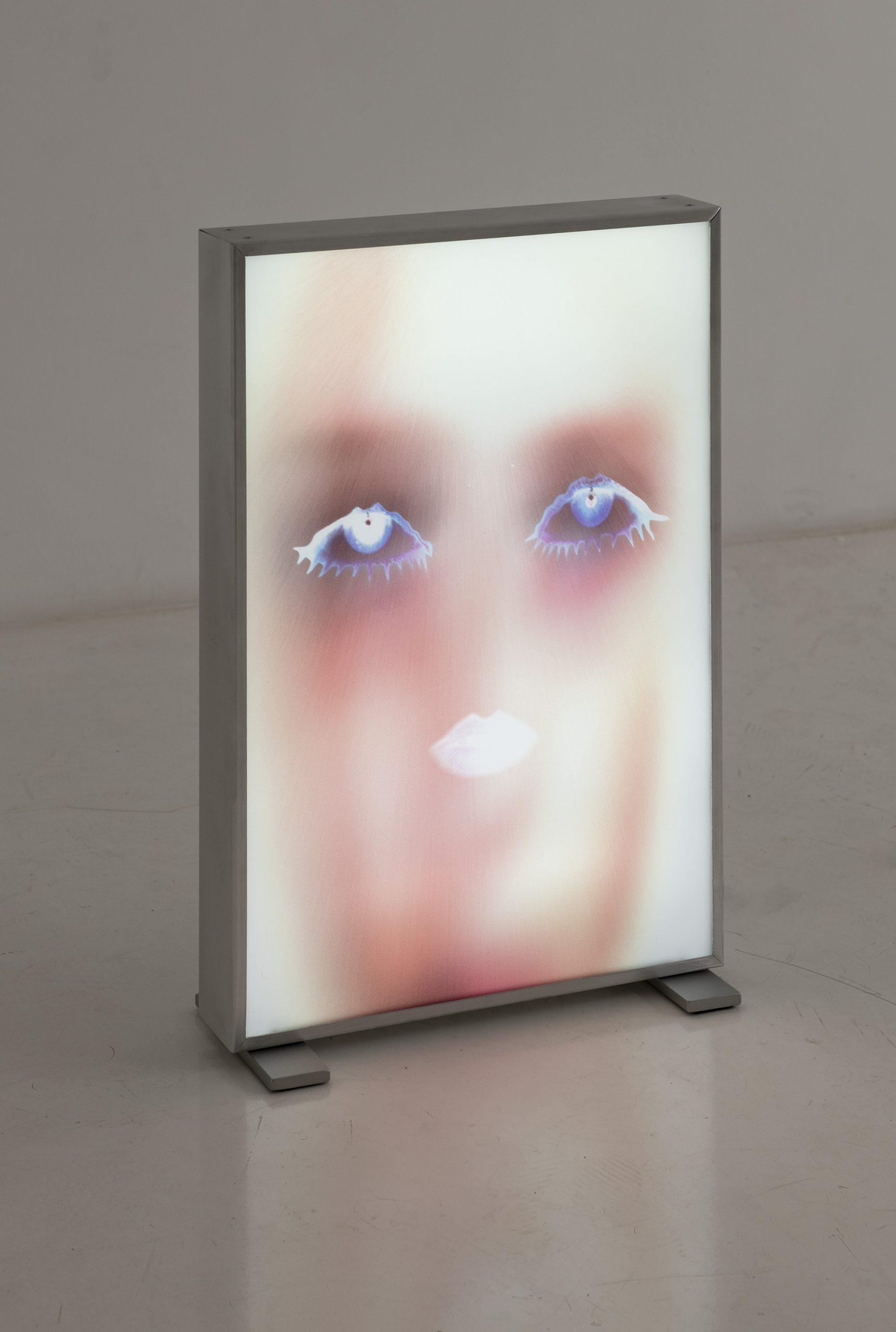
O olho é uma presença central e recorrente nessa produção. Recortado, ampliado, impresso e inserido em objetos, ele deixa de funcionar somente como órgão da visão e passa a ocupar a própria superfície da obra. O olho vê, mas também é visto. Pode sugerir consciência, vigilância, desejo, memória ou ameaça. Na psicologia e na psicanálise, o olhar nunca se limita à percepção objetiva do mundo. Ele participa da formação do sujeito, da relação com a própria imagem e do reconhecimento de si por meio do outro. Nas obras de Sofia, essa tensão se torna circular. Quem observa também se percebe observado pela imagem.
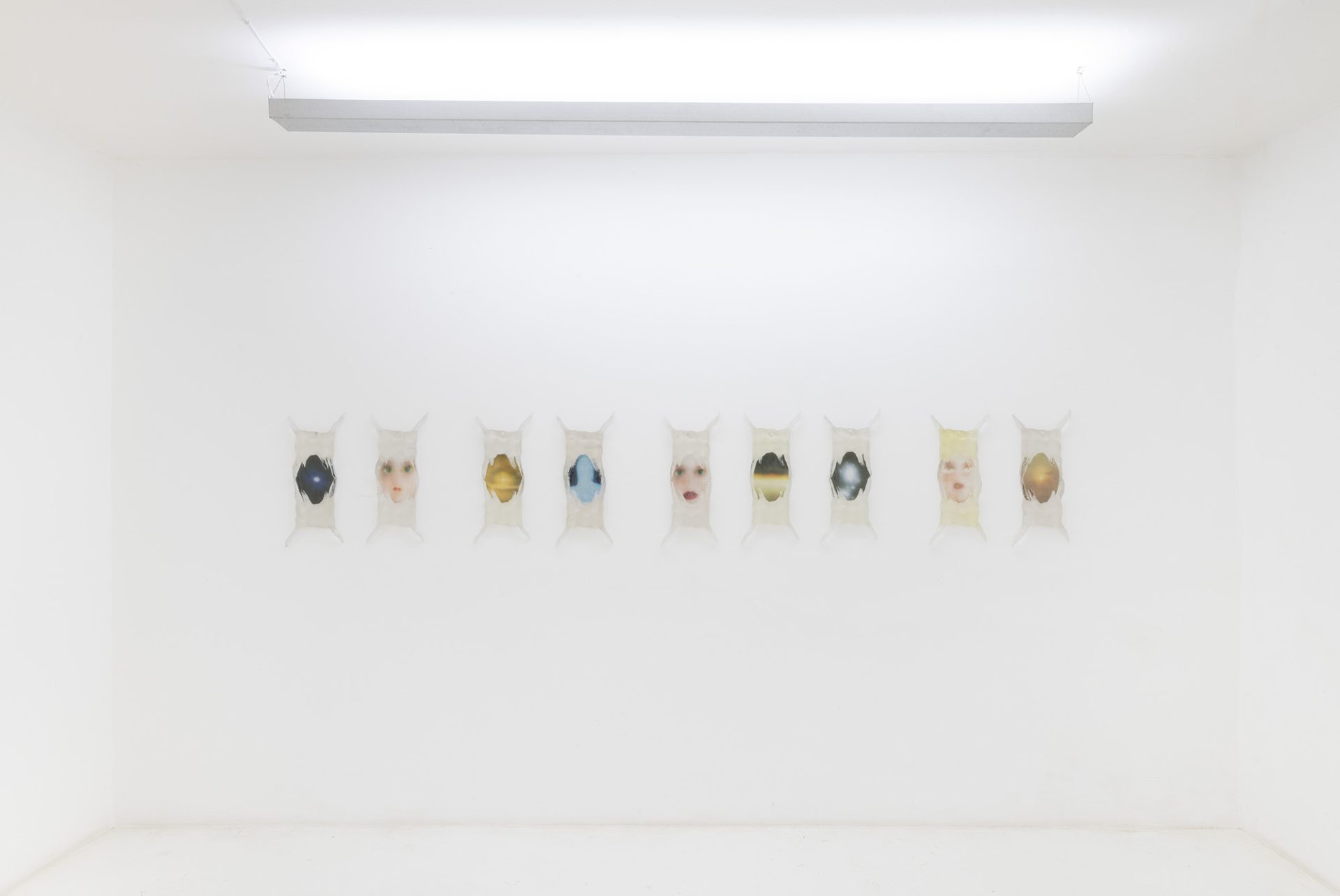
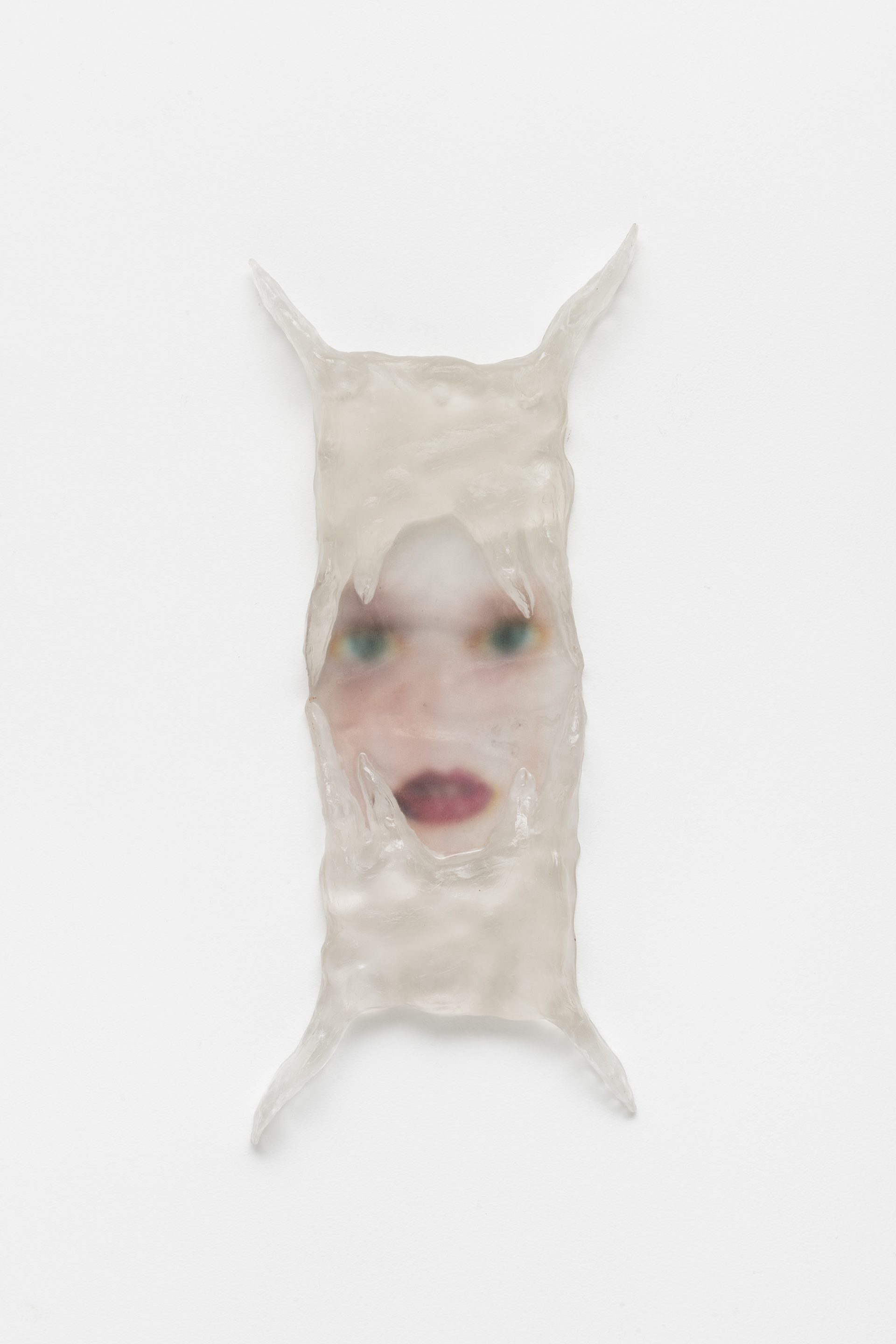
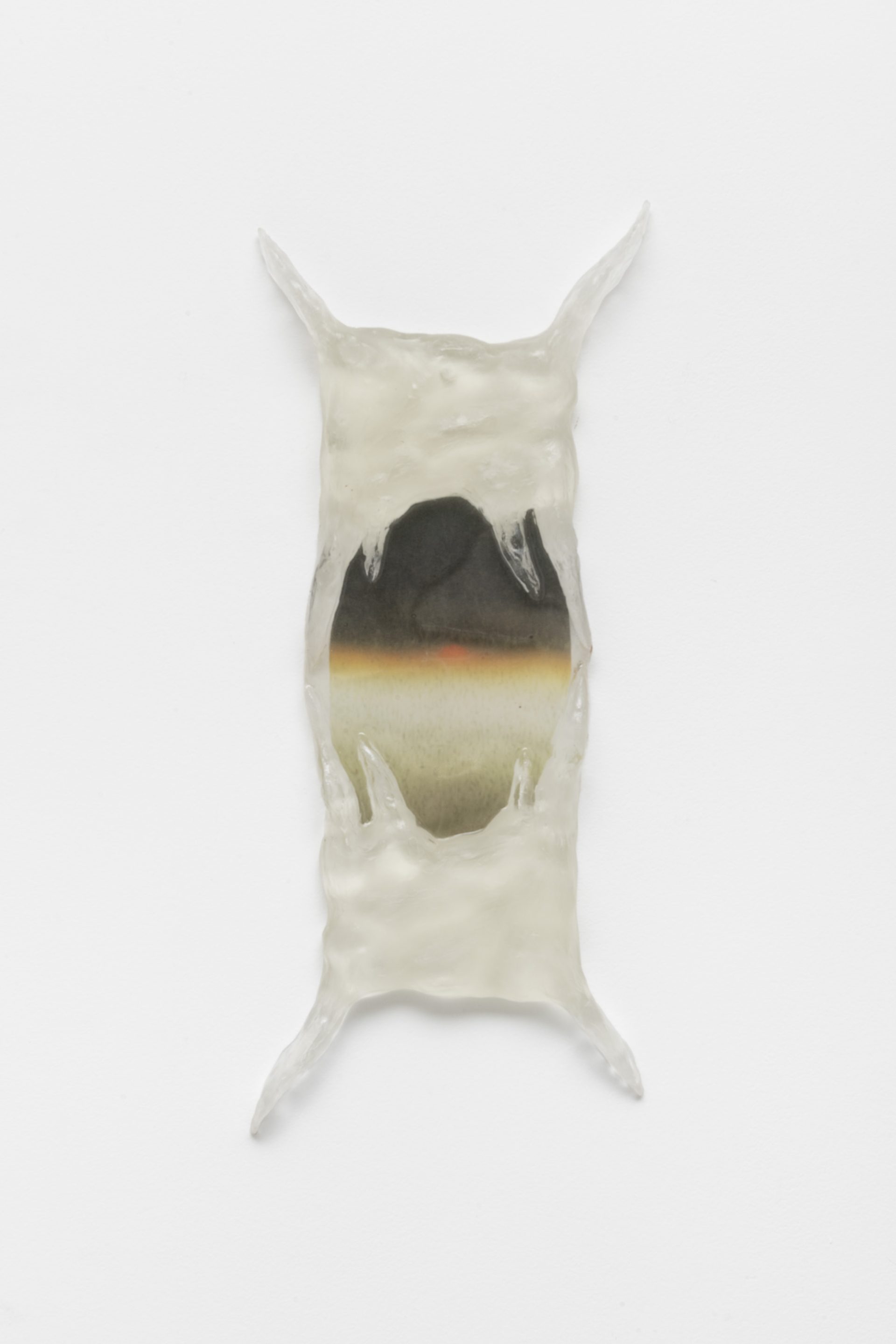
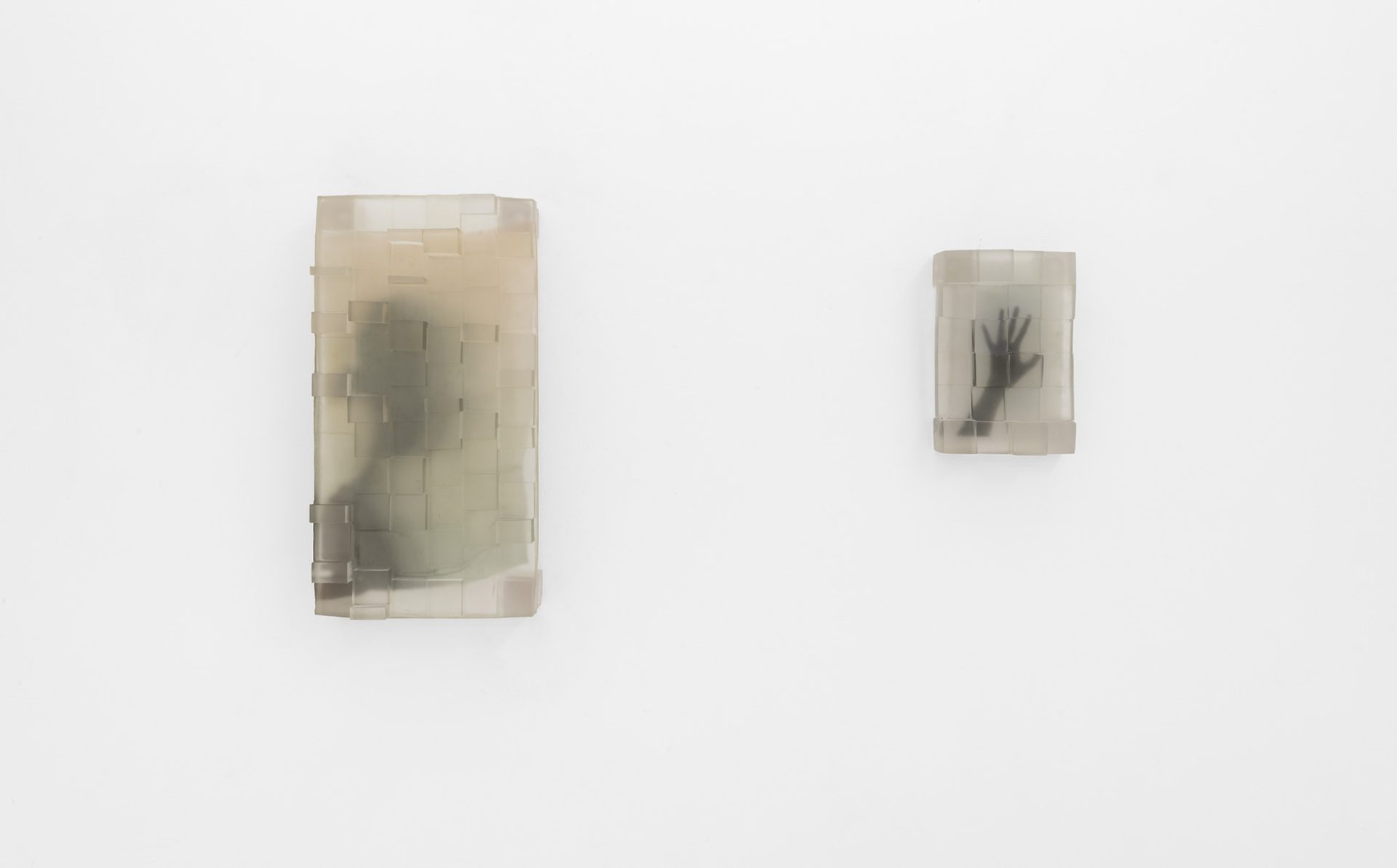
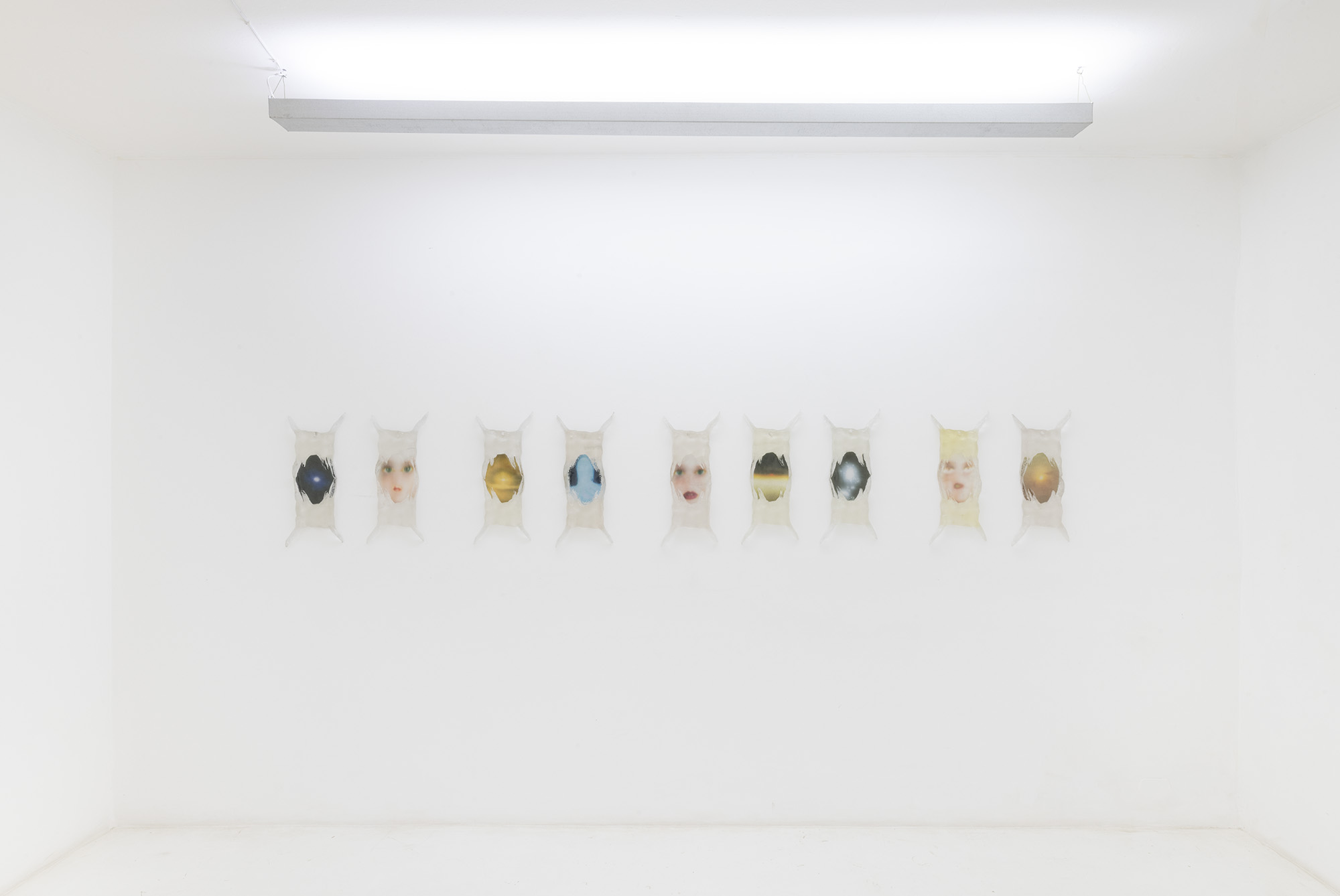
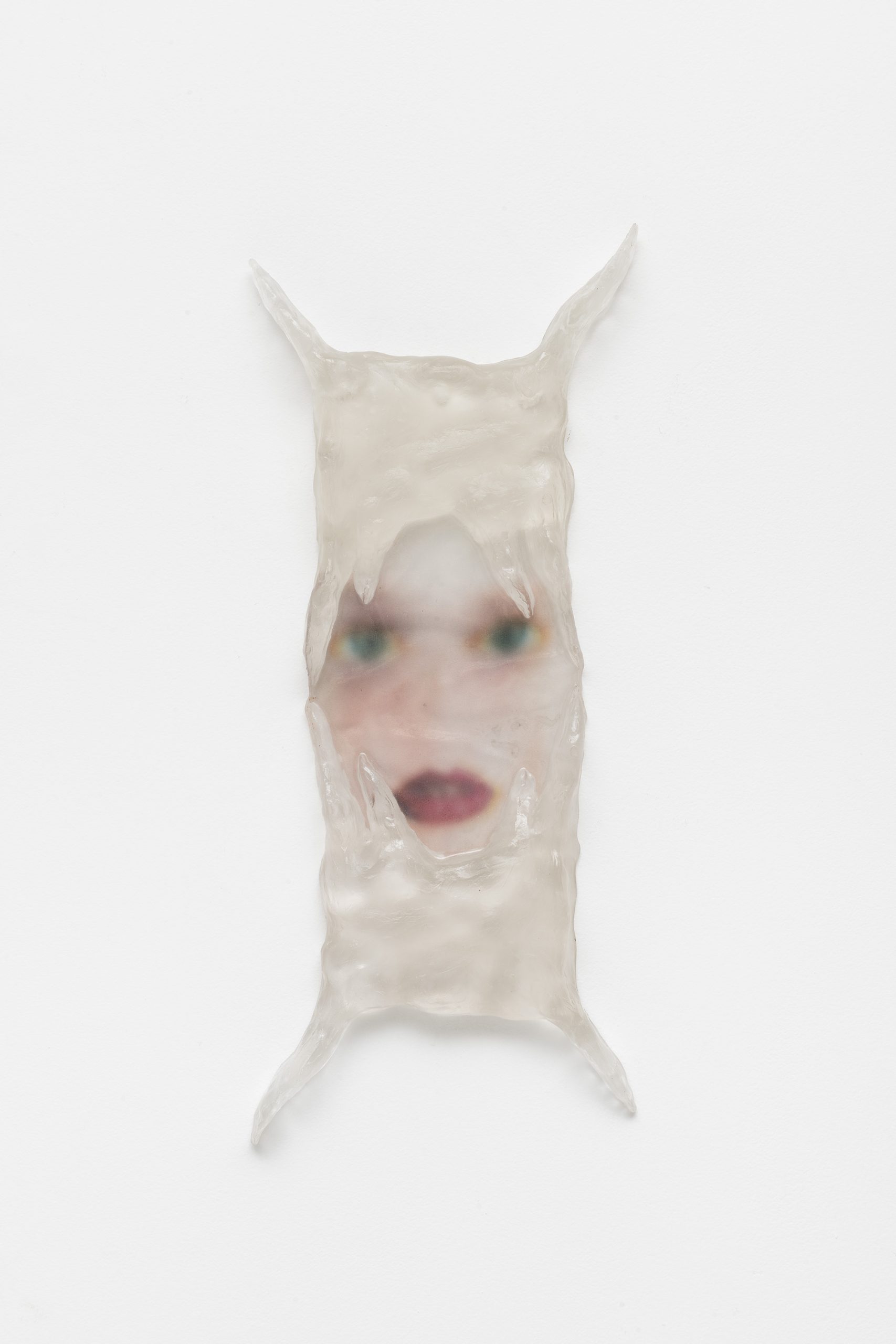
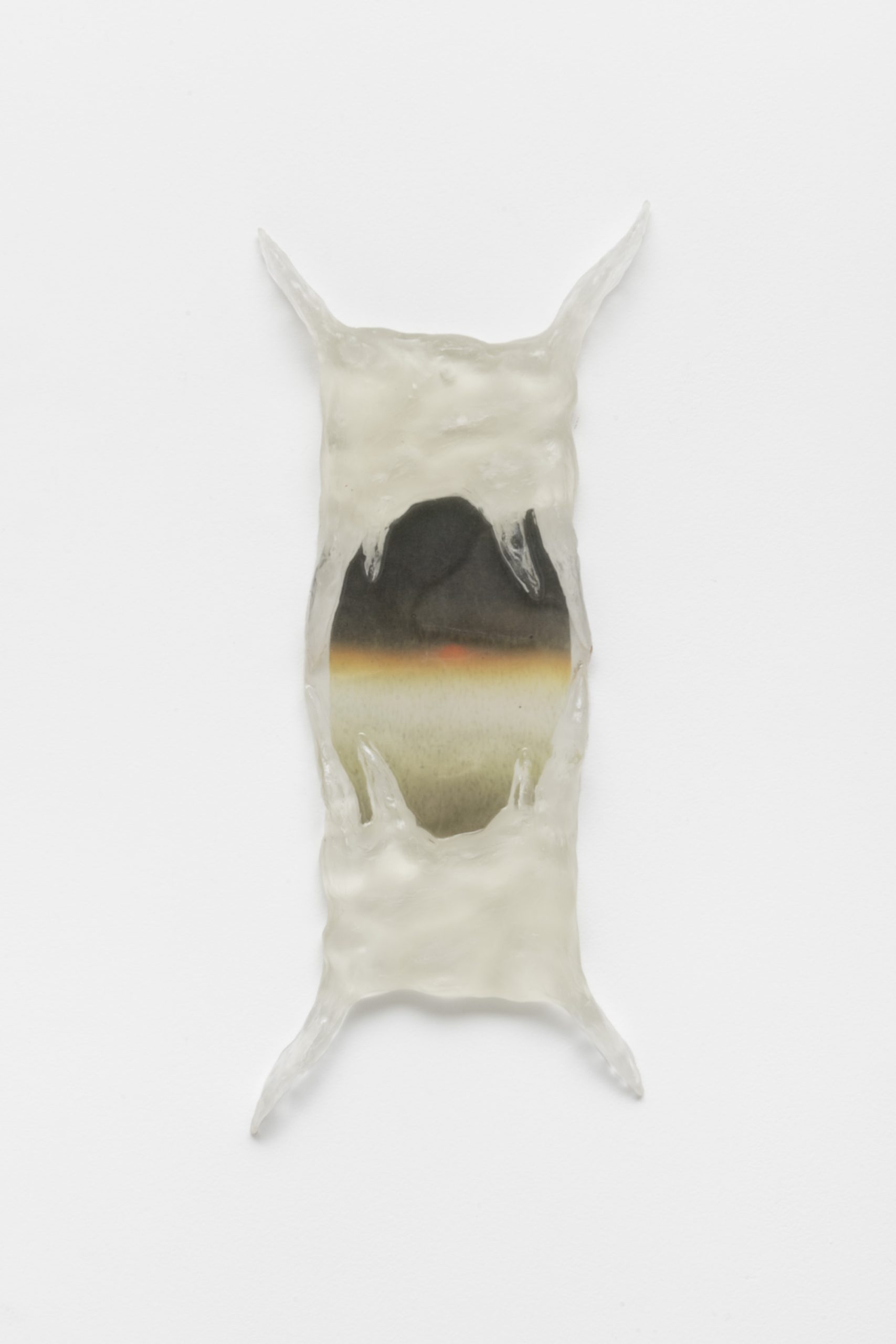
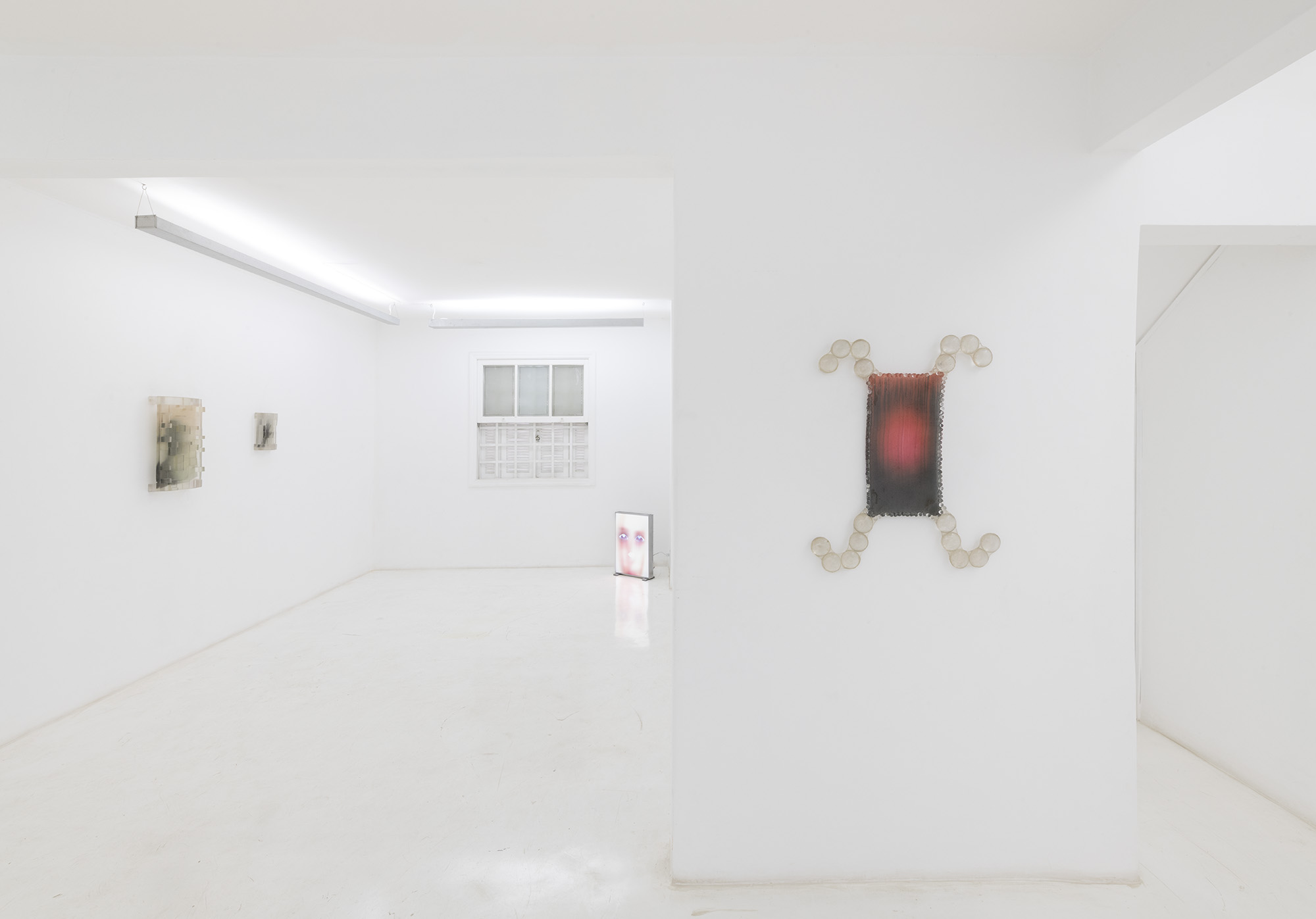
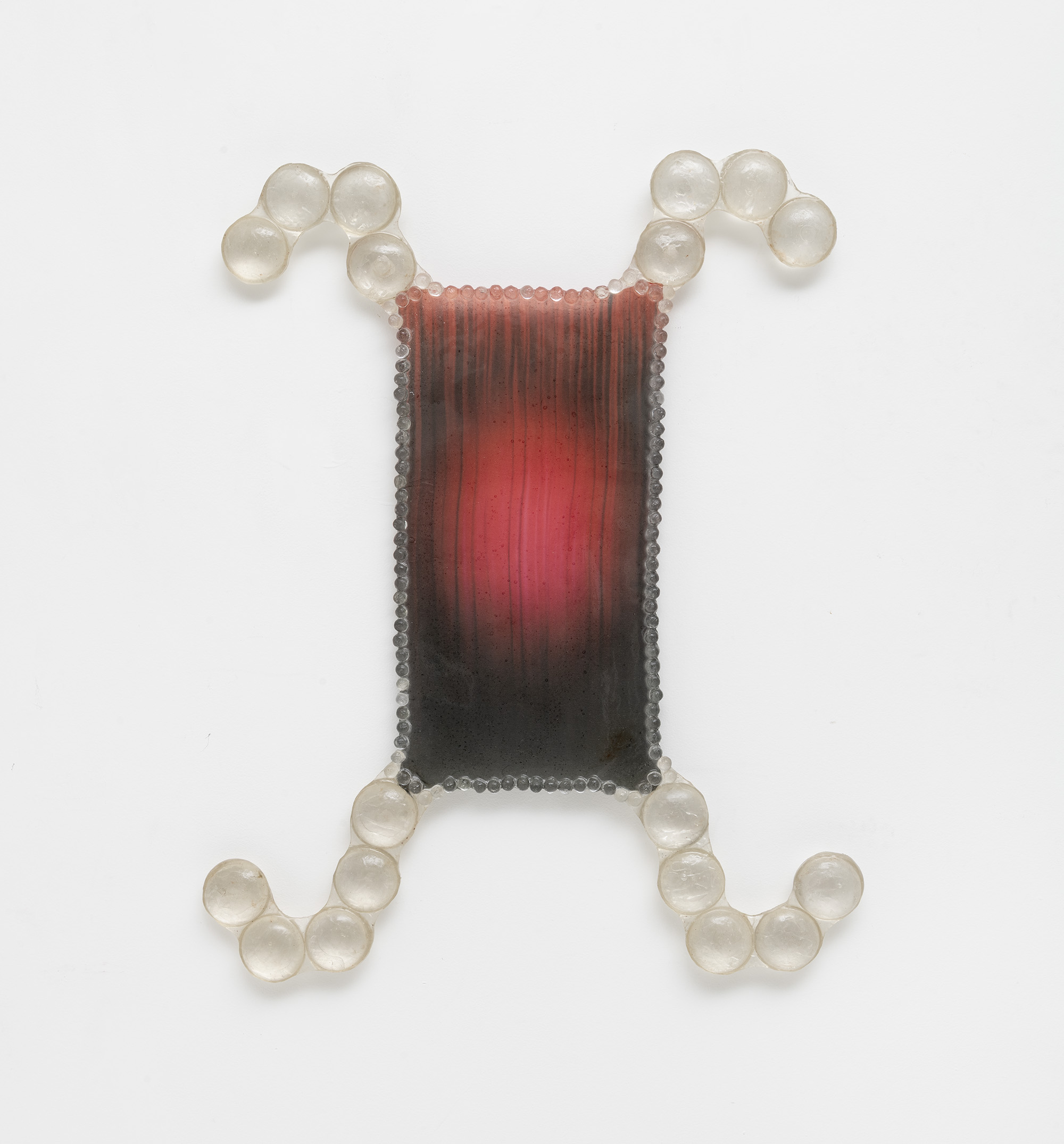
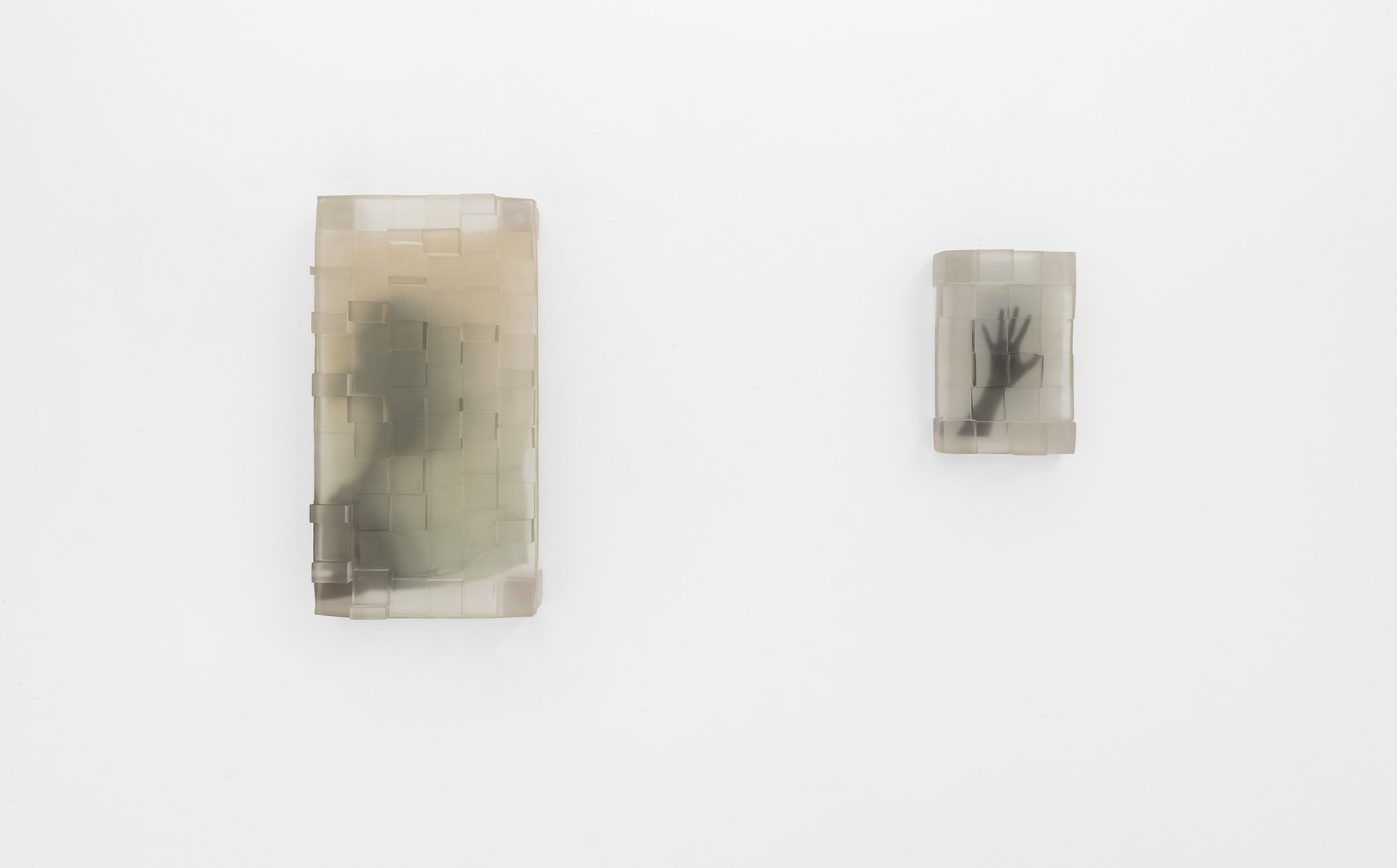
A série Bolsa de Sereia parte da forma popularmente conhecida por esse nome, uma cápsula ovígera produzida por algumas espécies de tubarões e raias para proteger seus embriões. Composta por uma estrutura resistente e translúcida, encontrada muitas vezes vazia nas praias, essa bolsa é simultaneamente invólucro, abrigo e vestígio de uma vida que já deixou seu interior. Sofia se apropria dessa forma para encapsular imagens impressas em tecido e revestidas por resina. Cada obra parece guardar fragmentos corporais e paisagens, como se preservasse a memória de uma presença. A rigidez da superfície protege a imagem, mas também a mantém inacessível, suspensa entre aparição e desaparecimento. Repetidas em diferentes variações, as peças formam um conjunto de organismos imaginários, pequenos relicários marinhos nos quais fotografia, corpo e matéria se confundem.
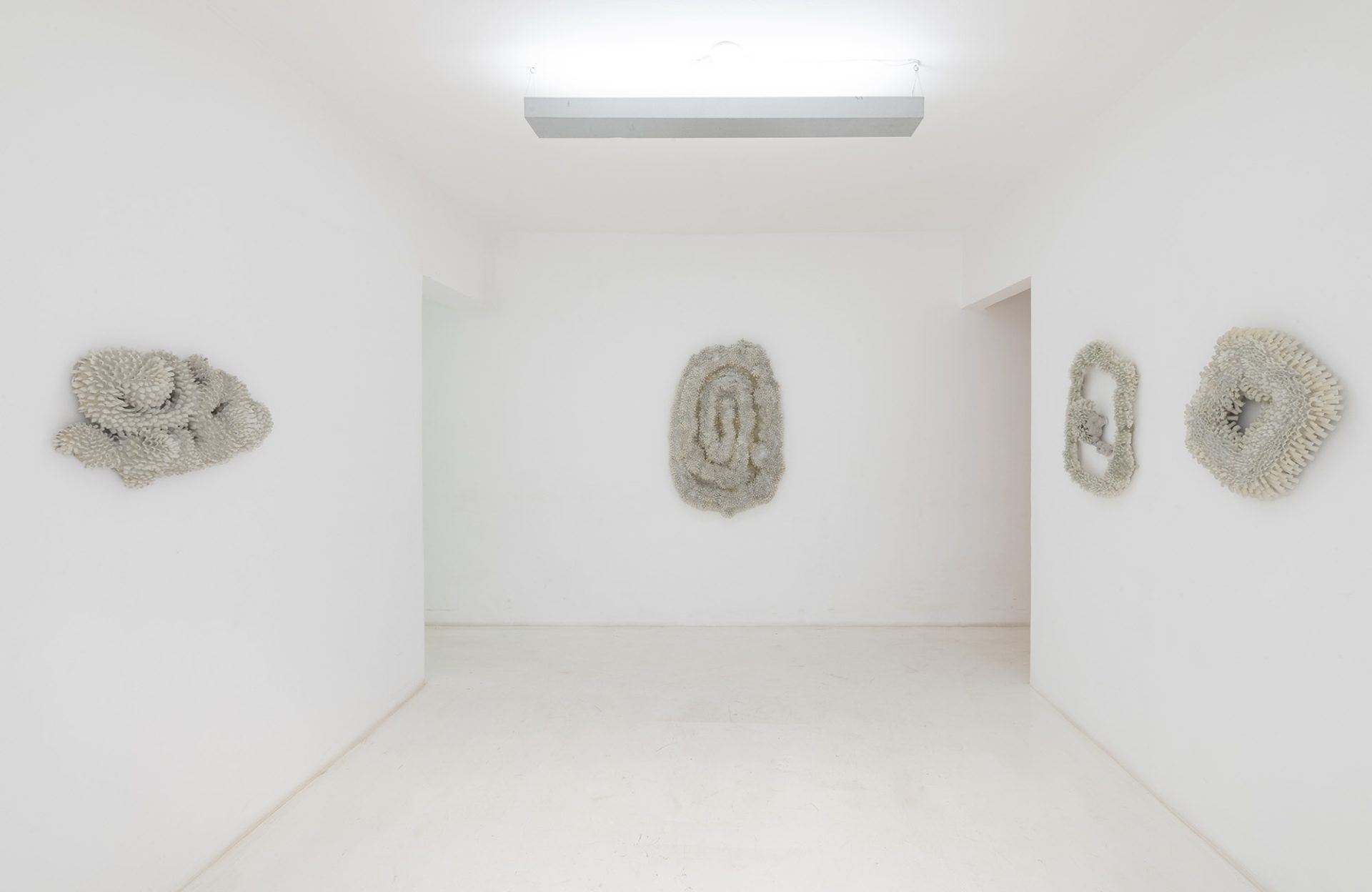
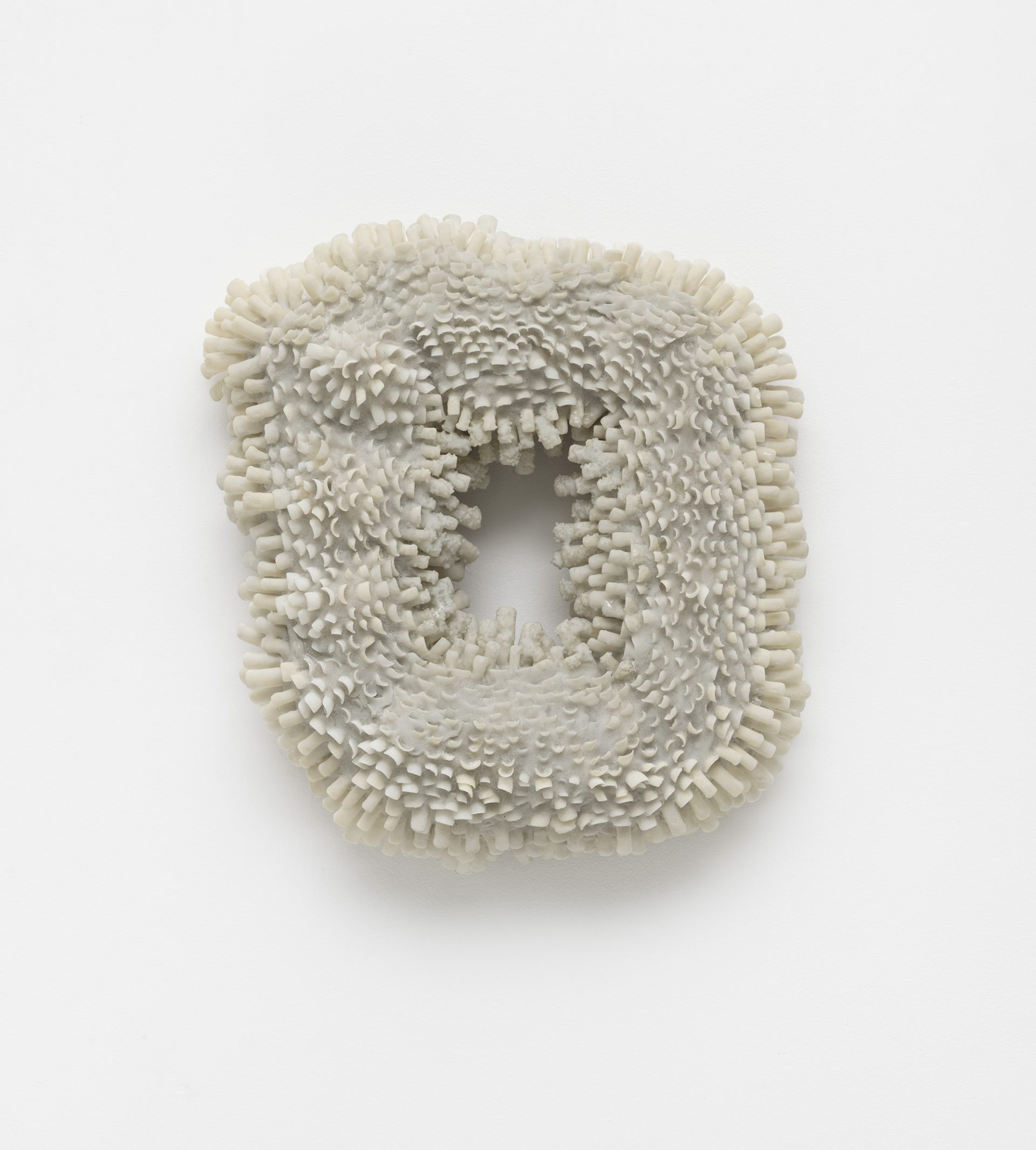
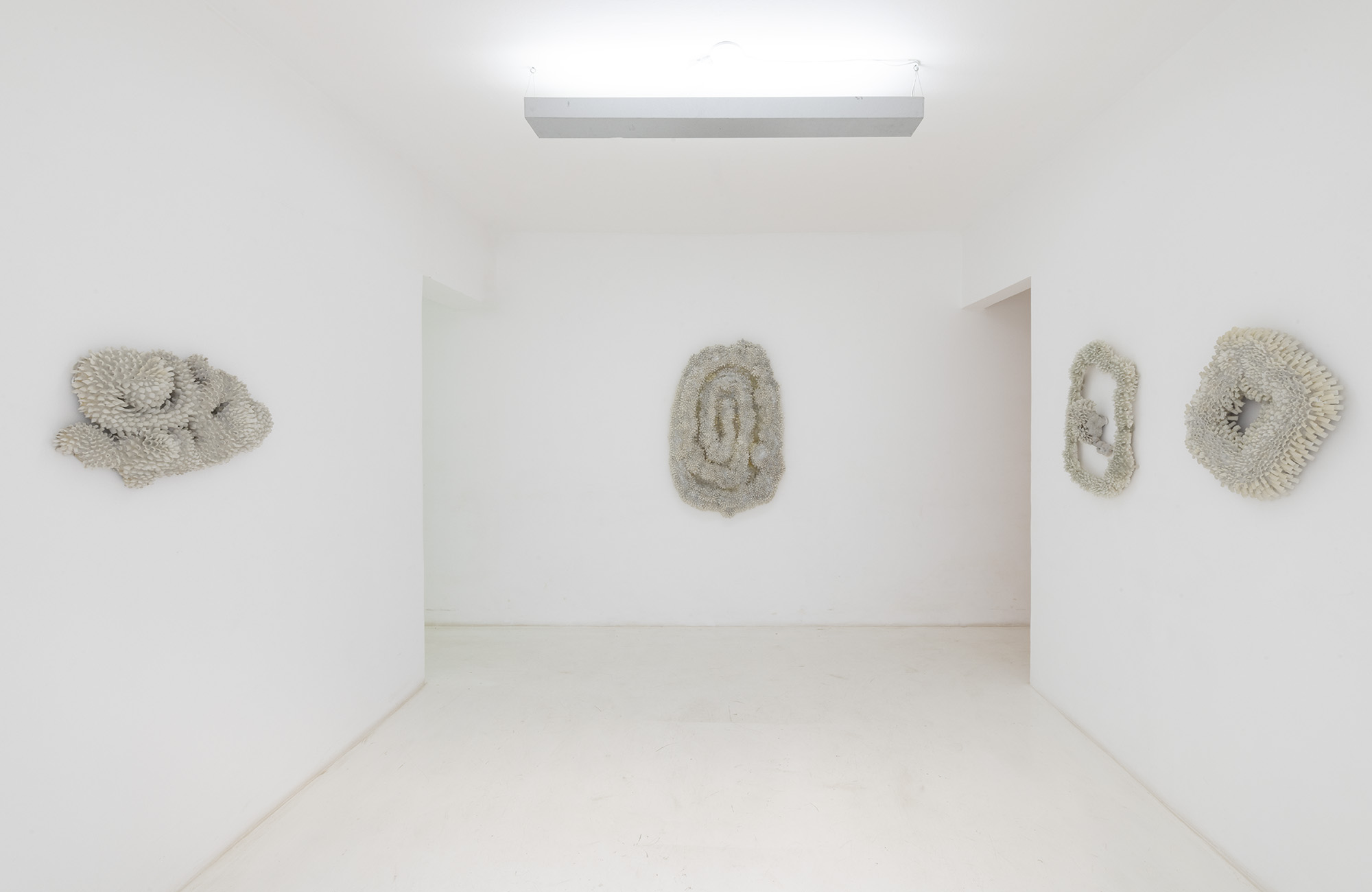
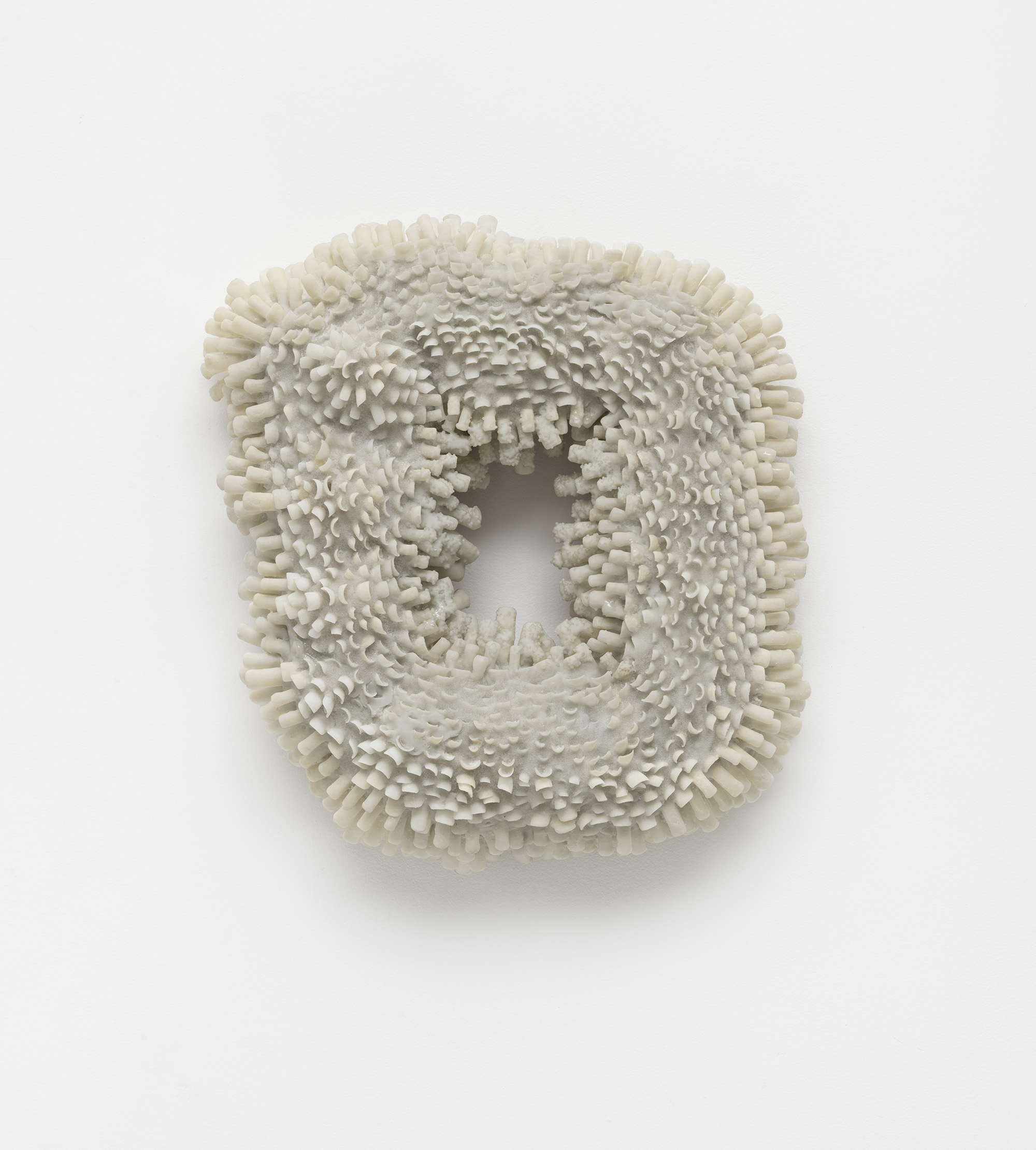
Em Artificially Natured, Sofia explora mais diretamente a fronteira entre formas orgânicas e materiais artificiais. Unhas postiças, resina, espuma e vidro, elementos associados à beleza, ao consumo e à transformação do corpo, são reorganizados em composições que lembram corais marinhos. As formas parecem crescer, aderir umas às outras e se reproduzir, como colônias de organismos que ocupam progressivamente uma superfície. Aquilo que inicialmente poderia ser entendido como acessório deixa de ser ornamento e adquire uma vida quase biológica. Ao aproximar unhas artificiais de estruturas coralinas, Sofia produz uma natureza ambígua, ao mesmo tempo corporal, marinha e sintética.
A série se conecta, assim, às obras de Bolsa de Sereia, ampliando um imaginário subaquático no qual proteção, sedução, metamorfose e reprodução se encontram. Esse universo aquático também evoca o espaço uterino, primeiro ambiente em que o corpo é formado e mantido em suspensão. Envolvido pelo líquido amniótico, o feto habita um interior protegido, anterior ao contato direto com o mundo exterior. A bolsa, a concha, o coral e o útero aproximam-se como formas de abrigo e gestação, lugares nos quais a vida permanece simultaneamente resguardada e em transformação. O mar não aparece apenas como tema ou paisagem, mas como memória de uma origem corporal, um campo fluido no qual os limites entre corpo, objeto e organismo permanecem abertos.
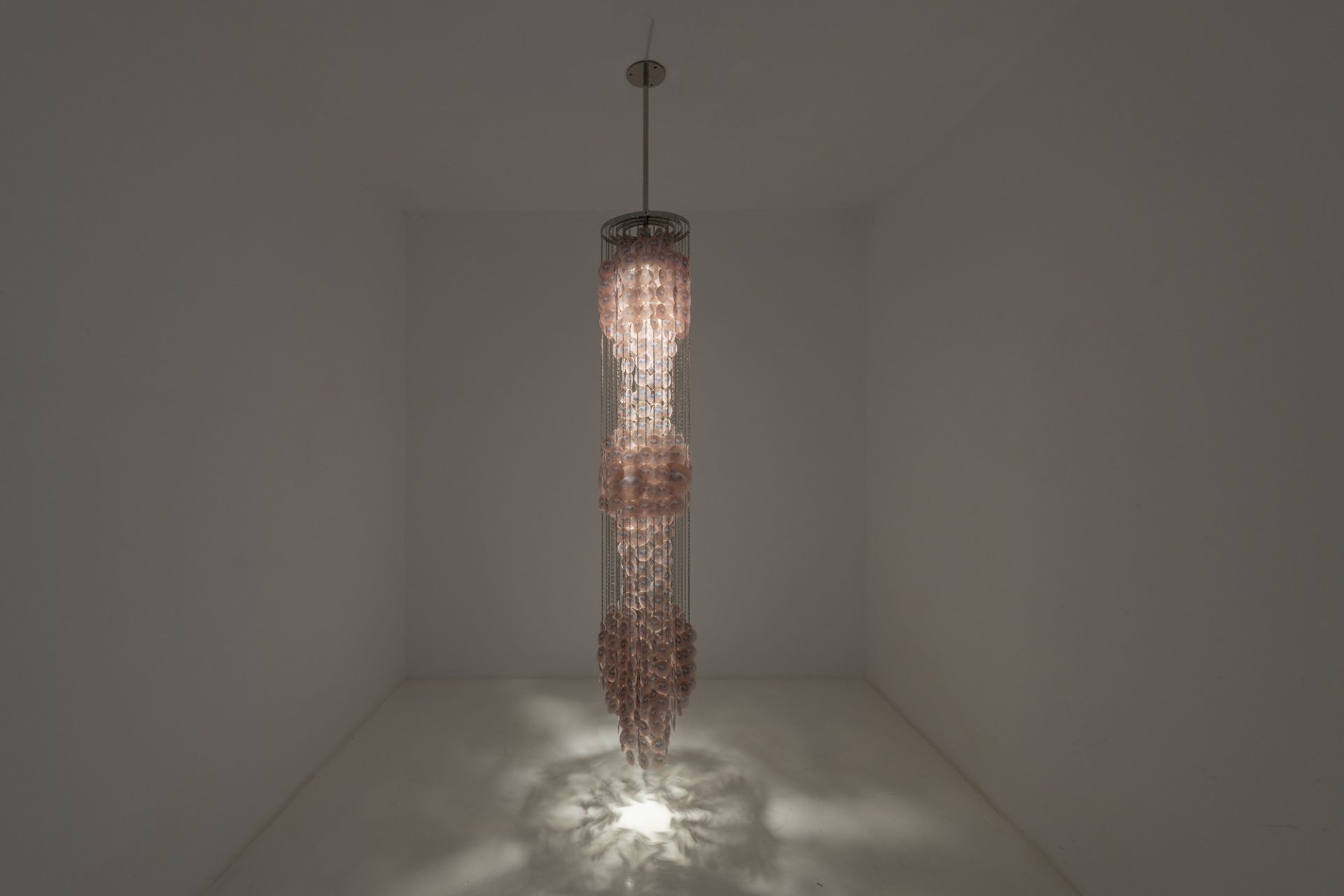
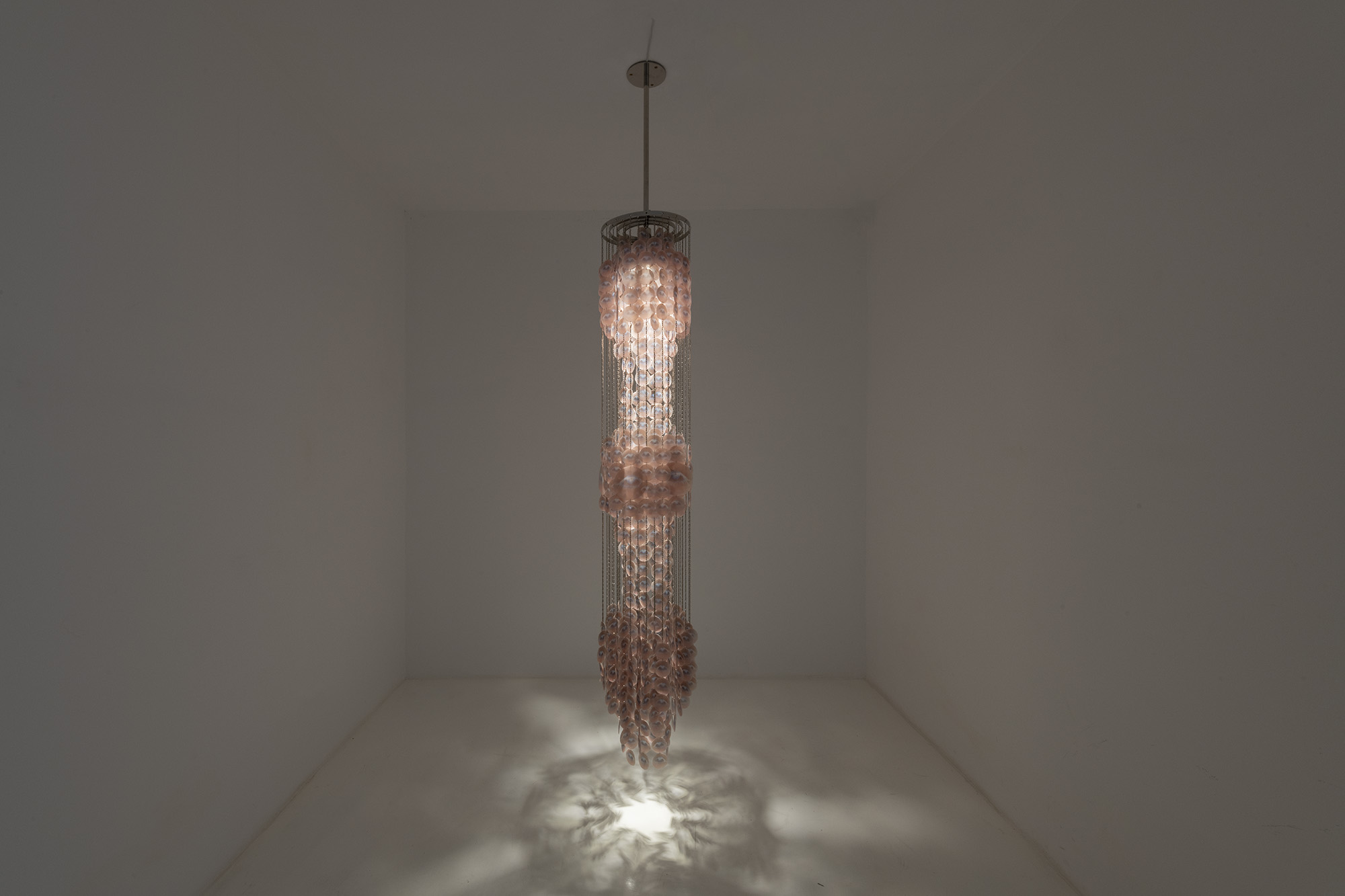
Em Aérea, a imagem impressa em tecido e revestida por resina se transforma em uma estrutura suspensa, composta também por elos, correntes e elementos metálicos. A obra parte da referência artesanal dos chandeliers feitos com escamas de peixe ou lâminas de madrepérola, cujos elementos translúcidos se sobrepõem e reagem à incidência da luz. Sofia retoma essa memória material sem reproduzir literalmente sua forma. A imagem fragmentada assume o lugar das escamas e se organiza como uma presença suspensa, simultaneamente luminosa, corporal e imaginária.
A luz atravessa e altera a superfície da obra, revelando diferentes graus de transparência, brilho e opacidade. As correntes, por sua vez, instauram uma tensão entre peso e flutuação. O próprio título aponta para algo que deixa o chão e passa a habitar o espaço. Embora evoque a forma de um lustre, Aérea não se reduz à sua função ou à condição de objeto decorativo. A familiaridade da referência é deslocada pela presença das imagens, que transformam a estrutura em um corpo estranho e em permanente suspensão. O olhar, que nas demais obras aparece inscrito na superfície, passa a ocupar uma posição elevada. A obra ilumina o espaço e, ao mesmo tempo, parece observá-lo.
Perfume do Invisível nasce da circulação entre interior e exterior, presença e ausência, sedução e estranhamento, delicadeza e artifício. Ao se apropriar do ornamento, da imagem erotizada e de materiais associados à transformação do corpo, Sofia cria formas uterinas e organismos marinhos que parecem estar em permanente formação. Suas obras preservam o prazer visual, mas também revelam alguns dos mecanismos envolvidos na construção das imagens. Entre os lugares de autora, modelo e observadora, a artista investiga como o feminino pode produzir a própria imagem e imaginar outras formas de aparecer.
Based in São Paulo and a graduate in psychology, Sofia Nehring has developed a body of work that explores questions surrounding the body and self-image, as well as the influence of the media on self-perception. In recent years, her practice has come to occupy a distinctive space between sculpture and the photographic image. Resin, fabrics, synthetic objects, metal structures, foam, glass, and printed surfaces form a vocabulary in which the image acquires body, weight, and texture, while matter seems to retain something unstable, spectral, and imaginary.
The title Perfume do Invisível [The Perfume of the Invisible] refers to the world of Milo Manara’s comics, known for their depictions of female figures shaped by eroticism and the male gaze. Sofia approaches this imagery in order to shift its meaning. Rather than treating the female body solely as an object of representation and desire, she asks what happens when a woman herself produces, stages, photographs, and transforms her own image.
This question takes on another dimension because the artist also works as a model. Accustomed to being in front of the camera and engaging with the visual codes of that world, Sofia incorporates into her practice the experience of being observed, directed, and converted into an image. In her works, however, she simultaneously assumes the position of the person who looks, selects, frames, and constructs. The body ceases to be a stable presence and becomes a surface, fragment, trace, and matter in transformation.
The eye is a central and recurring presence in this body of work. Cropped, enlarged, printed, and embedded in objects, it no longer functions solely as the organ of sight but comes to occupy the very surface of the artwork. The eye sees, but it is also seen. It may suggest awareness, surveillance, desire, memory, or threat. In psychology and psychoanalysis, the gaze is never limited to an objective perception of the world. It plays a role in the formation of the subject, in one’s relationship with one’s own image, and in self-recognition through the other. In Sofia’s works, this tension becomes circular: those who observe also sense that they are being observed by the image.
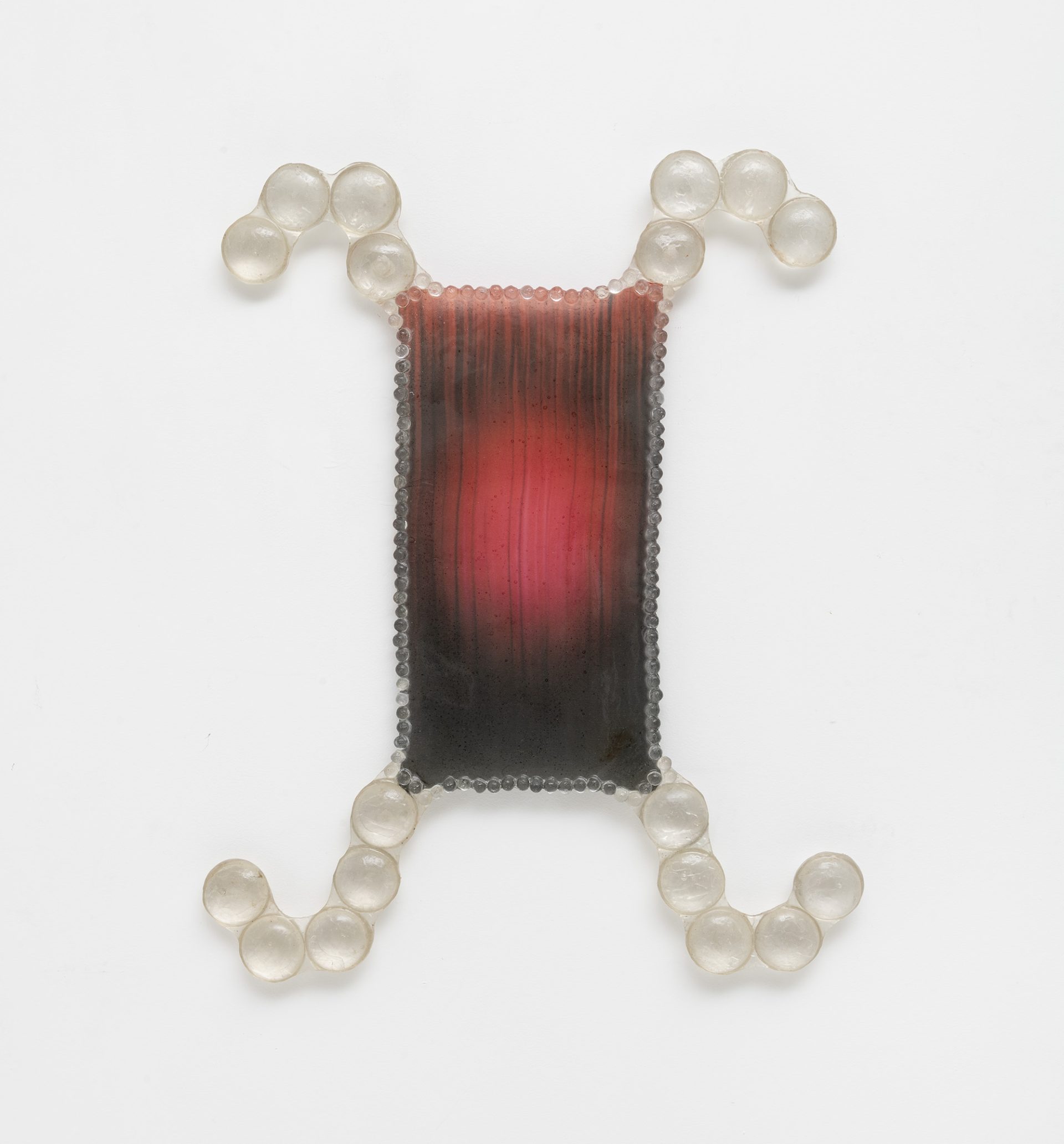
The Bolsa de Sereia [Mermaid’s Purse] series takes as its starting point the form commonly known by that name—an egg case produced by certain species of sharks and rays to protect their embryos. Consisting of a tough, translucent structure that is often found empty on beaches, the purse is simultaneously a casing, a shelter, and the trace of a life that has already left its interior. Sofia appropriates this form to encapsulate images printed on fabric and coated in resin. Each work seems to hold fragments of bodies and landscapes, as if preserving the memory of a presence. The rigid surface protects the image, but also keeps it inaccessible, suspended between appearance and disappearance. Repeated in different variations, the pieces form a collection of imaginary organisms—small marine reliquaries in which photography, body, and matter merge.
In Artificially Natured, Sofia more directly explores the boundary between organic forms and artificial materials. Press-on nails, resin, foam, and glass—elements associated with beauty, consumption, and the transformation of the body—are reorganized into compositions resembling marine coral. The forms appear to grow, attach themselves to one another, and reproduce like colonies of organisms progressively taking over a surface. What might initially be understood as an accessory ceases to be ornamental and acquires an almost biological life of its own. By bringing artificial nails into proximity with coral structures, Sofia creates an ambiguous form of nature that is simultaneously bodily, marine, and synthetic.
The series is thus connected to the works in Bolsa de Sereia, expanding an underwater imaginary in which protection, seduction, metamorphosis, and reproduction converge. This aquatic world also evokes the uterine space—the first environment in which the body is formed and held in suspension. Surrounded by amniotic fluid, the fetus inhabits a protected interior prior to direct contact with the outside world. The purse, the shell, the coral, and the womb come together as forms of shelter and gestation, places in which life remains simultaneously protected and in transformation. The sea appears not merely as a subject or landscape, but as the memory of a bodily origin—a fluid field in which the boundaries among body, object, and organism remain open.
In Aérea [Airborne], an image printed on fabric and coated in resin becomes a suspended structure that also incorporates links, chains, and metal elements. The work draws on the handcrafted chandeliers made from fish scales or thin sheets of mother-of-pearl, whose translucent elements overlap and respond to the play of light. Sofia revisits this material memory without literally reproducing its form. The fragmented image takes the place of the scales and is arranged as a suspended presence that is at once luminous, bodily, and imaginary.
Light passes through and alters the work’s surface, revealing varying degrees of transparency, sheen, and opacity. The chains, in turn, establish a tension between weight and buoyancy. The title itself points to something that leaves the ground and begins to inhabit space. Although it evokes the form of a chandelier, Aérea cannot be reduced to its function or to its status as a decorative object. The familiarity of the reference is unsettled by the presence of the images, which transform the structure into a strange body in a state of perpetual suspension. The gaze, inscribed on the surface of the other works, now assumes an elevated position. The work illuminates the space while also seeming to observe it.
Perfume do Invisível emerges from the movement between interior and exterior, presence and absence, seduction and estrangement, delicacy and artifice. By appropriating ornament, eroticized imagery, and materials associated with the transformation of the body, Sofia creates uterine forms and marine organisms that appear to be in a perpetual state of formation. Her works preserve visual pleasure while also revealing some of the mechanisms involved in the construction of images. Moving among the roles of author, model, and observer, the artist investigates how the feminine can produce its own image and imagine other ways of appearing.